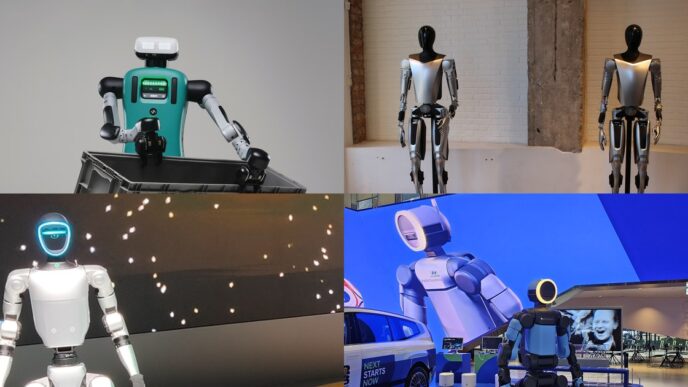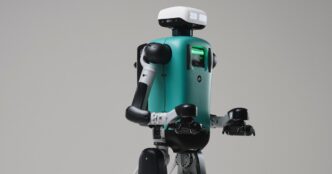
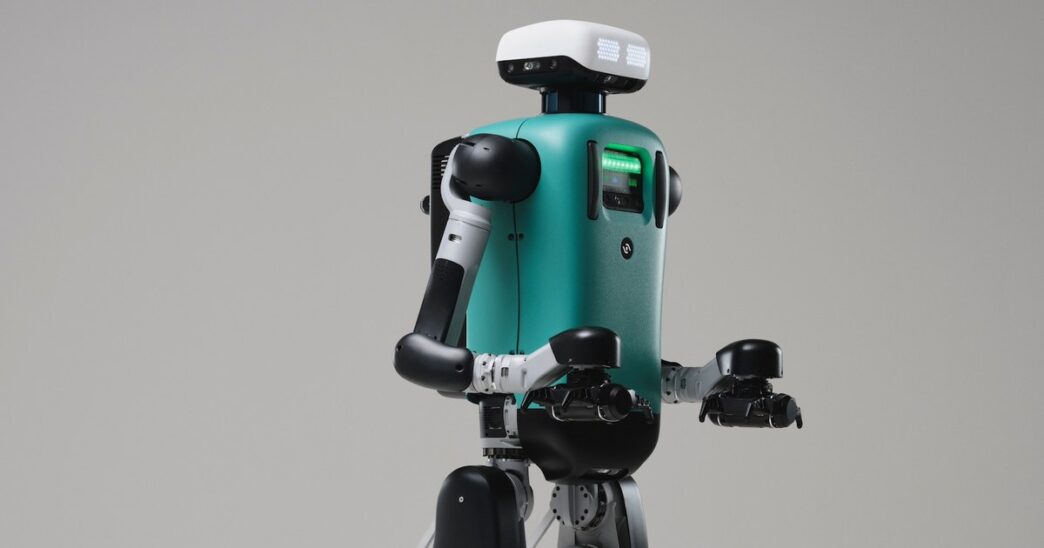
Agility says Digit 5 runs for 90 minutes on a battery and recharges in nine. Boston Dynamics says Atlas lasts about four hours, or about two if it’s lifting heavy things, and then swaps its own battery in roughly three minutes. Figure claims five hours for Figure 03. On paper, Figure wins. In a warehouse, that comparison could be meaningless.
Humanoid robot battery runtime is one of the most quoted specs in the industry and one of the least comparable. Vendors rarely say what load, walking pattern, computing workload or temperature sits behind “about N hours,” and they use very different strategies for getting a robot back to work. Here’s what the makers have published as of October 2026, why the numbers don’t line up, and how to test them yourself.
What the makers claim
Every figure below is a company claim from product pages, spec sheets or launch materials. None has been independently tested.
| Robot | Battery / pack details | Claimed runtime | How it gets back to work |
|---|---|---|---|
| Unitree G1 | Quick-release smart battery; about 9,000 mAh, roughly 421 Wh class in product materials | About 2 hours | Manual quick release (check the current US store sheet) |
| Boston Dynamics Atlas (electric) | Energy in Wh often not listed on marketing sheets | About 4 hours nominal; about 2 hours with heavy lifting | Autonomous battery swap in about 3 minutes; about 1.5 hours to charge the swapped pack |
| Agility Digit 5 | Wh not always in launch copy | About 90 minutes per battery | About 9-minute charge; Agility pitches a high run-to-charge ratio for multi-shift work |
| 1X NEO | About 842 Wh, per product materials checked in 2026 | About 4 hours | Check the charging method on the current 1x.tech page |
| Figure 03 | About 2.3 kWh, cited in company materials | About 5 hours | Inductive charging through coils in the feet, per company posts (verify against current docs) |
| Apptronik Apollo family | Swappable packs; Wh often undisclosed | About 4 hours in earlier Apollo positioning; Apollo 2 materials may not restate it | Swaps, opportunity charging or tethering, per company framing |
| Tesla Optimus | No stable public Wh or runtime spec as of Oct 7, 2026 | Not published as a verified product figure | Treat shift-length goals as plans until a datasheet appears |
For the full spec pictures, see our reports on Unitree prices and specs, Atlas at Hyundai, Digit 5, NEO and Figure 03.
Why “hours” can’t be compared
Atlas is the only robot in that table whose maker gives two numbers. The gap between them, four hours walking and two hours lifting, tells you how much the job matters. Most vendors publish only one figure and don’t say which job it describes.
Load is only the first variable. Computing draw is another: running vision and VLA models onboard can eat a big share of the battery, especially when the robot is standing still and doing fine manipulation. Heat is a third. Battery packs derate when they get warm, and vendors almost never publish how runtime holds up in a warehouse in August. And demo clips, some of them teleoperated, don’t necessarily reflect hours of continuous autonomous work.
Four ways to keep a humanoid working
The runtime number matters less than the plan for what happens when it runs out. The published approaches fall into four groups, and each one comes with its own infrastructure bill:
- Manual quick-swap, as on Unitree’s G1. You need charged spares and a person to do the swap.
- Autonomous pack swap, as described on Atlas’s spec sheet. You need a swap station, spare inventory and a plan for when a swap fails.
- Fast opportunity charging, as in Agility’s pitch for Digit 5 of 90 minutes of work for 9 minutes of charging, roughly 10 to 1. You need power at the work cell and charging slots scheduled into your warehouse or manufacturing software.
- Inductive or dock charging, as in Figure’s foot-coil design. You need floor infrastructure and dwell time.
Viewed that way, Digit’s 90 minutes and Figure’s five hours are answers to different questions. A short battery that recharges quickly at the workstation can beat a long one that needs a long charge, depending on how your shifts are built. For how this plays out in logistics, see humanoids in warehouse logistics. For how downtime changes the economics, see RaaS vs buy.
How to test the claim in a pilot
Define a reference task (payload, aisle length, picks per hour) and log watt-hours or battery percentage against time. Separate walking-only segments from manipulation-heavy ones. Measure swap or charge time on the wall clock, including any time a person spends waiting. And get the vendor to put the load condition behind its “N hours” figure in writing.
The spec to watch for is a second number. Boston Dynamics already publishes a heavy-lifting runtime next to its nominal one. When other makers start doing the same, buyers will finally be able to compare humanoid batteries on the job they’d actually be doing.
Frequently asked questions
How long do humanoid robot batteries last?
Published claims in 2026 mostly fall between about 1.5 and 5 hours per charge, depending on the robot and the work. Always ask what load the figure assumes, and whether it describes walking, lifting or a mix.
Can humanoid robots run 24/7?
Only with a way to replenish them: spare packs, autonomous swaps or scheduled opportunity charging. A single pack almost never covers continuous multi-shift work without downtime.
Is the Unitree G1’s “about 2 hours” official?
Yes. Unitree’s G1 product materials list about 2 hours of battery life with a quick-release pack. Check the live spec sheet for your model and region on the day you buy.
Sources
- Unitree G1 product page (battery life, quick-release pack)
- Boston Dynamics Atlas specification sheet (runtime, heavy lifting, battery swap)
- Agility Robotics Digit 5 launch materials (90-minute battery, 9-minute charge)
- 1X, Figure and Apptronik product and news pages for Wh and runtime claims (company figures)
Last updated: October 7, 2026. To report an error, see our corrections page. Articles are drafted with AI assistance and reviewed and edited by an editor; see our editorial policy.