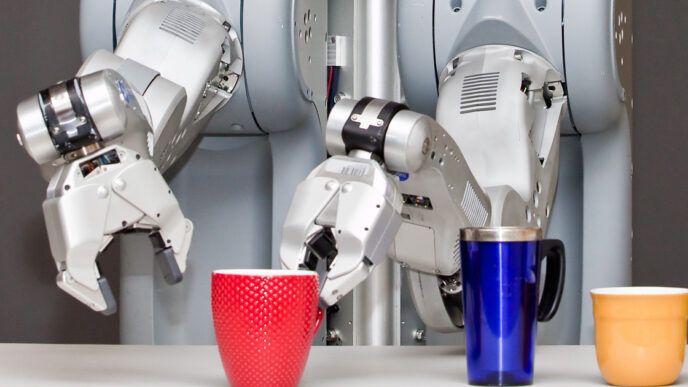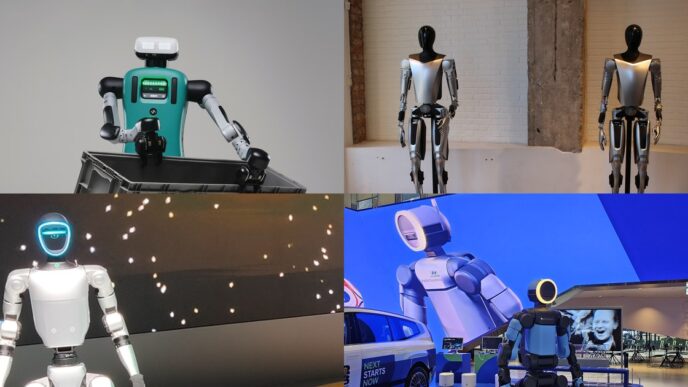

When Apptronik unveiled Apollo 2 in June, it shipped the same humanoid two ways: one version on legs, one on a wheeled base. It was a quiet admission of something the industry’s marketing tends to skip. For a lot of real jobs, legs are optional.
The bipedal vs wheeled humanoid question matters now because buyers are starting to see both on quotes. Legs win on stairs and spaces built for people. Wheels win on flat floors, energy use and stability. Very few vendors publish the numbers you’d need to compare them properly. Here’s how to think about the trade-off, and what to ask before you pick one.
A humanoid doesn’t need legs
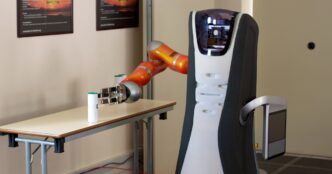
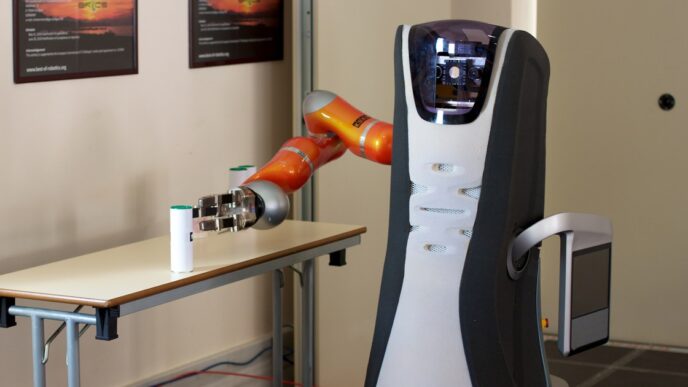
What makes a robot “humanoid” is mostly the upper body: a torso and two arms sized to fit human workspaces, tools and controls. Most industry coverage still calls a robot a humanoid platform if it keeps that human-scale torso on a wheeled base.
So the mobility choice comes down to the route the robot has to travel. Legs earn their complexity when the job involves stairs, uneven ground or aisles designed only for people. Wheels make more sense when floors are flat, routes are known, and battery life and stability matter more than flexibility.
Where legs win and where wheels win
| Factor | Bipedal legs | Wheeled base under a humanoid torso |
|---|---|---|
| Stairs, curbs, uneven ground | Potential advantage, if the vendor can prove it | Usually limited or out of scope |
| Energy used getting from A to B | Often higher for the same distance | Often lower on smooth floors |
| How it fails | Can fall; recovery behavior matters | Can tip; braking and stability matter |
| Best-fit spaces | Offices and homes with stairs | Warehouses with wide aisles |
| Throughput on flat routes | Depends on walking speed claims | Often easier to optimize |
| Maintenance | Actuator-heavy legs | Drivetrain plus the humanoid upper body |
This isn’t a scorecard. Vendors rarely publish comparable figures such as energy per meter traveled or mean time between falls, so every row is a tendency, not a measurement. If a salesperson tells you legs or wheels are simply “better,” ask for the data.
How the big programs have chosen
Apptronik is the clearest case of a vendor letting the job decide. Apollo 2 comes in bipedal and wheeled-base configurations, announced June 30, 2026, and the company frames the choice by task.
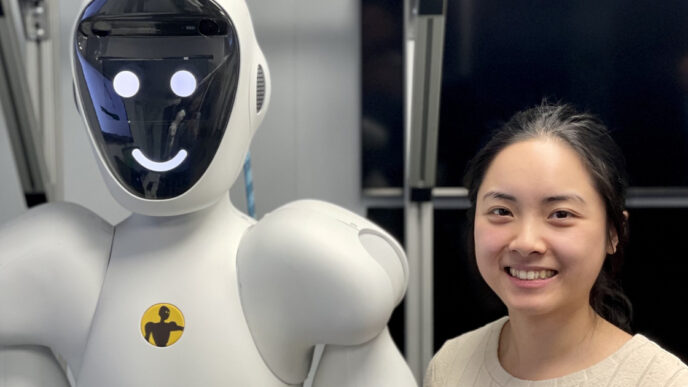
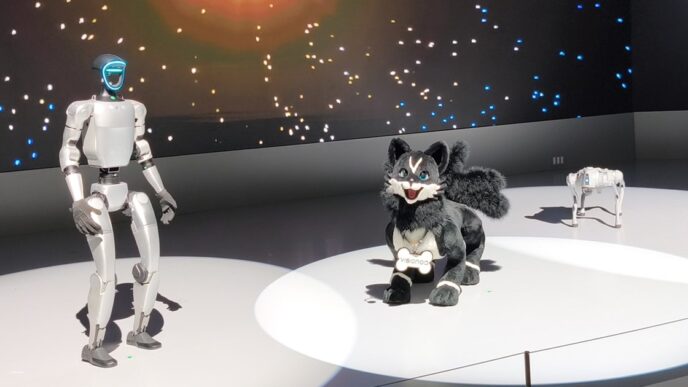
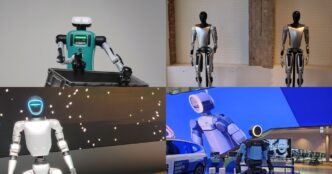
Most others have bet on legs. Agility’s Digit is a bipedal logistics robot that uses end-of-arm tooling rather than dexterous hands, sold on a facility deployment and robots-as-a-service model. Boston Dynamics’ electric Atlas walks too, and it’s training at Hyundai’s Georgia plant on parts logistics. 1X’s NEO is a bipedal home robot in a soft suit. Homes have stairs, but any claim that NEO handles them needs demo evidence. Unitree’s G1 and H2, which have public US store prices, are bipedal research and commercial platforms.
That lineup shows a pattern. The legs are partly an engineering choice and partly a bet on future generality. A walking robot can, in principle, go anywhere a person can. Whether your site needs that is a separate question.
Five things to put in the quote
- The exact mobility version. Legs or wheeled base should be named in the quote, not assumed.
- A site survey. It should cover floor grade, dock plates, elevators and stairs.
- Fall and tip-over data. Ask how the robot stops and behaves in shared aisles.
- Separate demos. Locomotion and manipulation should be shown separately, so a good walk doesn’t sell a weak grasp.
- Teleoperation disclosure. If a human is driving the base or the arms in any demo, it should be labeled. Our guide to teleoperation vs autonomy covers what to look for.
The open question for 2027 is whether other makers follow Apptronik and offer both. If the first big warehouse deployments run on wheels, the walking humanoid’s best argument will shift from the warehouse floor to the places wheels can’t go.
Frequently asked questions
Is a wheeled humanoid still a humanoid?
Generally, yes. If it keeps a human-scale torso and arms built for human workspaces, most industry coverage still calls it a humanoid platform. Legs aren’t required for the label.
Are legs or wheels better for warehouses?
It depends on aisle design, dock interfaces and whether there are stairs. Wheeled bases often win on flat, structured floors, and bipeds make more sense when the path is shaped for people. Ask for a pilot at your own site.
Which humanoid comes with both legs and wheels?
Apptronik offers Apollo 2 in bipedal and wheeled-base configurations, announced June 30, 2026.
Sources
- Apptronik, Apollo 2 product page and June 30, 2026 Robot Park release
- Company pages for Digit, Atlas, NEO and Unitree (linked above and in our individual reports)
Last updated: October 7, 2026. To report an error, see our corrections page. Articles are drafted with AI assistance and reviewed and edited by an editor; see our editorial policy.