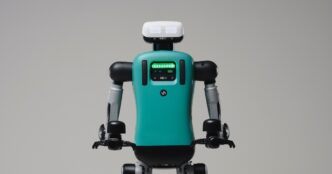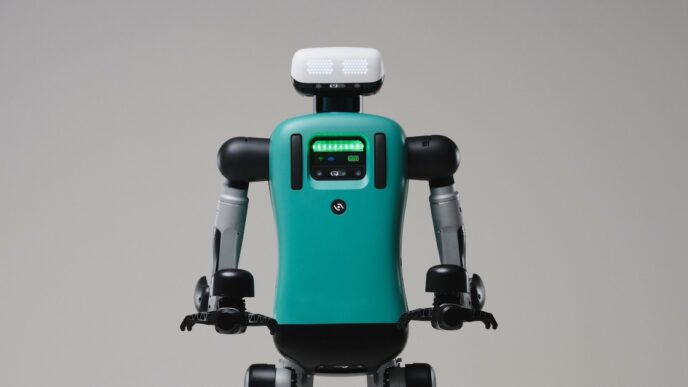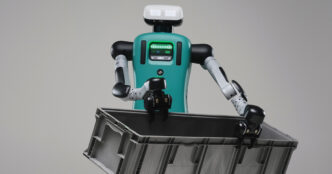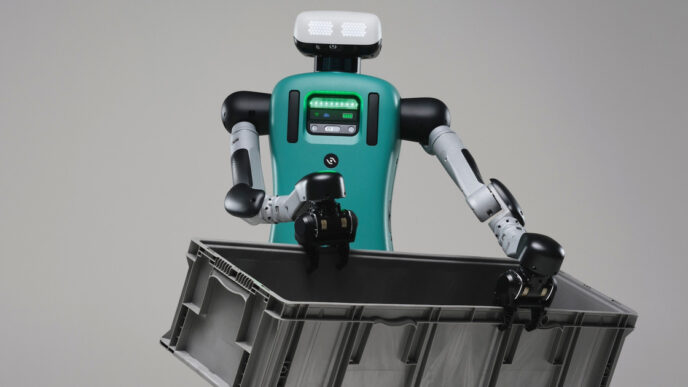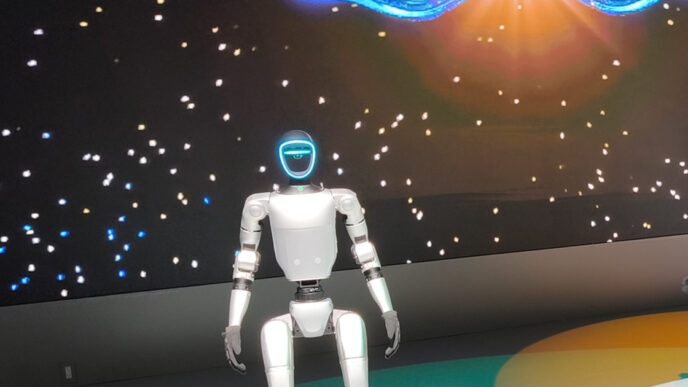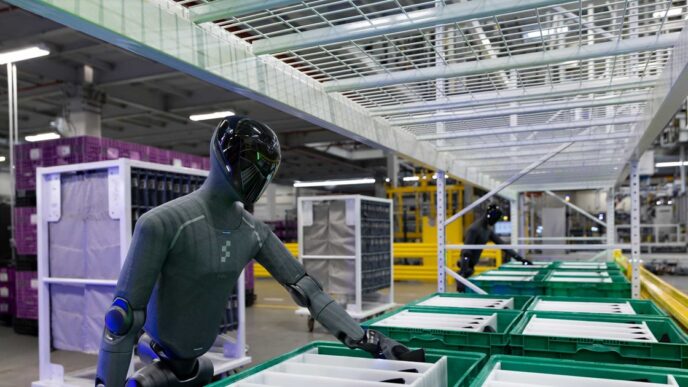
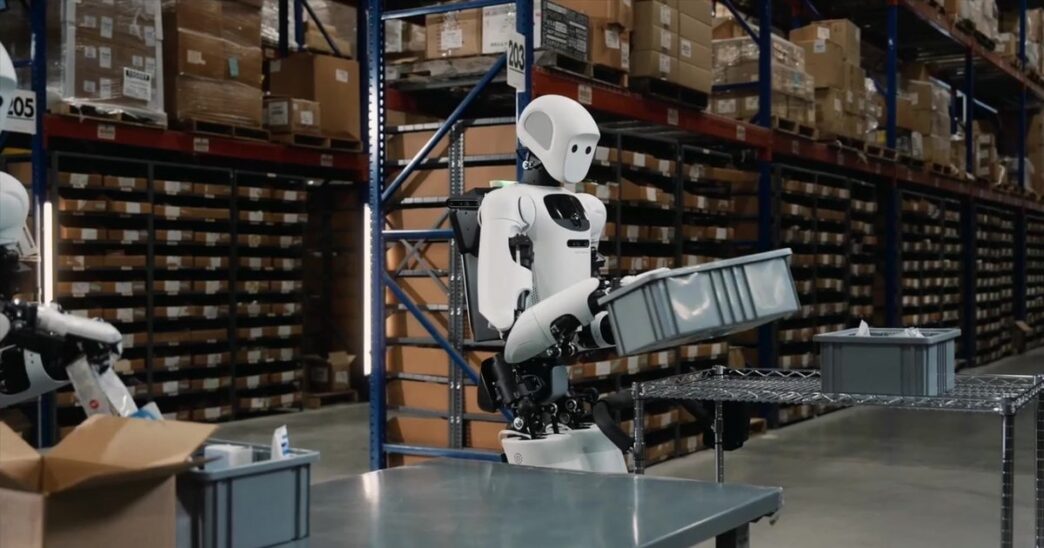
Apptronik’s newest humanoid comes with a choice most rivals don’t offer: legs or wheels. On June 30, 2026, the Austin company unveiled Apollo 2 in both bipedal and wheeled-base versions. It also expanded its flagship “Robot Park,” a facility where the robots do something less glamorous than factory work but arguably more valuable right now, which is collect training data.
That second part is the real tell. Apptronik is pitching Apollo 2 as a data-collection workhorse, and it says the data helps train Google DeepMind’s Gemini Robotics models. What Apptronik still hasn’t published is what most buyers want first: a price, a spec sheet with hard numbers, or a count of robots working at customer sites.
What Apptronik announced
According to the company’s June 30 announcement, which also went out on GlobeNewswire, the newly expanded Robot Park in Austin is its flagship data-collection and training facility. Apptronik says it anchors a growing network of Robot Parks at customer and partner sites, with more cities planned. It hasn’t named those cities or said how many sites exist today.
Apollo 2 is the current version of Apptronik’s humanoid, offered in bipedal and wheeled configurations and framed as a robot for gathering real-world task data. Apptronik says high-quality data from Apollo 2 helps advance Gemini Robotics, DeepMind’s family of robotics foundation models. That’s a description of the partnership’s role from one side of it, not a product listing. (We explain what DeepMind has released in our Gemini Robotics 2 explainer.)
The release’s company boilerplate puts Apptronik at more than 350 employees. It traces the company’s roots to the University of Texas at Austin’s Human Centered Robotics Lab and its earlier work on NASA’s Valkyrie humanoid. Reuters covered the unveiling the same day and reported that Apollo 2 had already been operating for more than a year in some configurations. Apptronik hasn’t published its own timeline confirming that.
Apollo 2 on paper: lots of features, few numbers
Apptronik’s Apollo 2 product page describes a modular humanoid built around the idea that “form follows function.” The robot gets legs where the job needs them and a wheeled base where it doesn’t. The page also lists:
- patented actuators, which Apptronik says are aimed at high energy efficiency and easier manufacturing
- swappable batteries for high uptime, plus opportunity charging and tethering options
- human-facing cues: an LED “mouth,” lighting, speech and listening, and a status display on the chest
- two software layers, Artemis for on-robot coordination and Fleet Connect for running fleets
- hardware safety zones for impact and perimeter detection
That’s a feature list, not a datasheet. On the pages we checked, Apptronik doesn’t publish the basics Boston Dynamics lists for Atlas: height, mass, degrees of freedom and payload. The safety zones are design claims, not certification results. We haven’t filled any of the gaps with estimates.
The logo wall versus the case study
Apptronik’s website shows logos for partners and customers including Google DeepMind, NVIDIA, GXO, Mercedes-Benz and Jabil. Mercedes-Benz showed Apollo prototypes at factory-campus media events in 2025, according to reporting at the time.
A logo isn’t a deployment, though. None of these relationships has come with a published case study giving robot counts, tasks or dates. Each one needs its own primary confirmation before you treat it as a production customer.
Here’s what remains undisclosed as of October 7, 2026:
- list price, lease rate or robots-as-a-service terms
- how many Apollo units are doing production work for customers
- independent productivity benchmarks (we found none)
- any ISO or other safety certification for Apollo 2 (none on the product pages we checked)
How Apollo fits next to its rivals
Apptronik is selling an industrial and logistics story, with the wheeled option as its clearest differentiator. We dig into that trade-off in bipedal vs wheeled humanoids. It isn’t running a consumer pre-order page like 1X does for NEO, and it isn’t disclosing order figures in SEC filings the way Agility has during its SPAC merger. Its strongest public card is the DeepMind relationship.
The next thing to watch is whether the Robot Park network turns into named sites with robot counts. If Apollo 2 really is the data engine behind Gemini Robotics, the second Robot Park city, and the first customer willing to say on the record what the robots do there, will tell us more than another product video.
Frequently asked questions
What is Apptronik Apollo 2?
It’s Apptronik’s current humanoid robot, announced June 30, 2026. It comes in bipedal and wheeled-base versions and is pitched for real-world data collection and industrial-style work.
What is Apptronik’s Robot Park?
It’s Apptronik’s flagship data-collection and training facility in Austin, Texas, expanded in the June 30, 2026 announcement. The company says more Robot Park sites at customer and partner locations are planned, but it hasn’t named them.
How much does Apollo 2 cost?
Apptronik hasn’t published a price on the pages we checked.
Can you buy Apollo 2 today?
Apptronik markets Apollo for commercial and partner deployments. There’s no public self-serve price or order page like 1X has for NEO.
Does Apollo 2 run Gemini Robotics?
Apptronik says data from Apollo 2 helps advance Gemini Robotics under its research partnership with Google DeepMind. That’s a partnership claim, not a product you can order from DeepMind.
Sources
- Apptronik, “Welcome to Robot Park…,” June 30, 2026: company news (also distributed via GlobeNewswire)
- Apptronik, Apollo 2 product page: apptronik.com/apollo/apollo-2
- Reuters, June 30, 2026 coverage of Robot Park and Apollo 2
Last updated: October 7, 2026. To report an error, see our corrections page. Articles are drafted with AI assistance and reviewed and edited by an editor; see our editorial policy.