Physical Intelligence, the San Francisco startup building one AI model to run many kinds of robots, is in talks to raise at least $1 billion at a valuation of about $20 billion, Bloomberg reported on Tuesday, October 27. Existing backers Avenir and Lux Capital are discussing leading the round. If it closes near that number, the Physical Intelligence valuation would have risen roughly eightfold in under two years.
Nothing is signed. Physical Intelligence, Avenir and Lux didn’t respond to Bloomberg’s requests for comment, and Bloomberg also reported that the company has no revenue. What investors would be paying for is a model roadmap and an API that opened to outside developers two weeks ago. That’s the part of this story you can check.
- What was reported: Physical Intelligence is in talks to raise at least $1 billion at about a $20 billion valuation, with Avenir and Lux Capital in talks to lead (Bloomberg, October 27, 2026).
- Status: Talks only. No company announcement, no closing date, no final terms. The company didn’t comment.
- Previous valuation: $11.5 billion earlier this year, per Bloomberg. Physical Intelligence doesn’t publish its rounds on its own site.
- The catch: Bloomberg says the company has no revenue. Its rival Skild AI says it has passed $100 million in annual recurring revenue.
What Bloomberg reported about the Physical Intelligence valuation
According to Bloomberg’s report, as summarized by Quartz, the new round would be at least $1 billion and would value the company at about $20 billion. Avenir and Lux Capital, both existing investors, are in talks to lead it. Other backers named in the report include CapitalG, Alphabet’s independent growth fund; Amazon founder Jeff Bezos; and Thrive Capital.
Bloomberg tied the investor interest to one recent product move. This month, Physical Intelligence began letting outside developers use and fine-tune its newest robot models through a beta API. The report also says the company has no revenue, which makes the round a bet on where the models go, not on current sales.
We haven’t seen a term sheet, and neither has anyone outside the talks. The amount, the price and the lead investors could all change before anything closes, and early-stage talks sometimes don’t close at all. Until the company or an investor confirms it, treat $20 billion as a reported number.
From $2.4 billion to a reported $20 billion in two years
Physical Intelligence was founded in 2024 by former Google DeepMind researchers and academics from Stanford and UC Berkeley. CapitalG, which led its 2025 round, highlights Karol Hausman, Sergey Levine, Brian Ichter, Quan Vuong, Chelsea Finn, Lachy Groom and Adnan Esmail in its investment note. Most of the funding history below comes from press reports, not company releases, so we’ve labeled each line.
| When | Round | Valuation | Status |
|---|---|---|---|
| November 2024 | $400 million from investors including Jeff Bezos, Thrive Capital, Lux Capital and OpenAI | About $2.4 billion | Reported (CNBC, Reuters) |
| November 2025 | $600 million round led by CapitalG | $5.6 billion | Reported (Bloomberg); CapitalG links the report on its site |
| March 2026 | Talks to raise about $1 billion | More than $11 billion | Reported talks (Bloomberg, via TechCrunch) |
| 2026 | Funding round | $11.5 billion | Reported (Bloomberg, October 27) |
| October 2026 | Talks to raise at least $1 billion | About $20 billion | Reported talks; no comment from the company |
The reported price has risen more than threefold since last November’s $5.6 billion. When TechCrunch visited in January, the company had raised just over $1 billion and employed about 80 people. Co-founder Lachy Groom told TechCrunch the company has no timeline for commercialization, an unusual stance at that price. “There’s no limit to how much money we can really put to work,” he said. “There’s always more compute you can throw at the problem.”
What Physical Intelligence has actually shipped
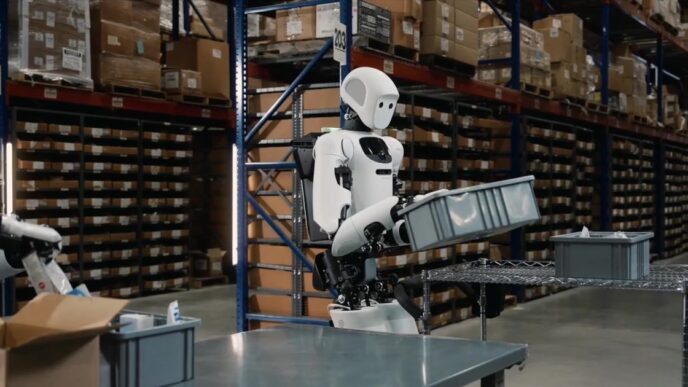
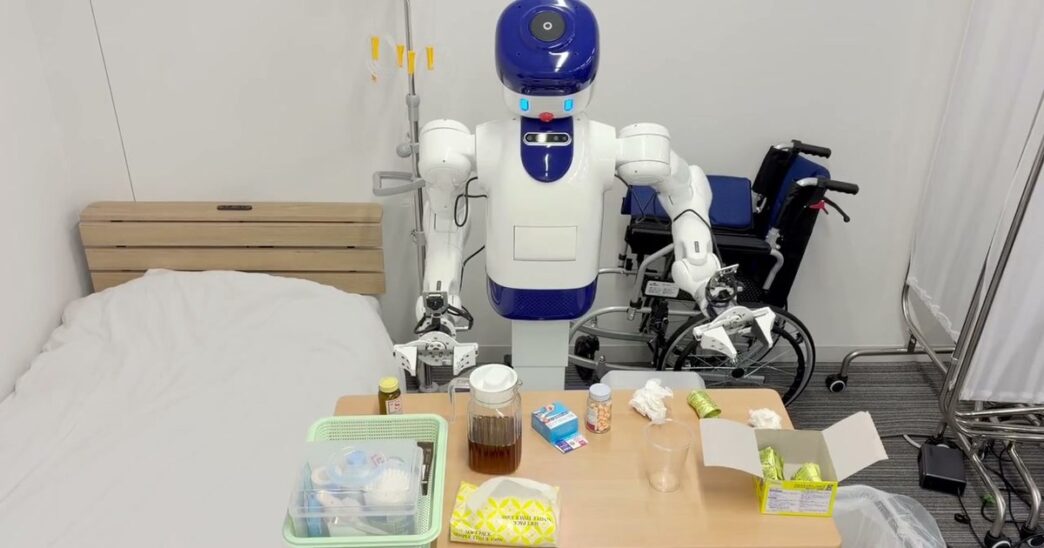
Unlike most robot companies, Physical Intelligence doesn’t sell a robot. It builds the software brain, called a vision-language-action model, that takes in camera images and an instruction and outputs motor commands for robots made by other companies. Its own blog gives a clean timeline:
- October 31, 2024: π0, its first generalist robot policy.
- February 4, 2025: open weights and code for π0, plus the faster π0-FAST variant, through the openpi project.
- April 22, 2025: π0.5, which the company says can clean up a kitchen or bedroom it has never seen.
- November 17, 2025: π*0.6, trained with reinforcement learning on real-world experience.
- April 16, 2026: π0.7, described as a steerable model with “a step-change in generalization.”
- October 13, 2026: the Pi API beta, which lets outside teams upload data, fine-tune Pi models and run them through hosted inference.
That last item is the one Bloomberg connected to investor interest. As we reported when it launched, the API post named early partners such as Actor, whose autonomous wheel loader works in Utah, and Almond, whose dual-arm Axol robot deburred spacers after four days of iteration with the API. It didn’t publish a price, a hardware compatibility list or a service-level commitment. A beta with named partners and no rate card fits Bloomberg’s no-revenue report.
Skild AI is the obvious comparison
Physical Intelligence isn’t the only company selling a general-purpose robot brain, and the closest rival has taken the opposite approach to revenue. Skild AI announced a $1.4 billion Series C on January 14, led by SoftBank, which it said took its valuation to more than $14 billion. On September 10, Skild said it had crossed $100 million in annual recurring revenue ten months after its first commercial deployment, with more than 60 paying customers and $50 million already recognized as revenue.
Skild’s founders used that post to argue that demo videos are a weak measure of progress and that deployment is where robotics actually happens. We’ve covered what Skild’s S1 model can and can’t show. Those revenue figures are Skild’s own and haven’t been audited publicly. Still, a reported $20 billion for Physical Intelligence against $14 billion for Skild would mean investors are paying more for research reputation than for current sales.
Bloomberg also listed OpenAI and Tesla among the companies competing in the space. Tesla’s Optimus effort is in-house and tied to its own hardware, while Physical Intelligence is betting that one model can serve many robot makers.
What to watch next
The first thing to watch is whether the round closes, and at what price. Physical Intelligence has rarely announced its own fundraising, so confirmation may come from an investor post or a regulatory filing rather than a press release. The second is pricing for the Pi API. A published rate card, or a named paying customer, would be the first public evidence of revenue. The third is the next model. The company has shipped a major model update roughly every five to seven months since π0, and π0.7 came out in April.
Until then, the reported $20 billion is a measure of investor appetite for robot foundation models more than of anything a buyer can use today.
Frequently asked questions
What is Physical Intelligence’s valuation?
Bloomberg reported on October 27, 2026, that Physical Intelligence is in talks to raise at least $1 billion at a valuation of about $20 billion. Its last reported valuation, from a round earlier in 2026, was $11.5 billion. The company hasn’t confirmed either figure.
Who is leading the new Physical Intelligence round?
Existing investors Avenir and Lux Capital are in talks to lead it, according to Bloomberg. Other backers named in the report include CapitalG, Jeff Bezos and Thrive Capital. None of the firms commented to Bloomberg.
Does Physical Intelligence make money?
Bloomberg reported that the company has no revenue. Its Pi API, which opened as a beta on October 13, 2026, has no public price, so there’s no published way to buy access yet.
What does Physical Intelligence build?
Robot foundation models, not robots. Its π0, π0.5, π*0.6 and π0.7 models take in camera images and instructions and output actions for robot arms and mobile robots built by other companies. π0 is available as open weights through the openpi project.
How does Physical Intelligence compare with Skild AI?
Both build general-purpose robot brains. Skild AI raised $1.4 billion at a valuation above $14 billion in January 2026 and says it passed $100 million in annual recurring revenue in September. Physical Intelligence’s reported $20 billion valuation would be higher, despite Bloomberg reporting no revenue.
Sources
- Bloomberg, “Physical Intelligence in Talks to Raise Funding at $20 Billion Valuation” (October 27, 2026; paywalled): bloomberg.com
- Quartz, “Robotics AI startup Physical Intelligence is seeking a valuation of about $20 billion” (October 27, 2026; summary of the Bloomberg report: at least $1 billion, Avenir and Lux, $11.5 billion prior valuation, no revenue, no comment, API beta interest, other backers): qz.com
- Physical Intelligence blog (model and API timeline, October 2024 to October 2026): pi.website/blog
- Physical Intelligence, “Frontier Models for Every Robot: Announcing our API beta” (October 13, 2026): pi.website/blog/api-beta
- CapitalG, “Physical Intelligence: Bringing AI Into the Physical World” (investment note; CapitalG-led 2025 round, team): capitalg.com
- Bloomberg, “Robotics Startup Physical Intelligence Valued at $5.6 Billion in New Funding” (November 20, 2025): bloomberg.com
- CNBC, “Jeff Bezos and OpenAI invest in robot startup Physical Intelligence” (November 4, 2024): cnbc.com
- TechCrunch, “Physical Intelligence is reportedly in talks to raise $1B, again” (March 27, 2026; Bloomberg-reported talks above $11 billion, January visit, Groom quotes): techcrunch.com
- Skild AI, “Announcing Series C” (January 14, 2026): skild.ai
- Skild AI, “The Hidden Pillar of Robotics” (September 10, 2026; $100 million ARR, 60+ customers): skild.ai
All sources accessed October 28, 2026, between about 7:10 and 7:50 AM ET.
Last updated: October 28, 2026. To report an error, see our corrections page. Articles are drafted with AI assistance and reviewed and edited by an editor; see our editorial policy.