


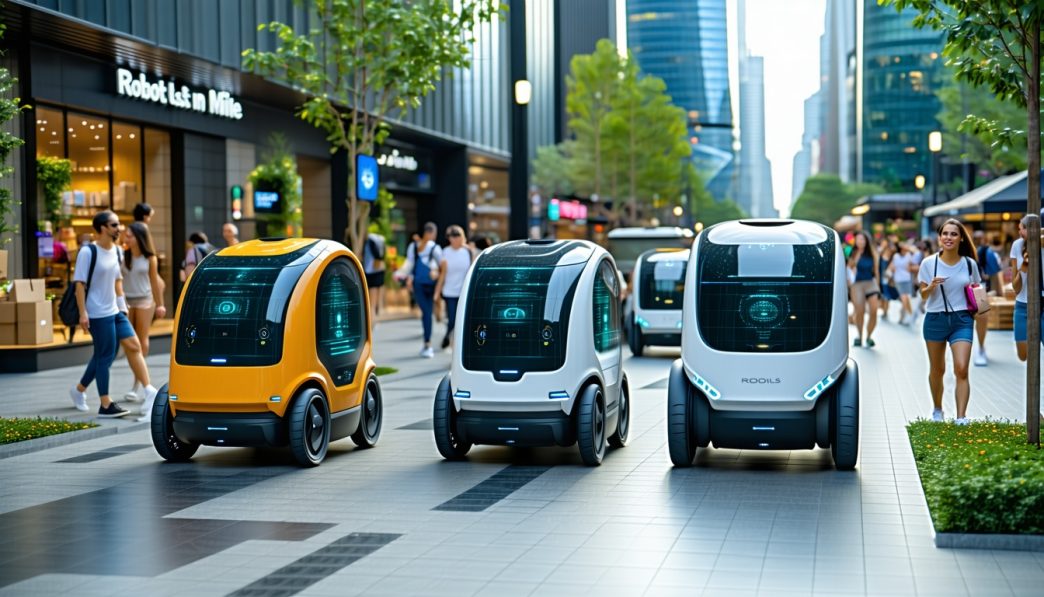
The Role of Robots in Last-Mile Logistics
Introduction to Last-Mile Logistics
Last-mile logistics refers to the final step in the delivery process, where goods are transported from a distribution hub to the end customer. This phase is critical in the supply chain and often accounts for a significant portion of shipping costs. As consumer expectations for fast and reliable delivery continue to rise, the efficiency of last-mile logistics becomes increasingly important. The integration of robots in last mile logistics is emerging as a transformative solution that can help streamline these services.
Last-mile delivery encompasses various challenges, including managing traffic congestion, meeting varying customer demands, and ensuring timely delivery. The complexity of urban environments further complicates this process, making the role of technology, particularly robotics, essential for improving logistics operations.
Importance of Last-Mile Efficiency
Efficient last-mile delivery can lead to increased customer satisfaction and reduced operational costs. Businesses often struggle with inefficiencies in this segment, leading to delays and increased expenses. When examining the factors that contribute to last-mile logistics efficiency, the following points can be highlighted: 
| Factor | Impact on Efficiency |
|---|---|
| Delivery Time | Shortened delivery windows can enhance customer satisfaction. |
| Cost Management | Reducing transportation costs can significantly boost profitability. |
| Resource Allocation | Efficient management of delivery staff and vehicles reduces overhead. |
| Customer Experience | Providing real-time tracking and timely deliveries enhances service quality. |
Robotic solutions can play a pivotal role in addressing these concerns. By automating deliveries, businesses can minimize human error and optimize route planning. This can lead to faster delivery times, consistent service, and the ability to scale operations effectively. For example, using grocery delivery robots can save time and man-hours in urban settings where traffic congestion and parking availability pose challenges.
The integration of robotics in last-mile logistics not only fosters operational efficiency but also meets the growing consumer demand for convenience. Organizations that adopt robotic solutions position themselves at the forefront of innovation in service delivery. Additional insights on how robots are enhancing service can be explored in our article on robot delivery and service.
How Robots Are Revolutionizing Last-Mile Delivery
The integration of robotics into last-mile delivery is transforming traditional logistics, addressing challenges that have plagued this segment for years. By utilizing automated systems, businesses can enhance efficiency and improve customer satisfaction.
Automated Delivery Systems
Automated delivery systems operate through various robotic technologies designed to transport goods from distribution centers directly to consumers. These systems embrace different forms of robots, each tailored for specific delivery needs and environments.
| Type of Automated Delivery System | Description |
|---|---|
| Delivery Robots | Small, wheeled robots that navigate sidewalks and urban environments to deliver packages. |
| Autonomous Ground Vehicles | Larger vehicles capable of transporting multiple packages over longer distances, often mimicking traditional delivery vans. |
| Drone Delivery Systems | Flying robots that can bypass road traffic to deliver small packages quickly. |
The widespread adoption of these automated systems is attributed to their ability to reduce human labor costs and optimize delivery times. Such technologies enhance the speed and reliability of package transfers, making them increasingly popular among consumers and businesses alike. For more examples of how robots are being used in various service settings, check out our article on robot delivery and service.
Benefits of Using Robots in Last-Mile Logistics
The implementation of robots in last-mile logistics brings several advantages, which significantly impact both operational processes and consumer experiences. These benefits include:
- Cost Efficiency: Reducing labor costs can lead to significant savings for businesses. Robots can operate continuously, minimizing the need for shifts and overtime pay.
- Speed and Efficiency: Automated systems can optimize routes in real-time, speeding up the delivery process and enhancing overall efficiency.
- Increased Accuracy: Using robots reduces the likelihood of human error in delivery and handling, improving accuracy in order fulfillment.
- Scalability: Robotic systems can easily scale to meet demand fluctuations, offering flexible solutions for companies during peak seasons.
- Enhanced Customer Satisfaction: Faster delivery times and reliable service contribute to improved customer experience and loyalty.
| Benefit | Impact on Last-Mile Logistics |
|---|---|
| Cost Efficiency | Significant reduction in operational costs |
| Speed and Efficiency | Faster delivery times and optimized routing |
| Increased Accuracy | Fewer errors in deliveries |
| Scalability | Ability to adapt to demand changes |
| Enhanced Customer Satisfaction | Higher customer retention and positive feedback |
As the logistics sector continues to evolve, the use of robots enhances the ability to meet the ever-growing consumer expectations for swift and accurate deliveries. For more insights into specific robotic delivery applications, explore how robots delivering food and grocery delivery robots are impacting everyday service efficiency.
Types of Robots Used in Last-Mile Logistics
In the ever-evolving landscape of last-mile logistics, various types of robots are making significant contributions to enhance efficiency and reduce costs. Here, we will explore three prominent categories: delivery robots, autonomous ground vehicles, and drone delivery systems.
Delivery Robots
Delivery robots are small, ground-based machines designed to transport goods directly to consumers. They navigate sidewalks and urban environments, handling packages ranging from food to small retail items.
These robots are typically equipped with sensors and cameras that allow them to perceive their surroundings and navigate obstacles. They operate within predefined areas and can communicate with customers for seamless delivery.
| Feature | Description |
|---|---|
| Size | Generally small (approximately the size of a cooler) |
| Navigation | Uses sensors and cameras for obstacle detection |
| Payload Capacity | Typically between 20–30 lbs |
| Delivery Range | Operates within a 2-3 mile radius |
The deployment of robots delivering food has gained popularity, showcasing their versatility in various environments.
Autonomous Ground Vehicles
Autonomous ground vehicles (AGVs) differ from delivery robots as they are larger, typically designed for moving more significant loads. These vehicles can be used within industrial sectors and urban settings, transporting packages and products from distribution centers to final destinations.
Equipped with advanced AI and GPS technology, AGVs can operate on roadways, navigating traffic while adhering to regulations.
| Feature | Description |
|---|---|
| Size | Larger than delivery robots (similar to small vans) |
| Navigation | Relies on GPS and advanced AI algorithms |
| Payload Capacity | Ranges from 100 lbs to several tons |
| Delivery Range | Can cover long distances, depending on design |
The use of robot lockers and pickup stations often complements AGVs by providing secure locations for package collection.
Drone Delivery Systems
Drone delivery systems have emerged as a cutting-edge solution within last-mile logistics. These flying robots can deliver packages from one location to another, dramatically reducing delivery times, especially in high-demand urban areas.
Drones are equipped with GPS technology and cameras to ensure accurate navigation. They are capable of bypassing ground traffic, making them an efficient alternative for delivering urgent items.
| Feature | Description |
|---|---|
| Size | Varies from small consumer drones to larger cargo drones |
| Navigation | Utilizes GPS and automated flight controls |
| Payload Capacity | Generally between 2–10 lbs for consumer drones; larger models can carry more |
| Delivery Range | Typically 1 to 5 miles, depending on battery and regulations |
As future of robot delivery services unfolds, drone delivery systems may become more widely adopted, offering innovative solutions to logistical challenges.
In summary, each type of robot used in last-mile logistics has unique features and capabilities that contribute to improving delivery efficiency. By understanding the roles of these robots, businesses and consumers can better appreciate the advancements in logistics technology.
Challenges and Considerations
As robots increasingly integrate into last-mile logistics, several challenges and considerations must be addressed for their successful implementation. These factors include regulatory hurdles, technological limitations, and the environmental and social impact of robotic delivery systems.
Regulatory Hurdles
Navigating the regulatory landscape presents a significant challenge for deploying robots in last-mile logistics. Various laws and regulations govern where and how delivery robots can operate. The lack of uniformity in regulations across different regions complicates the deployment process for businesses looking to utilize robotic technology.
Many municipalities have not yet established clear guidelines for autonomous vehicles on public roads or sidewalks. Some areas impose restrictions on weight limits, speed, and operating times, which can hinder the efficiency of robotic systems. These regulatory frameworks must evolve to accommodate new technologies in order to support their integration into everyday logistics.
| Regulatory Considerations | Impact on Robotics |
|---|---|
| Local ordinances | Varying operation limits |
| Licensing requirements | Increased complexity |
| Public safety regulations | Slower deployment |
Technological Limitations
While robotic technologies are rapidly advancing, there remain significant technological limitations affecting their effectiveness in last-mile logistics. Challenges include:
-
Navigation and Mapping: Robots rely on sophisticated algorithms for navigating urban environments. Obstacles such as curbs, pedestrians, and traffic can pose risks to successful deliveries. For more on navigation technologies, see our article on autonomous navigation for delivery robots.
-
Battery Life and Charging: The operational range of delivery robots may be restricted by battery life. Efficient charging stations must be created to ensure that robots are operational when needed.
-
Connectivity: Reliable internet connectivity is vital for real-time data processing and operation but may not be available in all areas.
| Technological Challenges | Description |
|---|---|
| Navigation and Mapping | Difficulty avoiding obstacles |
| Battery Life | Limited range and need for frequent recharging |
| Connectivity | Dependence on strong network signals |
Environmental and Social Impact
The introduction of robots into last-mile logistics also raises concerns about environmental impact and social implications.
On one hand, robotic delivery systems have the potential to reduce carbon emissions compared to traditional delivery methods by optimizing routes and lowering reliance on fossil-fueled vehicles. However, the production and operation of the robots themselves must also be considered regarding their carbon footprint.
Socially, there may be resistance from communities wary of automation taking over jobs currently held by human workers. This issue necessitates a careful balance between technological advancement and workforce implications.
| Environmental & Social Factors | Potential Outcomes |
|---|---|
| Emissions from robots | May decrease carbon footprint |
| Community acceptance | Possible pushback against automation |
| Job displacement concerns | Need for workforce reskilling |
Addressing these challenges is essential for the successful integration of robots in last-mile logistics. Stakeholders need to collaborate on creating solutions that maximize benefits while minimizing risks associated with robot-mediated delivery systems. For further insights into the evolving landscape of robotic logistics, explore our article on the future of robot delivery services.
Future Trends in Robotic Last-Mile Logistics
The future of robotic last-mile logistics is poised for significant transformation, driven by advancements in technology and innovative applications. As robots play an increasingly vital role in delivering goods, several trends are emerging that could reshape how logistics operates.
Advancements in Artificial Intelligence
Artificial intelligence (AI) is at the forefront of enhancing the capabilities of robots in last-mile delivery. AI algorithms improve the decision-making processes of robots, enabling them to navigate complex environments, optimize delivery routes, and interact with customers effectively. Machine learning techniques allow robots to learn from past deliveries and adapt to varying conditions, enhancing overall efficiency.
The integration of AI also supports features like predictive analytics, which anticipate demand patterns and help companies manage inventory more effectively. This not only streamlines operations but also reduces operational costs.
| AI Application | Impact on Delivery Efficiency |
|---|---|
| Route Optimization | Reduces delivery time by up to 30% |
| Demand Prediction | Decreases inventory costs by 15% |
| Customer Interaction | Improves satisfaction ratings by 20% |
Integration of Robotics with Existing Systems
As companies adopt robotic solutions, there is a growing focus on integrating these systems with existing logistics frameworks. Compatibility with current software, warehouse management systems, and supply chain processes is crucial for maximizing the benefits of robotic delivery.
Seamless integration allows for real-time monitoring of deliveries, effective tracking of inventory, and enhanced communication between robots and human workers. This holistic approach simplifies operations, reduces errors, and enables companies to harness both human and robotic efficiency.
Investing in systems that support interoperability among various robotic and traditional logistics technologies will be vital for the future success of these operations.
Potential Disruption and Innovation
The expansion of robots in last-mile logistics brings both potential disruption and innovation to the industry. As robots become more common, traditional logistics providers may face challenges in adapting their operations to compete with automated solutions.
Innovative applications of robotics can lead to new service models, such as on-demand delivery or personalized services tailored to individual consumer needs. These innovations have the potential to significantly change consumer expectations regarding delivery speed, convenience, and service quality.
| Innovation Area | Example Use Case | Potential Benefits |
|---|---|---|
| On-Demand Delivery | AI-powered delivery scheduling | Increases customer satisfaction and loyalty |
| Personalized Services | Tailored delivery options | Enhances user experience and expands market reach |
| Enhanced Last-Mile Services | Robotic assistance at pickup stations | Improves operational efficiency and reduces staffing costs |
The future trends in robotic last-mile logistics reflect a movement towards automation that not only enhances efficiency but also redefines how goods are delivered. As the landscape of delivery services evolves, the integration of advanced technologies and innovative processes will play a key role in shaping the logistics of tomorrow. For more insights on the implications of robotic services, explore our section on robot delivery and service.
Case Studies and Success Stories
Companies Implementing Robotic Last-Mile Solutions
Numerous companies are pioneering the use of robots in last-mile logistics, showcasing how automation can enhance delivery efficiency. Here are a few notable examples:
| Company Name | Type of Robot Used | Area of Implementation |
|---|---|---|
| Company A | Delivery Robots | Urban residential areas |
| Company B | Autonomous Ground Vehicles | Campus environments |
| Company C | Drone Delivery Systems | Suburban and rural areas |
| Company D | Grocery Delivery Robots | Supermarkets and local shops |
These companies highlight the versatility and adaptability of robotic systems to meet diverse delivery challenges.
Real-World Examples of Robots Improving Delivery Efficiency
In practice, robots are transforming how deliveries are executed. Below are specific instances where robotic systems have improved logistics and service processes.
-
Urban Delivery Robots: In several city neighborhoods, small delivery robots have been deployed to handle parcel deliveries. These robots navigate sidewalks, follow traffic rules, and can deliver packages directly to the consumer’s doorstep, significantly reducing the time it takes for items to reach consumers.
-
Campus Delivery Solutions: Some universities have integrated autonomous ground vehicles to transport goods across campus. They efficiently deliver snacks, drinks, and essential items to students, saving time for both the consumers and vendors. This system also reduces foot traffic in crowded areas.
-
Drone Delivery Initiatives: In suburban areas, companies have piloted drone delivery systems, enabling rapid transportation of small packages over longer distances. These drones navigate using advanced algorithms to avoid obstacles and deliver items in a matter of minutes, demonstrating a faster alternative compared to conventional delivery methods.
-
Grocery Delivery Robots: Grocery chains have implemented robots that travel short distances from stores to customer’s homes. They are capable of carrying multiple grocery bags and navigating through neighborhoods autonomously. These robots not only streamline grocery deliveries but also enhance customer satisfaction by providing quick access to essential goods.
The implementation of robots in last-mile logistics offers exciting insights into the future of delivery services. For more details about how various robots improve different service areas, check out our articles on robot delivery and service, grocery delivery robots, and restaurant service robots. The continuous evolution of these technologies promises even greater efficiency and reliability in last-mile logistics.


