


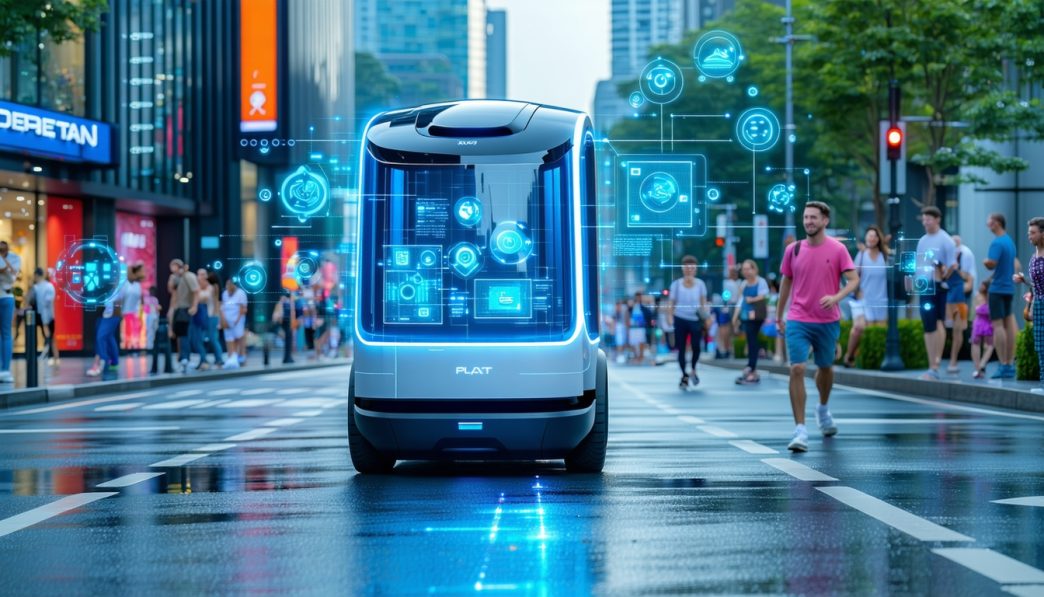
Robots Revolutionizing Navigation
The Integration of Robots in Deliveries and Services
Robots are increasingly being integrated into various delivery and service sectors. This shift is transforming how goods and services reach consumers, enhancing efficiency and convenience. Delivery robots are particularly effective in urban settings, where they navigate streets and sidewalks, delivering items directly to customers’ doors.
The key sectors benefiting from robotic integration include food delivery, grocery services, and hotel operations. For example, robots delivering food have become a common sight in many cities, while grocery delivery robots assist shoppers by bringing their purchases to their homes, streamlining the shopping process.
This technological advancement not only offers operational efficiencies for businesses but also caters to consumer demands for quicker delivery times. Below is a table showcasing the average delivery times for different robotic services: 
| Service Type | Average Delivery Time |
|---|---|
| Food Delivery | 30 minutes |
| Grocery Delivery | 45 minutes |
| Hotel Lobby Service | 20 minutes |
| Office Delivery | 25 minutes |
Importance of Autonomous Navigation for Robots
Autonomous navigation is crucial for the effectiveness of delivery robots. It enables robots to travel without human intervention, allowing them to efficiently navigate complex environments. Key benefits of autonomous navigation include safety, efficiency, and reduced labor costs.
Robots equipped with advanced sensors and navigational technologies can detect and avoid obstacles, ensuring safe movement in busy urban landscapes. Furthermore, autonomous navigation enhances route optimization, enabling delivery robots to select the quickest and least congested paths.
The significance of this technology is evident in its impact on robots in last mile logistics. The ability of robots to operate independently creates possibilities for cost-saving solutions in logistics and delivery services.
As robotic technology continues to evolve, the future of robot delivery and service holds immense potential for consumer convenience and industry innovation.
Navigational Technologies
Robots increasingly rely on advanced navigational technologies to move efficiently in various environments. This section explores GPS integration and sensor technologies that enable autonomous navigation for delivery robots.
GPS Integration in Robot Navigation
Global Positioning System (GPS) technology plays a vital role in helping robots determine their precise location in outdoor settings. By receiving signals from a network of satellites, robots can navigate streets and public spaces effectively. This capability is crucial for tasks such as delivery or service operations, where accurate positioning is essential for timely service.
The integration of GPS provides several benefits, including:
| Benefit | Description |
|---|---|
| Location Accuracy | GPS enables robots to pinpoint their location to within a few meters. |
| Route Optimization | GPS data allows robots to calculate the most efficient routes. |
| Real-Time Tracking | Users can monitor the location of delivery robots via GPS updates. |
However, GPS signals can be unreliable in certain areas, such as densely populated urban environments or indoor settings. In these cases, supplementary technologies are necessary to maintain navigational efficacy.
Sensor Technologies for Obstacle Avoidance
In addition to GPS, robots utilize a variety of sensors to navigate complex environments safely. These sensors help robots detect obstacles and react accordingly, ensuring safe and efficient navigation. Some common sensor technologies include:
| Sensor Type | Function |
|---|---|
| Lidar | Uses laser pulses to create a 3D map of the surrounding area, detecting obstacles and their distances. |
| Ultrasonic Sensors | Emits sound waves to measure distances to nearby objects, helping robots avoid collisions. |
| Cameras | Provides visual data for recognizing objects, pedestrians, and potential obstacles. |
| Infrared Sensors | Detects heat signatures to identify living beings or unexpected objects in a robot’s path. |
The combination of these sensor technologies enhances a robot’s ability to navigate dynamically, providing real-time information and making it better equipped for tasks in busy environments. With effective obstacle avoidance systems, robots can operate seamlessly alongside pedestrians and vehicles, contributing to the growth of robot delivery and service solutions.
These navigational technologies collectively support the advancement of autonomous navigation, pushing the boundaries of what’s possible in delivery logistics. For a closer look at how robots are transforming the last-mile logistics sector, explore our article on robots in last mile logistics.
Urban Environments Navigation
Navigating city streets presents unique challenges for robots. Autonomous navigation for delivery robots must account for the complexities of urban landscapes.
Challenges of Navigating Streets
Urban environments are characterized by high pedestrian traffic, varying road conditions, and diverse obstacles. Some notable challenges include:
| Challenge | Description |
|---|---|
| Pedestrian Interaction | High foot traffic and crowded sidewalks can impede robot movement, making human interaction critical for smooth navigation. |
| Traffic Signals and Regulations | Robots must recognize and respond to traffic signals and navigate within the legal frameworks that govern vehicles and pedestrians alike. |
| Varying Surface Types | Different surfaces, such as cobblestones or gravel, can affect stability and mobility of delivery robots. |
| Dynamic Obstacles | Unpredictable obstacles such as construction sites, parked cars, and street vendors may block paths or require rerouting. |
Solutions for Safe Street Navigation
To address these challenges and ensure safe navigation, several solutions have been developed:
| Solution | Description |
|---|---|
| Advanced Sensor Systems | Robots equipped with LIDAR and cameras can detect pedestrians, vehicles, and obstacles, facilitating real-time decision-making. |
| AI-Powered Navigation Algorithms | Machine learning algorithms enhance route planning by predicting potential obstacles and calculating alternative paths. |
| Communication Systems | Real-time communication with traffic management systems allows robots to respond to changing traffic conditions and signals. |
| Collaboration with Pedestrians | Some robots utilize user interfaces that allow pedestrians to interact with and guide them, enhancing safety and cooperation. |
The application of these solutions highlights the importance of effective navigation for autonomous delivery systems in urban areas. For more information on how robots are integrating into service sectors, explore our article on robot delivery and service.
Indoor Navigation Systems
As robotic technology continues to evolve, effective indoor navigation has become a critical focus for numerous applications, particularly in delivery and service. Autonomous navigation for delivery robots within indoor environments requires sophisticated mapping techniques and strategies to successfully navigate complex layouts.
Mapping Techniques for Indoor Spaces
Mapping indoor spaces involves creating precise representations of environments where robots operate. Several techniques are employed to generate accurate maps for these automated systems:
-
Simultaneous Localization and Mapping (SLAM): SLAM is a technology that allows robots to build a map of an unknown environment while simultaneously keeping track of their own location within that environment.
-
3D Mapping: This method creates three-dimensional maps that provide depth information, allowing robots to better understand spatial layouts. Sensors such as LIDAR and cameras are commonly used for this purpose.
-
Pre-Mapped Environments: In some cases, environments are pre-mapped using software tools before robots navigate them. This can speed up the process as robots can rely on an existing map.
The choice of mapping technique depends on the specific application of the delivery robot. A summary of preferred techniques includes:
| Mapping Technique | Description |
|---|---|
| SLAM | Maps environment while tracking position |
| 3D Mapping | Creates detailed spatial representations |
| Pre-Mapped Environments | Uses existing maps for quicker navigation |
Strategies for Navigating Complex Indoor Environments
Navigating through intricate indoor spaces can present a range of challenges for autonomous robots. To effectively maneuver through these areas, robots utilize various strategies:
-
Obstacle Detection and Avoidance: Robots employ sensors to detect obstacles in real-time, enabling them to adjust their paths accordingly. This is essential for avoiding collisions with furniture, people, or other objects.
-
Path Planning Algorithms: Advanced algorithms help robots determine the most efficient route to their destination. These algorithms analyze the mapped environment and calculate the best path considering various factors like obstacles and distance.
-
Dynamic Re-routing: In crowded or changing environments, robots can be designed to dynamically adjust their routes to avoid unforeseen barriers or congestion. This flexibility enhances the effectiveness of delivering services indoors.
-
Zone-Based Navigation: Dividing the indoor space into manageable zones helps robots navigate more efficiently. Each zone may have characteristics that can be utilized to improve navigation strategies.
| Navigation Strategy | Description |
|---|---|
| Obstacle Detection | Real-time identification of barriers |
| Path Planning Algorithms | Computes optimal routes |
| Dynamic Re-routing | Adjusts paths on-the-fly for obstacles |
| Zone-Based Navigation | Breaks environment into zones for easier navigation |
Understanding how these mapping techniques and navigation strategies work enables businesses and consumers to better appreciate the implementation of robots in indoor environments. For more insights on robotic applications, explore articles on robot delivery and service and robots in last mile logistics.
Future Innovations
As technology continues to evolve, advancements in autonomous navigation for delivery robots are set to revolutionize how services are provided. Here, we will explore the innovations in machine learning that enhance robot navigation and the potential impact of these technologies on last-mile logistics.
Advancements in Machine Learning for Enhanced Navigation
Machine learning plays a crucial role in improving the capabilities of delivery robots. By utilizing algorithms that learn from various data inputs, robots can better understand their environment, make informed decisions, and adapt to changing conditions. Key advancements in this area include:
-
Enhanced Object Recognition: Machine learning algorithms can improve a robot’s ability to identify and classify objects in its path, such as pedestrians, pets, and obstacles. This skill is essential for safe navigation in urban settings.
-
Real-Time Decision Making: Machine learning enables robots to process data swiftly, allowing them to make real-time decisions based on their surroundings. This includes rerouting when encountering obstacles or adjusting to traffic patterns.
-
Predictive Analytics: By analyzing historical data, robots can predict potential issues or delays in their delivery routes, enhancing efficiency and reliability.
| Innovation Area | Description |
|---|---|
| Object Recognition | Improved ability to identify obstacles |
| Decision Making | Real-time route adjustments based on surroundings |
| Predictive Analytics | Anticipating delays and optimizing delivery routes |
These advancements lead to smarter robots that can navigate more safely and efficiently, enhancing the effectiveness of robot delivery and service.
Potential Impact of Autonomous Navigation on Last-Mile Logistics
The advancements in autonomous navigation technologies have significant implications for last-mile logistics. Last-mile delivery is often the most challenging part of the logistics process, and efficient navigation can lead to substantial benefits:
-
Cost Reduction: Automated delivery systems can lower labor costs by minimizing the need for human couriers, contributing to overall cost savings for companies.
-
Increased Efficiency: With robots capable of analyzing routes and adjusting to real-time conditions, deliveries can be made faster and more reliably, leading to improved customer satisfaction.
-
Expanded Service Areas: Autonomous navigation allows delivery robots to operate in a broader range of environments, including residential neighborhoods and urban centers, thereby expanding service capabilities.
| Impact Area | Benefit |
|---|---|
| Cost Reduction | Decreased labor expenses |
| Efficiency | Faster and more reliable deliveries |
| Service Areas | Broader operational reach for companies |
As businesses increasingly invest in robots in last-mile logistics, the synergy of machine learning and autonomous navigation will continue to enhance the delivery experience for consumers, ultimately reshaping how services are offered.
Regulatory Considerations
As the use of robots becomes more prevalent in delivery and service applications, understanding the regulatory framework surrounding autonomous navigation for delivery robots is essential. This section covers the legal frameworks and ethical implications associated with robot navigation in public spaces.
Legal Frameworks for Autonomous Navigation
Legal frameworks play a crucial role in governing how robots operate within public environments. These frameworks vary significantly across different regions and countries, impacting the development and deployment of autonomous delivery systems. Key aspects of these legal frameworks include regulations on safety, liability, and data privacy.
| Regulation Aspect | Description |
|---|---|
| Safety Standards | Guidelines ensure that robots can operate without posing risks to humans or property. |
| Liability Laws | Legislation determines who is responsible in the event of accidents involving robots. |
| Data Privacy | Regulations govern how robots collect, store, and utilize personal information during deliveries. |
Robots must comply with these regulations to gain acceptance and credibility in urban settings. As cities increase the adoption of robotic delivery and service solutions, many regions are developing specific policies to regulate autonomous navigation. For more insights on how robots are contributing to service sectors, view our article on robot delivery and service.
Ethical Implications of Robot Navigation in Public Spaces
The presence of autonomous delivery robots in public environments raises several ethical concerns. These include issues related to privacy, public safety, and the potential for job displacement. Examining these aspects can help inform better practices and policies.
-
Privacy Concerns: Delivery robots often rely on cameras and sensors to navigate. This can lead to data collection that might infringe on individuals’ privacy. Addressing these concerns through transparent practices is essential.
-
Public Safety: While robots are designed to navigate streets and sidewalks, they must also be programmed to respond appropriately in emergencies. Ensuring that autonomous systems can handle unexpected situations, such as pedestrian movement or other obstacles, is vital for public safety.
-
Job Displacement: The automation of delivery services may lead to concerns regarding job loss in certain sectors. It is important to consider how society can adapt to these changes, potentially offering retraining programs to affected workers.
Understanding and addressing these ethical implications is crucial as the landscape for autonomous navigation evolves. For more detailed discussions on workplace settings, check our articles on robots for hotel and office service and grocery delivery robots.
As technology continues to advance, navigating the legal and ethical landscapes of robotic navigation will remain a critical factor in promoting acceptance and ensuring public trust in autonomous delivery systems.


