


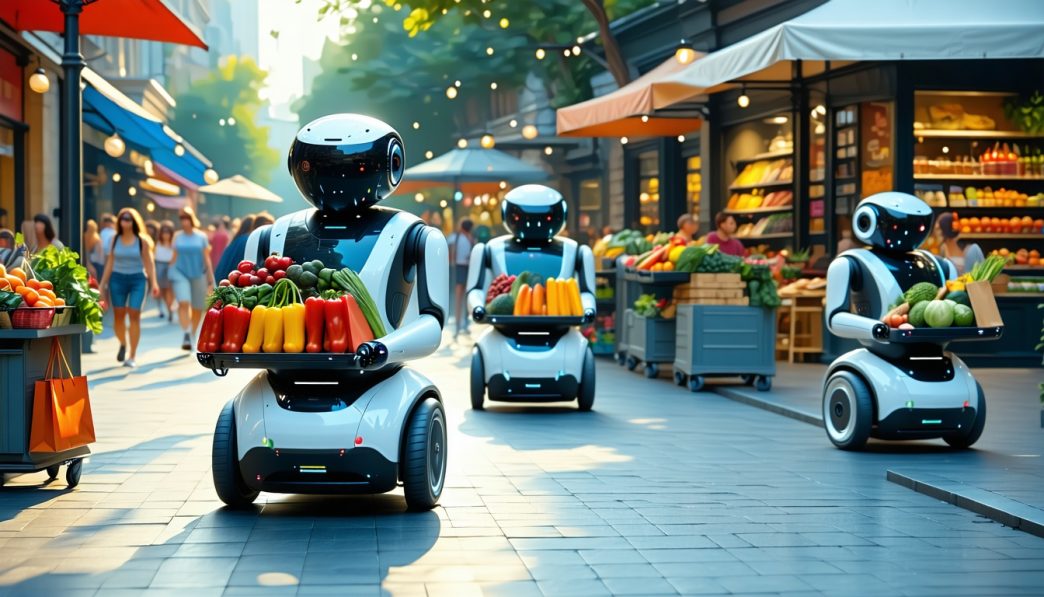
The Rise of Delivery Robots
Introduction to Robotic Delivery Systems
Robotic delivery systems are becoming increasingly prevalent, changing the way consumers receive their orders. These systems utilize various types of robots, including ground-based models, drones, and autonomous vehicles, to transport goods directly to consumers’ locations. Grocery delivery robots play a significant role in this evolution, streamlining the logistics of transporting food and grocery items.
The integration of robotics into delivery services addresses some of the challenges traditional delivery methods face, such as delays, costs, and labor shortages. Robotic delivery offers a promising solution by enhancing the speed and efficiency of last-mile logistics.
Role of Robots in Last-Mile Logistics
Last-mile logistics refers to the final step in the delivery process, where goods are transported from a distribution center to the final destination—usually the customer’s home or workplace. Robots are increasingly utilized in this segment to improve efficiency and reduce operational costs. 
Key benefits of using robots in last-mile logistics include:
| Benefit | Description |
|---|---|
| Reduced Delivery Times | Robots can efficiently navigate urban environments, minimizing delays caused by traffic and congestion. |
| Cost Savings | Automating deliveries with robots reduces reliance on human labor and associated wages, decreasing overall delivery costs. |
| Increased Order Capacity | With their ability to operate continuously without breaks, robots can handle more deliveries per hour compared to traditional methods. |
| Consistent Performance | Robots can perform tasks with precision, ensuring orders are delivered correctly and on time. |
Many urban areas are beginning to implement these robotic systems as part of their delivery framework. As a result, businesses are exploring the use of robots in last mile logistics to enhance their delivery capabilities and meet the growing demand for convenient shopping options.
The rise of robotic delivery systems signals a shift towards more automated solutions in the service industry. As these technologies advance, the potential for using robots delivering food expands, paving the way for a future where automated deliveries become the norm.
Grocery Delivery Robots
How Grocery Delivery Robots Operate
Grocery delivery robots are designed to automate the process of transporting groceries directly to consumers. These robots utilize advanced technology and automation to navigate urban environments efficiently. Typically, they are equipped with sensors, cameras, and software that enable them to navigate sidewalks and streets while avoiding obstacles and pedestrians.
Most grocery delivery robots operate through a combination of GPS and localized mapping systems, which allow them to understand their surroundings. The following table summarizes key operational features of grocery delivery robots:
| Feature | Description |
|---|---|
| Navigation | Utilizes GPS and sensors for obstacle detection and route optimization. |
| Delivery Capacity | Can typically carry a certain weight, often around 20-30 pounds. |
| Battery Life | Operates for several hours on a single charge, depending on the distance traveled. |
| Communication | Equipped with a user interface to inform customers of delivery status. |
| Loading Mechanism | Often has a secure compartment for storing groceries during transit. |
Consumers place orders through an app, after which the robot is dispatched to the grocery store to collect the items. Once loaded, it travels to the specified address, where consumers can track its progress in real time.
Benefits of Using Grocery Delivery Robots
The adoption of grocery delivery robots offers a variety of advantages for consumers, businesses, and urban environments. Some of the key benefits include:
| Benefit | Description |
|---|---|
| Reduced Delivery Time | Robots can provide quicker delivery compared to traditional human services. |
| Cost Efficiency | Lower operational costs associated with automation may lead to reduced delivery fees for customers. |
| Increased Convenience | Consumers can receive groceries without leaving their homes, enhancing convenience. |
| Sustainability | Many robots are designed to be energy-efficient, contributing to reduced carbon footprints. |
| Enhanced Service Availability | Robots can operate outside of traditional business hours, providing flexible delivery options. |
By utilizing grocery delivery robots, businesses can improve logistical efficiency while consumers enjoy the convenience of home delivery. The implications of this robotic technology extend not only to grocery shopping but potentially to other areas such as robots delivering food and robots in last mile logistics.
Implementation in Urban Settings
The integration of delivery robots into urban environments presents both opportunities and challenges. As grocery delivery robots become more prevalent, understanding their application in city settings is crucial for consumers and businesses alike.
Use of Robotics in Urban Areas
Robots designed for grocery delivery are especially suited for urban areas due to their ability to navigate crowded streets and deliver goods efficiently. These robots utilize advanced algorithms and sensors to make real-time decisions, ensuring safe and timely deliveries. Urban settings often have high population density, which can increase the demand for fast and convenient delivery options.
Urban areas equipped with technology infrastructure, such as GPS mapping and 5G connectivity, can enhance the operational capabilities of these delivery robots. Additionally, many municipalities are exploring partnerships with technology developers to facilitate the deployment of robotic services.
| City Feature | Benefit for Grocery Delivery Robots |
|---|---|
| High Population Density | Increases demand for quick deliveries |
| Smart Infrastructure | Improves navigation and delivery efficiency |
| Technological Partnerships | Enhances operational capabilities |
Overcoming Challenges in Urban Delivery
Despite the advantages, several challenges exist when implementing grocery delivery robots in cities. Factors such as traffic congestion, pedestrian safety, and varying regulations across municipalities can complicate deployment efforts.
Traffic can significantly hinder the speed of delivery robots. To combat this, developers use sophisticated autonomous navigation systems to reroute robots as needed. These systems help robots avoid congested areas and choose optimal paths for timely deliveries.
Safety regulations also pose a significant obstacle. Different cities may have various rules regarding the operation of delivery robots on public sidewalks and streets. Engaging with local governments and adhering to safety standards is essential for successful implementation.
| Challenge | Solution |
|---|---|
| Traffic Congestion | Advanced navigation systems for optimal routing |
| Safety Regulations | Collaboration with local governments to establish guidelines |
Robots delivering groceries in urban environments promise to reshape the delivery landscape, optimizing last-mile logistics. To explore more about how robots are transforming delivery services, check our articles on robot delivery and service and robots in last mile logistics. These advancements pave the way for a more convenient and efficient future, enhancing consumer experiences and business operations alike.
Robotics in Home Deliveries
Impact of Robots on Home Delivery Services
Grocery delivery robots are transforming the landscape of home delivery services. These robotic systems are designed to autonomously navigate urban environments, improving convenience for consumers. As they take over some of the more mundane tasks associated with delivery, there are several impacts worth noting.
-
Cost Savings: The use of delivery robots can help reduce operational costs for businesses by minimizing the need for human labor. This often translates into lower delivery fees for consumers.
-
Time Efficiency: Delivery robots can operate around the clock, decreasing wait times for customers. They can execute deliveries without breaks, enhancing the overall speed of service.
-
Service Reach: Robots can reach areas that are often challenging for traditional delivery methods, enabling services to cater to a broader consumer base. This is especially significant in densely populated urban areas.
-
Environmentally Friendly: Many grocery delivery robots are electric, reducing the carbon footprint associated with traditional delivery vehicles. This contributes positively to urban sustainability efforts.
| Impact Area | Description |
|---|---|
| Cost Savings | Reduced operational expenses lead to lower consumer fees. |
| Time Efficiency | 24/7 operation reduces wait times for deliveries. |
| Service Reach | Ability to serve more areas, including harder-to-reach locations. |
| Environmental Impact | Lower carbon emissions due to electric vehicles. |
Improving Efficiency in Home Deliveries
Grocery delivery robots play a crucial role in streamlining the delivery process. Their advanced technology allows for precise navigation and quick adaptations to obstacles, which enhances their efficiency in home deliveries.
-
Autonomous Navigation: Equipped with sophisticated sensors and AI, robots can navigate streets, sidewalks, and pedestrian crossings efficiently. For more information on this technology, refer to our article on autonomous navigation for delivery robots.
-
Real-Time Tracking: Many delivery robots feature GPS and tracking capabilities, allowing consumers to monitor their order in real-time. This increases transparency and builds trust between consumers and service providers.
-
Simplified Delivery Process: The introduction of robotic systems eliminates many human errors typically associated with delivery logistics. Orders are less likely to be misdelivered, enhancing the overall reliability of home delivery services.
-
Integration with Existing Systems: Grocery delivery robots can be easily integrated with current delivery management systems, providing a seamless experience for both businesses and consumers. For further insights, check our article on robot delivery and service.
| Efficiency Feature | Description |
|---|---|
| Autonomous Navigation | Robots navigate environments independently. |
| Real-Time Tracking | Consumers track their deliveries from start to finish. |
| Reduced Errors | Improved reliability in order delivery reduces misdelivered items. |
| System Integration | Compatibility with existing delivery systems enhances usability. |
The evolving role of grocery delivery robots is markedly improving home delivery services and operational workflows for businesses. As technology advances, these systems will likely become a staple in urban logistics and personal delivery solutions.
Future of Automated Services
Advancements in Robotic Technology
As technology continues to evolve, significant advancements in robotic systems are reshaping the landscape of delivery services. One crucial area of development is autonomous navigation, which allows delivery robots to navigate complex urban environments with ease. This involves the use of sensors, cameras, and advanced algorithms that enable robots to recognize obstacles and efficiently plot routes.
The following table showcases key advancements in robotic technology relevant to grocery delivery robots:
| Technology | Description | Benefits |
|---|---|---|
| Autonomous Navigation | Uses sensors and AI for route planning | Reduces delivery time |
| Object Recognition | Enables robots to identify and avoid obstacles | Increases safety during deliveries |
| Machine Learning | Allows robots to improve performance based on past deliveries | Enhances efficiency |
| Battery Technology | Developments in battery life and charging speed | Extends operational range |
These advancements are not only improving the functionality of grocery delivery robots but are also paving the way for their increased adoption in various delivery sectors, including food service and logistics.
Potential Expansion of Robotic Deliveries
The potential expansion of robotic deliveries looks promising as more consumers and businesses embrace these technologies. Cities are beginning to implement infrastructure that supports robotic services, such as designated pathways and smart intersections that accommodate both pedestrians and delivery robots.
Robots are anticipated to find applications beyond grocery delivery, reaching sectors such as retail, healthcare, and hospitality. For instance, robots are already being explored in restaurant services and hotel and office settings. The following table outlines potential areas of growth for robotic delivery systems:
| Sector | Potential Applications | Expected Impact |
|---|---|---|
| Retail | In-store delivery and restocking | Enhances customer experience |
| Healthcare | Medicine and supplies delivery to patients | Improves service efficiency |
| Hospitality | Room service and luggage handling | Streamlines operations |
| Urban Logistics | Package deliveries to private residences | Reduces traffic congestion |
As infrastructure advances and consumer acceptance grows, the future of grocery delivery robots and their counterparts in other industries looks bright. Innovations in robotic technology combined with expanding applications indicate a transformative shift in how goods and services are delivered. More information can be found in our article on the future of robot delivery services.


