


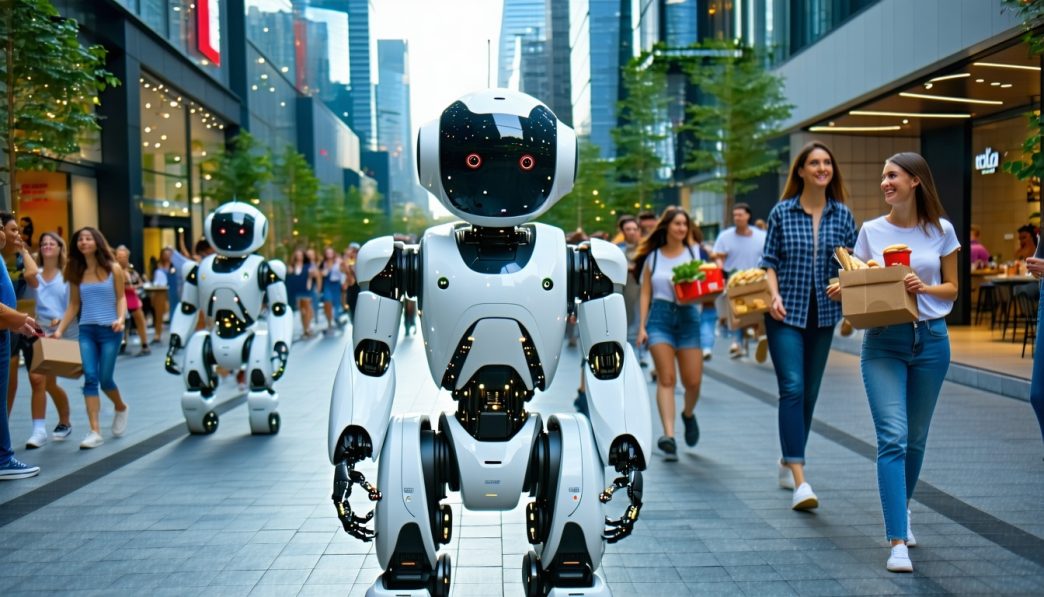
Rise of Delivery Robots
Evolution of Delivery Services
Delivery services have undergone significant transformation over the years. Starting from traditional courier services, the landscape has expanded to include various modern methods aiming to enhance convenience and efficiency. The introduction of online shopping prompted a surge in demand for faster and more reliable delivery options. With the advancement of technology, logistics began to shift from human-driven deliveries to automated systems, paving the way for robots delivering food and other essentials.
| Year | Milestone in Delivery Services |
|---|---|
| 1970s | Emergence of courier services |
| 1990s | Rise of e-commerce and delivery demand |
| 2010s | Introduction of drone and robotic deliveries |
| 2020s | Adoption of autonomous delivery solutions in urban areas |
Introduction to Delivery Robots
Delivery robots are designed to transport goods autonomously, leveraging sensors, cameras, and sophisticated software systems for navigation and operation. These robots can typically carry a range of items, from groceries to meals, providing a valuable service in both urban and campus environments. Many models feature unique designs and capabilities, catering to specific delivery tasks.
Consumers and businesses alike are starting to recognize the practicality of integrating delivery robots into their supply chains. Their ability to operate around the clock enhances service availability and customer satisfaction levels. For those interested in the advancements in robotic delivery systems, an examination of robot delivery and service reveals the latest developments in this growing field. 
Significance of Robotic Deliveries
Robotic deliveries represent a paradigm shift in how goods are transported, impacting various sectors. They improve delivery efficiency and reduce human labor costs while also addressing challenges in last-mile logistics. The use of robots can minimize delivery time and shrink the carbon footprint associated with transportation.
As consumers increasingly expect faster services, robotic delivery solutions offer a response to these demands, illustrating their significance in modern logistics. The ongoing integration of these technologies could lead to the widespread implementation of robots in last mile logistics, further transforming urban and campus delivery systems.
The growing presence of robotic systems provides opportunities for various industries, including food service, retail, and hospitality. For example, applications in restaurants and hotels are becoming more prevalent, with restaurant service robots and robots for hotel and office service enhancing guest experiences and operational efficiency.
The future of delivery robots looks promising, with advancements in autonomous navigation and smart technology shaping the way items are delivered. The path forward involves deeper consumer acceptance and an understanding of how these technologies can enhance everyday services.
Applications of Delivery Robots
Delivery robots are making significant strides in various environments, particularly in urban areas and on college campuses. Their versatility in applications is expanding the possibilities for logistics and service delivery.
Urban Deliveries
In densely populated urban settings, robots are increasingly used for delivering food and essential items. These devices navigate through crowded streets, sidewalks, and public spaces to bring goods directly to consumers. Urban delivery robots typically feature advanced navigational systems, enabling them to avoid obstacles and ensure timely deliveries.
| Urban Delivery Robot Features | Description |
|---|---|
| Navigation System | Uses GPS and sensors for safe navigation |
| Speed | Average speed ranges from 2 to 4 mph |
| Load Capacity | Typically carries 10-20 pounds |
| Delivery Radius | Operates within a 1-3 mile radius |
Robots delivering food contribute to reduced traffic congestion and lower emissions compared to traditional delivery vehicles. For additional insights on robotic food delivery, refer to our article on robot delivery and service.
Campus Deliveries
Colleges and universities are increasingly adopting delivery robots to cater to students and faculty. These robots efficiently navigate campus grounds, delivering food, beverages, and packages directly to dorms, classrooms, or common areas.
| Campus Delivery Robot Features | Description |
|---|---|
| Customization | Appearance and branding tailored to campus identity |
| User Interaction | Allows users to place orders via a mobile app |
| Time Efficiency | Reduces waiting time during peak hours |
| Integration | Works in conjunction with campus dining services |
This enhances the overall experience for students and faculty, saving them time and making it easier to access amenities. More information on this can be found in our article on grocery delivery robots.
Automated Last-Mile Logistics
The last mile in delivery logistics refers to the final leg of the delivery journey from a distribution center to the customer’s location. Delivery robots are improving the efficiency of this process in various ways.
| Last-Mile Robot Logistics | Impact |
|---|---|
| Cost Reduction | Lowers delivery costs through automation |
| Increased Delivery Capacity | Handles multiple deliveries simultaneously |
| Enhanced Tracking | Provides real-time tracking capabilities |
| Reduced Delivery Times | Speeds up the final delivery process |
By utilizing robots in last-mile logistics, businesses can improve operational efficiency and customer satisfaction. The effectiveness of these robots in logistics is further outlined in our piece on robots in last mile logistics.
Delivery robots are transforming how goods are delivered in urban and campus environments, with a focus on efficiency, convenience, and innovative service solutions.
Types of Delivery Robots
As the landscape of delivery services evolves, various types of delivery robots have emerged, each designed for specific use cases. These robots are transforming how consumers and businesses engage with delivery processes.
Wheeled Robots
Wheeled delivery robots are among the most common types found in urban environments. These small, often autonomous vehicles navigate sidewalks and streets to deliver items directly to consumers. Equipped with sensors and cameras, wheeled robots can avoid obstacles and ensure safe travel.
| Feature | Description |
|---|---|
| Speed | Up to 4 mph |
| Payload Capacity | 20-30 lbs |
| Range | Approximately 2-5 miles |
| Navigation | GPS and sensor-based |
Wheeled robots are particularly effective in delivering groceries and online orders within neighborhoods. They provide a convenient solution for “robots delivering food” directly to doorsteps. For more information on how these machines are streamlining grocery delivery, refer to our article on grocery delivery robots.
Drone Delivery Systems
Drone delivery systems utilize aerial technology to transport goods from one location to another. These flying robots are capable of overcoming traffic congestions and can deliver items quickly over short distances.
| Feature | Description |
|---|---|
| Speed | Up to 30 mph |
| Payload Capacity | 5-10 lbs |
| Range | Approximately 1-3 miles |
| Navigation | GPS and aerial mapping |
Drones are particularly effective for urgent deliveries, medication disbursement, or essential supplies in remote areas. For further insights into how drones are changing delivery methods, explore our discussion on robot delivery and service.
Autonomous Ground Vehicles
Autonomous ground vehicles are larger, self-driving robots designed for more extensive delivery tasks. Unlike wheeled robots, these vehicles can transport larger quantities of goods, making them ideal for businesses seeking efficient last-mile logistics solutions.
| Feature | Description |
|---|---|
| Speed | Up to 25 mph |
| Payload Capacity | 200-1,000 lbs |
| Range | Up to 60 miles |
| Navigation | Lidar and autonomous systems |
These vehicles are increasingly being adopted for deliveries on university campuses and urban centers, effectively addressing demands for efficient transport of food, packages, and supplies. For more on how these vehicles enhance logistics, see our article on robots in last mile logistics.
Each type of delivery robot plays a vital role in revolutionizing delivery systems, making them more accessible and efficient for consumers, businesses, and urban planning.
Benefits of Robot Deliveries
The rise of delivery robots offers multiple advantages that impact consumers, businesses, and urban environments. This section explores the efficiency and speed, cost-effectiveness, and environmental sustainability associated with robotic delivery systems.
Efficiency and Speed
Delivery robots can navigate routes quickly and efficiently, significantly reducing the time it takes to deliver goods. They are designed to circumvent traffic and follow established paths, cutting down on delivery times compared to traditional methods. Many consumers appreciate the promptness of robots delivering food and other items right to their doorsteps.
The following table illustrates average delivery times for traditional methods versus robotic systems:
| Delivery Method | Average Delivery Time |
|---|---|
| Standard Delivery | 30 – 60 minutes |
| Express Delivery | 15 – 30 minutes |
| Robot Delivery | 10 – 20 minutes |
Cost-Effectiveness
Implementing delivery robots can lead to substantial cost savings for businesses. With fewer labor costs involved, companies can direct their resources to other areas, such as customer service or product quality. Moreover, robots require minimal overhead once operational, making them an economical choice in the long run.
The cost comparison below demonstrates how robotic deliveries impact business expenses:
| Expense Type | Traditional Delivery | Robot Delivery |
|---|---|---|
| Labor Costs | High | Low |
| Fuel Costs | Moderate | Low |
| Maintenance | Moderate | Low |
Overall, the use of robots in last-mile logistics can enhance profit margins and promote competitive pricing.
Environmental Sustainability
Robotic delivery systems often utilize electric power, resulting in reduced carbon emissions compared to conventional delivery vehicles. These robots are designed to consume less energy and frequently optimize delivery routes, further minimizing their ecological footprint.
The environmental impact comparison is shown in the table below:
| Delivery Type | CO2 Emissions (grams per mile) |
|---|---|
| Traditional Vehicles | 404 |
| Robot Delivery | 40 |
By opting for robots for hotel and office service, businesses can contribute to sustainability efforts while maintaining operational efficiency. Consumers also increasingly appreciate companies that prioritize environmentally friendly practices.
In sum, the benefits of robotic deliveries encompass efficiency, cost savings, and ecological advantages, making them an attractive option for urban settings and campuses alike. For more insights into the future of these technologies, refer to our article on future of robot delivery services.
Challenges and Limitations
Despite the promising potential of robots delivering food and other items, several challenges and limitations exist. Addressing these issues is crucial for the wider acceptance and implementation of robotic delivery systems.
Regulatory Hurdles
The deployment of delivery robots is often constrained by regulatory frameworks. Each city and state has its own regulations governing autonomous vehicles, including delivery robots. These regulations can vary significantly, affecting where and how delivery robots can operate.
| Key Regulatory Issues | Description |
|---|---|
| Licensing Requirements | Some jurisdictions require delivery robots to obtain special permits. |
| Operating Zones | Restrictions on where robots can travel, such as pedestrian-only areas. |
| Insurance and Liability | Guidelines for insurance coverage in case of accidents or damages. |
Regulatory bodies are still working to adapt existing laws to accommodate these innovations. Businesses hoping to employ robots for delivery services must navigate these regulations, potentially slowing down rollout timelines.
Safety Concerns
Safety is a paramount concern in the deployment of delivery robots. Both pedestrians and the robots themselves can encounter risk on urban streets and campus paths. Maintaining safety involves ensuring that robots can operate without causing accidents or injuries.
| Safety Factors | Description |
|---|---|
| Pedestrian Interactions | Robots must be able to navigate crowded environments safely. |
| Emergency Response | Robots should have protocols in place to respond to emergencies. |
| Physical Obstacles | The ability of robots to avoid obstacles, such as potholes or curbs, is critical. |
These safety concerns require ongoing technology improvements, including enhancements in sensors and AI systems for better navigation and situational awareness. More information on technology enhancements can be found in our article on autonomous navigation for delivery robots.
Technical Limitations
Robotic technology is still developing, and several technical limitations can hinder delivery robots’ functionality. These limitations can impact the efficiency and reliability of deliveries.
| Technical Limitations | Description |
|---|---|
| Battery Life | Limited battery capacity can restrict operational time. |
| Weather Conditions | Adverse weather can impede robot functionality (e.g., rain, snow). |
| Terrain Handling | Difficulty navigating uneven surfaces can limit deployment in some areas. |
Advancements in battery technology, environmental adaptability, and robotic design are essential for overcoming these challenges. Businesses interested in incorporating robots into their operations should stay informed about the latest developments in the field of robot delivery and service.
Future of Delivery Robots
The future of delivery robots promises exciting developments in how goods and services reach consumers. As technology continues to evolve, the omnipresence of robots in delivery services is becoming more apparent.
Expansion of Robot Delivery Services
Demand for robots delivering food and goods is on the rise. As consumers become more accustomed to the convenience of delivery services, businesses are beginning to integrate robotic solutions into their logistics. The expansion of delivery robots is visible in various sectors, including restaurants, grocery stores, and even campuses.
| Sector | Projected Growth Rate (%) |
|---|---|
| Restaurant Delivery | 20 |
| Grocery Delivery | 25 |
| Campus Delivery | 30 |
With a growing number of companies exploring the potential of robotic delivery, cities may soon see a significant increase in these service robots on their streets. Urban areas will particularly benefit from the efficiency brought by these autonomous systems, as they can alleviate congestion and reduce delivery times. For more on this trend, explore robot delivery and service.
Integration with AI and IoT
The integration of Artificial Intelligence (AI) and the Internet of Things (IoT) plays a crucial role in enhancing the capabilities of delivery robots. AI systems enable robots to learn from their environment and make real-time decisions, while IoT devices allow for seamless communication between robots and other systems.
Through connectivity, delivery robots can optimize their routes based on traffic patterns and environmental changes. This capability is essential for robots in last mile logistics, as it enables them to complete deliveries more efficiently. An increase in AI sophistication will lead to more reliable robots that can safely navigate complex urban landscapes.
Consumer Acceptance and Adoption
Consumer acceptance is a major factor influencing the future of robotic deliveries. Many individuals are open to the idea of robots performing tasks typically done by humans. Surveys indicate that familiarity with technology directly correlates with acceptance levels.
| Acceptance Factors | Percentage of Consumers (%) |
|---|---|
| Familiarity with Technology | 75 |
| Trust in Safety Measures | 65 |
| Perceived Convenience | 80 |
Acceptance of robots among consumers, particularly for everyday services such as food delivery and grocery delivery robots, is increasing. As people become more comfortable with autonomous technology, businesses will likely see higher adoption rates.
In summary, the future of delivery robots appears promising, with expansion across various sectors, meaningful integration with advanced technologies, and growing consumer acceptance paving the way for a more automated service model. Exploring additional applications such as restaurant service robots and robot lockers and pickup stations may further showcase the evolving landscape of this innovative approach to last-mile delivery.


