


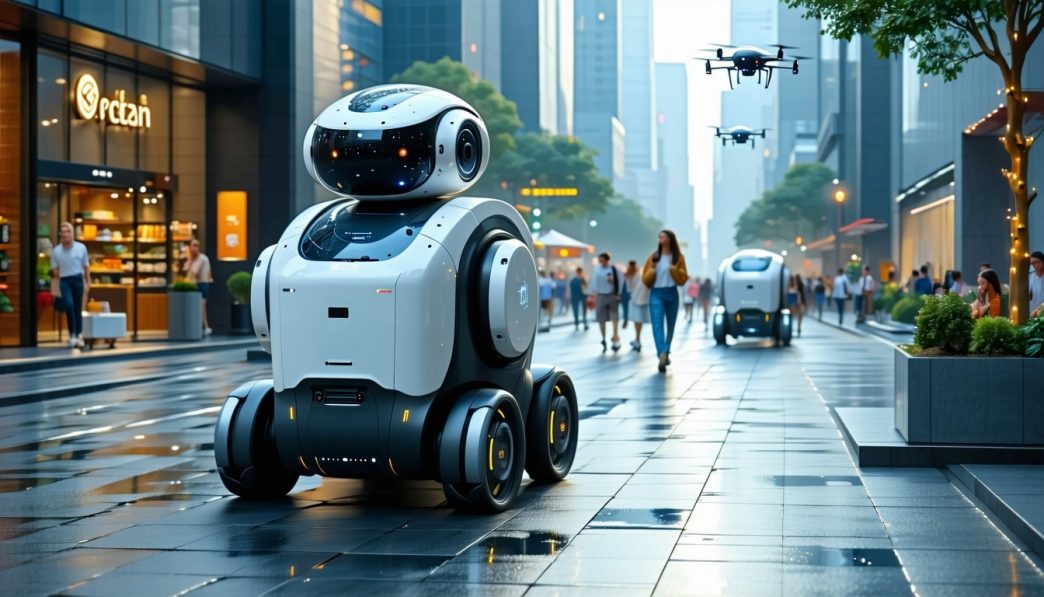
The Rise of Delivery Robots
The landscape of last-mile delivery has undergone significant transformation with the introduction of delivery robots. These autonomous devices are increasingly becoming a part of everyday logistics. Their efficiency and capability to navigate urban environments have captured the interest of consumers, businesses, and tech enthusiasts alike.
Current State of Delivery Robots
Delivery robots are currently deployed in various settings, including urban areas, college campuses, and gated communities. Many of these robots are designed to deliver food, groceries, and packages directly to consumers’ doorsteps. The rise of robots delivering food has led to increased convenience for users, allowing for faster delivery times and reduced human intervention.
| Delivery Type | Current Usage | Notable Features |
|---|---|---|
| Food Delivery | High | Compact design, temperature control |
| Grocery Delivery | Moderate | Larger storage, multiple compartments |
| Package Delivery | Growing | Secure storage, tracking capabilities |
The technology behind these robots has seen progressive advancements, particularly in areas such as autonomous navigation. However, challenges still exist, such as navigating through crowded spaces and different weather conditions. 
Factors Driving the Adoption of Delivery Robots
Several factors are contributing to the growing adoption of robotic delivery systems. Some of these include:
-
Consumer Demand for Convenience: As consumer expectations evolve, there is a high demand for quick and efficient delivery services. Delivery robots provide a reliable alternative to traditional delivery methods, aligning with the lifestyle needs of urban dwellers and tech adopters.
-
Cost Reduction for Businesses: Implementing robots in delivery services can significantly lower labor costs for businesses. Robots can operate longer hours without breaks, thus increasing service efficiency and reducing the overall cost of last-mile logistics.
-
Technological Advancements: Improvements in robotics technology, including artificial intelligence and machine learning, are enhancing the capabilities of delivery robots. This allows for better decision-making and navigation in dynamic environments. For more insights on robotic navigation, read about autonomous navigation for delivery robots.
-
Sustainability Goals: Many companies are looking for eco-friendly delivery options. Delivery robots tend to have a smaller carbon footprint compared to traditional delivery vehicles, aligning with the sustainability initiatives of consumers and businesses.
-
Pandemic Influence: The COVID-19 pandemic has accelerated the need for contactless delivery options. This has given rise to increased interest in automated solutions, leading to a faster acceptance of delivery robots in various sectors.
The future of robot delivery services is bright, as advancements in technology and consumer acceptance continue to drive their integration into society. As these devices become more commonplace, it is essential for stakeholders to understand their implications for logistics and daily life. Explore more about the diverse applications of robots in delivery and service here.
Anticipated Technological Advancements
As the world embraces innovations in delivery services, several technological advancements are expected to significantly shape the future of robot delivery services. Two key areas of advancement are artificial intelligence integration and enhanced navigation systems.
Artificial Intelligence Integration
The integration of artificial intelligence (AI) will play a pivotal role in shaping the next generation of delivery robots. AI will enable these robots to learn from their environments, enhance decision-making capabilities, and optimize delivery routes in real time.
Key features that AI integration will introduce include:
| AI Feature | Benefits |
|---|---|
| Machine Learning | Adapts to varying delivery conditions by learning from data patterns and experiences. |
| Predictive Analytics | Anticipates delivery challenges, such as traffic patterns, to ensure timely arrivals. |
| Improved Interaction | Facilitates better communication with customers and assists in addressing concerns immediately. |
With AI, delivery robots can operate more autonomously, reducing the need for human intervention and saving time. This is particularly beneficial in urban settings, where complex logistics require prompt responses to changing conditions. More information on how robots enhance services is covered in our article on robot delivery and service.
Enhanced Navigation Systems
Navigation systems for delivery robots are evolving rapidly to ensure precise and efficient operations. Enhanced navigation technologies will allow robots to navigate through complex environments with greater accuracy and reliability.
Expected advancements include:
| Navigation Technology | Description |
|---|---|
| LiDAR (Light Detection and Ranging) | Provides 360-degree environmental scanning to identify obstacles and create detailed maps. |
| GPS Integration | Combines global positioning systems with local positioning for improved accuracy in delivery locations. |
| Autonomous Navigation Algorithms | Enables robots to adjust routes dynamically based on real-time obstacles or conditions. |
These navigation improvements are crucial for robots operating in bustling urban areas or mixed-use environments. Enhanced systems will ensure safer and quicker deliveries, addressing the unique demands of urban dwellers. For more insights into the logistics side, visit our article on robots in last mile logistics.
Through AI and advanced navigation technologies, delivery robots will become more effective, ensuring that consumers and businesses enjoy faster, more reliable service.
Evolution of Design and Functionality
The design and functionality of delivery robots are evolving to better meet the needs of consumers and businesses. Two significant trends in this evolution include customization for various delivery needs and increased payload capacity.
Customization for Various Delivery Needs
As the demand for delivery robots grows, customization becomes crucial to address diverse delivery requirements. Different sectors, such as food delivery, grocery services, and logistics, have unique needs that robots must cater to.
Delivery robots can be tailored for specific applications, allowing for enhanced operational efficiency. For instance, robots designed for food delivery may have insulated compartments to maintain temperature, while those serving grocery delivery may include larger storage space. Customizing robots for different environments ensures that they can operate effectively in urban settings, residential neighborhoods, or business districts.
| Application Area | Customization Features |
|---|---|
| Food Delivery | Insulated compartments, trays for drinks |
| Grocery Delivery | Larger storage compartments |
| Logistics and Warehousing | Enhanced navigation and tracking systems |
| Hotel and Office Services | Designed for carrying multiple items |
For more on how robots serve various sectors, refer to our articles on robots delivering food and robots for hotel and office service.
Increased Payload Capacity
Another critical advancement in delivery robot design is the increase in payload capacity. As delivery demands grow, the ability to transport larger quantities of goods becomes essential. Future delivery robots are likely to feature expanded storage solutions to accommodate more items per trip.
Enhancing payload capacity not only improves efficiency but also reduces delivery frequency, which is beneficial for both businesses and consumers. Increased capacity will allow for consolidating deliveries, decreasing traffic congestion and emissions in urban areas.
| Robot Model Type | Current Payload Capacity | Projected Capacity (Next 5 Years) |
|---|---|---|
| Small Delivery | 15 lbs | 30 lbs |
| Medium Delivery | 30 lbs | 60 lbs |
| Large Delivery | 60 lbs | 120 lbs |
For insight into specific implementations of delivery robots and their impact, explore our discussions on grocery delivery robots and robots in last mile logistics.
As delivery robots advance in design and functionality, they promise to create a more efficient and customized experience for consumers and businesses alike.
Regulatory and Ethical Considerations
As delivery robots become more prevalent, significant regulatory and ethical considerations emerge. Addressing these issues is crucial for ensuring the responsible integration of these technologies into daily life.
Addressing Legal Implications
Delivery robots operate in shared spaces, raising legal questions regarding their operation on sidewalks, roads, and private properties. Legislation must adapt to define where and how these robots can function, ensuring that they do not obstruct pedestrians or interfere with traffic.
Key legal aspects to consider include:
| Aspect | Description |
|---|---|
| Liability | Who is responsible in case of accidents involving delivery robots? |
| Licensing | Should delivery robots require specific permits to operate in urban settings? |
| Insurance | What insurance requirements are necessary to cover potential damages? |
Cities and municipalities may need to establish specific guidelines governing robot usage. Clear regulations will support safe operations while promoting innovation in the robot delivery and service sector.
Ensuring Ethical Use of Delivery Robots
Alongside legal matters, ethical considerations play a vital role in the deployment of delivery robots. Developers and operators must focus on responsible practices that prioritize public safety and equity.
Some ethical concerns include:
| Concern | Description |
|---|---|
| Data Privacy | How will delivery robots collect and use consumer data? |
| Job Displacement | What impact will automation have on employment, particularly in delivery sectors? |
| Accessibility | Are robots designed to accommodate all individuals, including those with disabilities? |
Robot deployment strategies must incorporate feedback mechanisms to address public concerns effectively. For instance, understanding community needs can guide the design of robots for different applications, such as robots delivering food or grocery delivery robots.
By focusing on these regulatory and ethical dimensions, stakeholders can foster an environment conducive to innovation while ensuring that the evolution of robot delivery services aligns with societal values and expectations. Through collaborative efforts, businesses, municipalities, and consumers can navigate the complexities of the future of robot delivery services, paving the way for a more efficient and responsible logistics landscape.
Market Penetration and Expansion
As the future of robot delivery services continues to unfold, one of the main focuses will be the effective integration of delivery robots into urban environments and their collaboration with businesses and services.
Integration into Urban Environments
Urban areas present both challenges and opportunities for the integration of delivery robots. The dense populations, narrow streets, and complex layouts require advanced navigation and adaptability from these machines. With ongoing technological advancements, including autonomous navigation for delivery robots, these robots are expected to navigate their surroundings efficiently, making last-mile delivery more accessible.
The growing presence of delivery robots in cities can be reflected in the anticipated deployment statistics over the next five years:
| Year | Estimated Number of Delivery Robots in Urban Areas |
|---|---|
| 2024 | 5,000 |
| 2025 | 20,000 |
| 2026 | 50,000 |
| 2027 | 100,000 |
| 2028 | 250,000 |
This increase indicates a significant expansion and acceptance of robotic delivery technologies within urban settings, improving logistics and convenience for residents. Moreover, the presence of designated pathways and infrastructure will enhance safety and efficiency.
Collaboration with Businesses and Services
Another key aspect of market penetration is the collaboration between delivery robots and various businesses and services. Partnerships with restaurants, grocery stores, and retail chains will likely accelerate the growth of delivery robots. Such collaborations enable businesses to leverage robotic services to facilitate quicker and more efficient delivery options, catering to the demands of consumers who prioritize convenience.
For example, partnerships with grocery delivery robots could transform how local markets operate, allowing customers to receive their groceries directly to their homes within minutes. In addition, robots delivering food from restaurants will streamline the dining experience, allowing customers to enjoy meals without delays.
As businesses integrate robots into their service models, the following benefits are expected:
| Benefit | Description |
|---|---|
| Cost Reduction | Decreased labor costs and improved efficiency. |
| Increased Reach | Ability to deliver to a larger area without additional resources. |
| Enhanced Customer Experience | Quicker service and meeting modern consumer expectations. |
| Innovation Exposure | Businesses gain visibility as innovators, attracting tech-savvy clients. |
The collaborative potential of delivery robots with various sectors, including robots for hotel and office service and restaurant service robots, will further solidify their role in the delivery ecosystem, making these robots an essential part of urban logistics in the coming years.
Consumer Adoption and Expectations
As delivery robots become more prevalent in everyday life, understanding consumer adoption and expectations is crucial for their success. The convenience they offer, the mechanisms for feedback, and the privacy and security concerns surrounding their use will play significant roles in shaping the future of robot delivery services.
Convenience and Speed of Delivery
One of the main attractions of robotic delivery systems is their ability to provide quick and efficient service. Consumers are increasingly seeking solutions that cater to their fast-paced lifestyles. Delivery robots can operate around the clock, providing timely deliveries without the constraints that traditional methods face. The following table highlights some key statistics regarding consumer expectations for delivery speed:
| Delivery Method | Average Delivery Time | Consumer Expectation |
|---|---|---|
| Traditional Delivery Services | 1-3 days | 1 day |
| Drone Delivery | 30-60 minutes | 30 minutes |
| Robot Delivery | 15-30 minutes | 15 minutes |
Robot delivery options, such as those used for grocery delivery robots and robots delivering food, are designed for efficiency, leading to heightened consumer interest.
Feedback Mechanisms for Improvement
Consumers value their input and experience when it comes to delivery services. Providing effective feedback mechanisms allows companies to gather insights and continuously improve their robotic systems. This can involve simple surveys after delivery or real-time feedback options through mobile apps.
A potential feedback loop can include:
- User Ratings – Allowing consumers to rate their delivery experience after each interaction.
- Surveys – Sending follow-up surveys to assess satisfaction levels and identify areas for improvement.
- Service Adjustments – Using feedback data to make real-time adjustments to delivery routes and robot functions.
By involving consumers in the enhancement process, businesses can better align their services with consumer expectations, as seen in robots in last mile logistics.
Privacy and Security Concerns
As delivery robots become more integrated into urban landscapes, privacy and security concerns arise. Consumers are cautious about how their personal data is collected, stored, and used by robotic systems. Transparency in data practices is paramount to build trust between consumers and service providers.
Key aspects related to privacy and security include:
- Data Protection – Ensuring that consumer data used for deliveries, such as addresses and payment information, is encrypted and secured.
- Monitoring – Establishing protocols for how delivery robots interact with consumers and their environment to prevent unauthorized tracking.
- Accidents and Liability – Addressing concerns about potential accidents involving delivery robots, and outlining clear liability agreements to protect consumers.
Understanding these concerns is essential for service providers as they expand their use of technologies like autonomous navigation for delivery robots to ensure that consumer trust is maintained.
By examining these aspects of consumer adoption and expectations, stakeholders in the robot delivery sector can better navigate the challenges and opportunities ahead.


