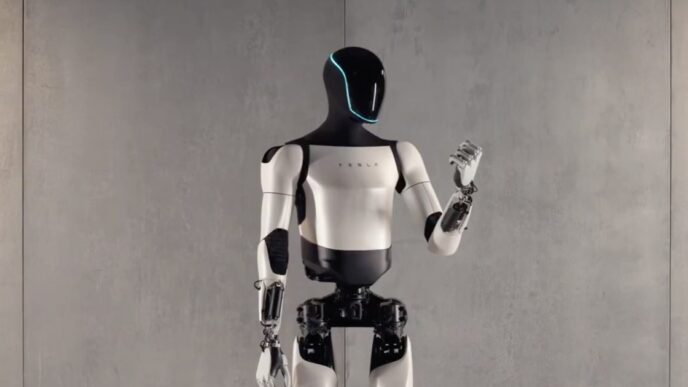
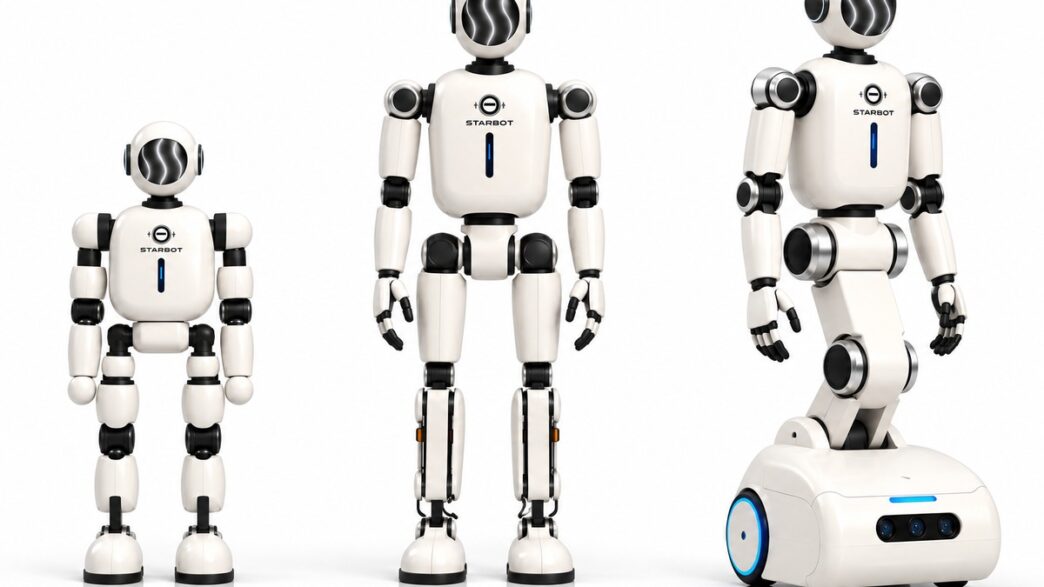
Santa Barbara startup StarBot is selling a roughly 3-foot humanoid for a list price that starts at $7,999. On its site, StarBot lists Spark at that standard price, with introductory pricing from $5,999 for the first 100 confirmed orders, a $200 reservation deposit, and an on-sale date of October 18, 2026. A GlobeNewswire release dated November 4, 2026 framed the same launch as a made-in-America developer humanoid; the company site is the primary source for the numbers below.
That sticker is low for a bipedal humanoid with a public U.S. price tag. It is also incomplete. Taxes, shipping, configuration and delivery timing are quoted separately. The $200 is a deposit, not the full bill. And an October on-sale date is not the same as a delivery date. Here is what StarBot publishes, what it leaves open, and how Spark sits next to other small humanoids with public prices.
- Price StarBot lists: Spark standard from $7,999; first 100 confirmed orders from $5,999; $200 per-unit reservation deposit credited to the final price.
- Specs StarBot lists: about 3 ft / 90 cm, 35 lb, 22 degrees of freedom, 24 V battery, up to 3 hours runtime, about 40 minutes to charge; “100% Made in USA” on the company site.
- Status: site says on sale October 18, 2026; reservations open; final configuration confirmed before purchase.
- The catch: taxes, shipping, delivery timing and support are separate; deposit is not full payment; on-sale is not a ship date; software/curriculum details and independent manufacturing checks are thin on the public pages.
What StarBot says Spark is for
StarBot positions Spark as a compact embodied-AI platform for youth robotics education, programming practice, AI projects and supervised research. The company’s home page groups it with Astra, a 5-foot, 23-DoF research humanoid listed from $9,999, and Flex, a 5-foot-9 foldable wheeled service robot whose availability is still “to be announced.” Spark is the smallest of the three 2026 platforms and the one aimed at classrooms and developers rather than full-size labs or restaurant floors.
Size is the product. At about 90 centimeters and 35 pounds, Spark is closer to a child-height education robot than to warehouse humanoids from Figure, Agility or Unitree’s taller models. StarBot’s site calls out 22 degrees of freedom for full-body motion. A DoF count alone does not tell you hand dexterity, payload or how joints are split among legs, arms and neck; StarBot has not published that breakdown on the public Spark card. For a plain-language walkthrough of DoF and related specs, see our humanoid robot glossary.
StarBot’s own timeline says the company started on a Unitree G1 as an R&D platform in January 2025, launched a wheeled Nova service robot in December 2025, released Astra in July 2026, and released Spark and Flex in September 2026. That history matters because Spark is a new brand’s education skus, not a decade-old platform with a long public bug list.
What the $7,999 price leaves out
StarBot’s reservation block is unusually clear about the gaps. The $200 per-unit payment “reserves your place in the order process and is credited toward the final purchase price.” It is not the robot paid in full. The first-100 offer is for customers “whose orders are confirmed by StarBot,” at introductory pricing from $5,999, “subject to the selected version, configuration, and final purchase agreement.” Taxes, shipping, delivery timing and support terms are “quoted separately.” Final configuration and included capabilities are confirmed before purchase.
Those lines are doing real work. A school that budgets $7,999 for one robot still needs a quote for shipping and tax, and it may need more than one unit if a classroom wants a robot per small group. The introductory $5,999 helps the first tranche of buyers; it does not change the classroom math for a full lab. The October 18, 2026 on-sale date tells you when StarBot says sales opened. It does not guarantee when a reserved unit ships. StarBot will confirm delivery timing before the order is finalized, which is the right process note and also the reason buyers should not treat on-sale as a delivery calendar.
Secondary coverage after the November 4 wire, including The Robotics Media and Robot24, repeated StarBot’s U.S.-made claim and the Spark price. GlobeNewswire’s page for the release returned 403 from our build environment, so we treat the company site as the primary source and the wire date as reported by those outlets. Where secondary pieces also cite an earlier Nova price of $4,999 plus a $499 monthly fee and “more than 20,000” people served, that Nova pricing is not on the public Spark/Astra cards we checked on November 5; StarBot’s site describes Nova as its first-generation wheeled service robot with height, weight and battery figures, but without those dollar amounts on the pages we opened. We are not repeating Nova’s dollar figures as confirmed site prices.
How Spark compares with other public small-humanoid prices
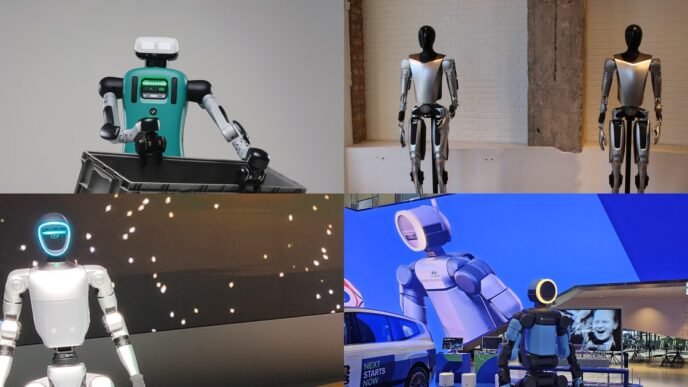
Public list prices for small humanoids are still rare. On Unitree’s own store, as we tracked in our Unitree G1 / R1 / H2 price sheet, the R1 Air lists from $4,900, the R1 from $5,900 and the G1 from $13,500, before tax and shipping. Faraday Future’s FF Nova listed at $2,490 for a much smaller 49.7 cm developer unit. AiMOGA’s Mobo is a home preorder with a deposit structure, not a walk-up humanoid. Full-size platforms such as Figure 03 and 1X NEO still leave major price or ship details unpublished, as our 2026 price hub and NEO status sheet spell out.
| Robot | Approx. size | Public price signal | What the list leaves out |
|---|---|---|---|
| StarBot Spark | ~3 ft / 90 cm, 35 lb (StarBot) | From $7,999; first 100 from $5,999; $200 deposit | Tax, shipping, config, delivery timing; deposit ≠ full payment |
| Unitree R1 / R1 Air | Unitree’s small humanoid line | R1 Air from $4,900; R1 from $5,900 (Unitree store) | Tax, shipping, EDU quotes, stock messages |
| Unitree G1 | Unitree mid-size humanoid | From $13,500 (Unitree store) | Tax, shipping, EDU; taller/heavier class than Spark |
| FF Nova | 49.7 cm, 2.8 kg | $2,490 list (Faraday Future / FFR) | Much smaller; invitation-era limits; OEM risk notes |
On raw sticker price, Spark sits above Unitree’s cheapest R1 Air and below the G1. The comparison is imperfect: Unitree’s store is a long-running catalog with EDU SKUs and changing stock banners, while StarBot is taking deposits against a configuration it confirms later. Spark’s pitch is U.S. manufacturing plus an education/developer lane. Unitree’s pitch is a deep product stack with public prices that still exclude tax and shipping. Buyers comparing them should match height, DoF detail, software tools and support terms, not just the headline dollar figure.
The “Made in USA” claim, labeled as StarBot’s
StarBot’s site puts “100% Made in USA” in the hero section and describes itself as a Santa Barbara robotics company. Secondary launch stories call Spark North America’s first U.S.-made developer humanoid in its size and price class. That wording is a company positioning claim. The public pages we opened do not break out which components (motors, batteries, chips, fasteners) are domestic versus imported, and they do not cite an independent origin audit. Treat “made in America” as StarBot’s statement until a bill of materials or third-party check appears.
StarBot also hosts demo videos on its own site (self-hosted MP4s for platform and full demos). There is no official YouTube upload we could verify with oEmbed for an in-article embed, so we link the company site instead of dropping an unverified re-upload. Instagram, LinkedIn and TikTok accounts are linked from the footer for anyone who wants the social demos.
What is still missing before a school or lab should buy
Beyond price and shipping, the public Spark materials are light on the details teachers and lab managers usually ask for first:
- Software and curriculum. StarBot says programming practice and AI projects are in scope. It does not publish a curriculum pack, supported languages, or an SDK download page next to the price card.
- Hands and payload. 22 DoF is listed; finger count, grip force and payload are not on the Spark summary we checked.
- Safety and supervision. The product is aimed at youth education and “supervised” research. Child-safety testing, age guidance and required adult oversight are not spelled out on the reservation page.
- Support terms. Warranty length, spare-parts pricing and turnaround are among the items StarBot says are confirmed before final purchase.
None of those gaps kill the story. They do mean a $7,999 headline is a starting quote, not a landed classroom cost. For companion and education robots that already have more public order clutter, UBTech’s U1 / UWORLD pricing notes show how messy “orders versus deliveries” can get once a consumer-facing humanoid leaves the launch post.
What to watch next
Three signals would make Spark easier to judge. First, a public configuration sheet that lists hand DoF, payload, included software and warranty. Second, a clear ship window for reserved units, not only the October 18 on-sale date. Third, any independent look at the U.S. manufacturing claim. Until then, StarBot Spark is a named-company price story with an unusually frank deposit page and a lot still to confirm before the remaining balance is due.
Frequently asked questions
How much does the StarBot Spark humanoid cost?
StarBot lists a standard price from $7,999 and introductory pricing from $5,999 for the first 100 confirmed orders. A $200 per-unit reservation deposit is credited toward the final purchase. Taxes, shipping, configuration and delivery timing are quoted separately.
What are the StarBot Spark specs?
On StarBot’s site, Spark is about 3 feet tall, weighs 35 pounds, has 22 degrees of freedom, uses a 24 V battery, runs up to 3 hours and charges in about 40 minutes. Final configuration is confirmed before purchase.
Is StarBot Spark available to buy now?
StarBot says Spark went on sale October 18, 2026, and the site takes $200 reservations. On-sale is not the same as a guaranteed delivery date; StarBot says delivery timing is confirmed before the order is finalized.
Is Spark the same as StarBot Nova?
No. Spark is the compact bipedal education and research platform. Nova is StarBot’s earlier wheeled service robot, described separately on the company site with its own height, weight and battery figures.
Is StarBot Spark made in the United States?
StarBot’s site says “100% Made in USA.” That is the company’s claim. The public pages we checked do not publish a component-level bill of materials or an independent origin audit.
Sources
- StarBot USA: company site (Spark / Astra / Flex prices, specs, reservation terms, Made in USA claim)
- GlobeNewswire: StarBot Spark launch release, November 4, 2026 (page returned 403 from our build host; date and headline confirmed via secondary coverage)
- The Robotics Media: StarBot Spark launch report, November 4, 2026
- Robot24: StarBot Spark launch report, November 5, 2026
- Unitree: store and product pages used for R1 / G1 list-price comparison (see our Unitree price article)
All sources accessed November 5, 2026.
Last updated: November 5, 2026. To report an error, see our corrections page. Articles are drafted with AI assistance and reviewed and edited by an editor; see our editorial policy.