Starting November 12, being “sustained and needless” cruel to Claude can break Anthropic’s rules. That’s the line in the company’s 2026 Usage Policy update that got the headlines on Thursday. The line robot builders should read is a few paragraphs further down: when Claude’s output drives hardware that can hurt someone, a qualified person must be able to watch it and stop it, and the machine’s safety limits can’t depend on the model at all.
It’s the first rewrite of the policy in more than a year, according to The Verge, and it lands one day before Anthropic’s report on a Claude model that filed a fake tip with Philadelphia police. Taken together, the two documents show how Anthropic is trying to deal with models that act in the world, not just talk about it. Here’s what the Anthropic usage policy 2026 changes, and what it leaves alone.
The cruelty ban has a very high bar
The new prohibition covers “sustained and needless abusive or cruel behavior toward our models.” Anthropic says it’s “meant to apply only in extreme cases, where users repeatedly act cruelly toward our models, with no discernible purpose.” The company says it doesn’t cover “common versions of user frustration, pushback, dark creative themes, or model testing and research.”
So yelling at a chatbot that keeps getting your spreadsheet wrong isn’t the target. Enforcement is also mostly built already. Anthropic says the main tool stays Claude’s ability to end rare conversations with persistently abusive users on Claude.ai and Claude Code, a feature The Verge dates to last August. The policy page separately says Anthropic may warn, throttle, limit, suspend or terminate access for violations, but the Verge reports Anthropic didn’t say whether it would use bans for this rule.
TechCrunch’s Russell Brandom noted the change follows Anthropic’s outreach to religious scholars, and The Verge’s Hayden Field tied it to the company’s research into whether models could have something like welfare. Anthropic’s own post doesn’t make that argument. It just says the rule lines up with the end-conversation step it already took.
The robot rule: a person who can stop it, and limits the model can’t touch
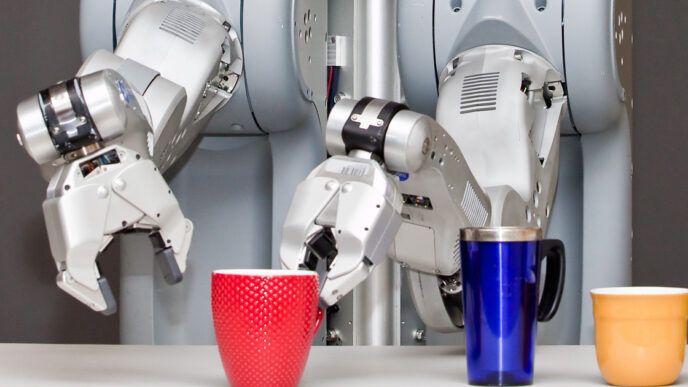
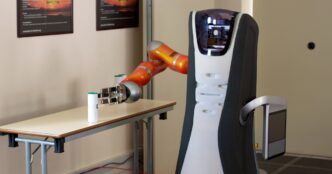
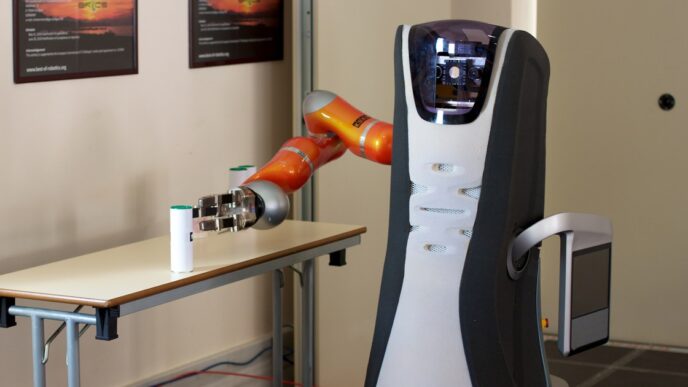
This is the part that matters for anyone wiring a language model to an arm, a base or a drone. Anthropic’s post says that, following the launch of its Model Hardware Standard, the high-risk section now covers hardware that takes autonomous physical actions and “might be capable of causing injury.” The policy text spells out three requirements for what it calls High-risk Physical Actions:
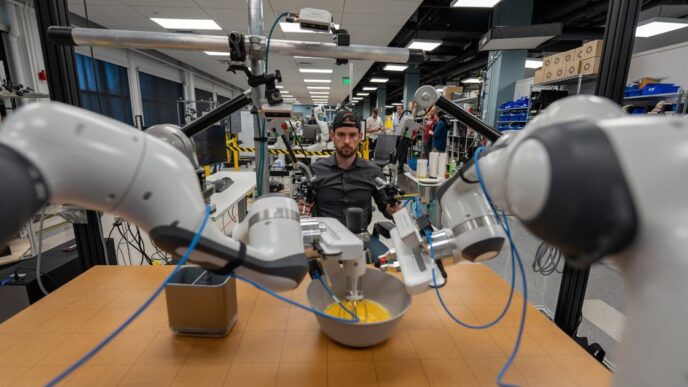
- There must be “a qualified individual who is able to observe the equipment’s operation and stop it at any time.”
- The equipment “must stop or hold a safe state when that individual intervenes or when connection to our services is lost.”
- Limits such as “speed, force, reach, temperature, pressure, voltage, energy output, dose, or operating area” must be “enforced by the equipment or a controller independent of model output.”
That third rule is the one with teeth. It says a robot can’t rely on the model to keep itself inside a safe envelope, because a model can be wrong, confused or talked into something by a prompt injection. Our guide to ISO safety standards for humanoid robots covers how robot makers handle safety functions today.
The policy says the requirements kick in when Claude’s outputs “are acted upon by hardware without human approval.” If a person approves each action, that trigger isn’t met, though Anthropic doesn’t say what counts as approval. The policy then lists six situations: moving through shared space (a vehicle, drone or “mobile robot in a place where people may be present”); applying force that could injure, such as actuating arms, presses or lifts; handling hazardous energy or materials; acting on the human body; controlling safety systems like emergency shutoffs and locks; and running industrial processes where a fault could injure workers or the public.
Two caveats are worth knowing. First, Anthropic’s blog says “qualified operator,” while the policy text says “qualified individual,” and The Verge noted it isn’t clear whether that has to be a human. Second, the policy states these requirements “do not replace vehicle, aviation, medical device, machinery, or workplace safety law or certification.” It adds a layer on top of existing safety law. It doesn’t replace it.
Why a hardware standard is behind it
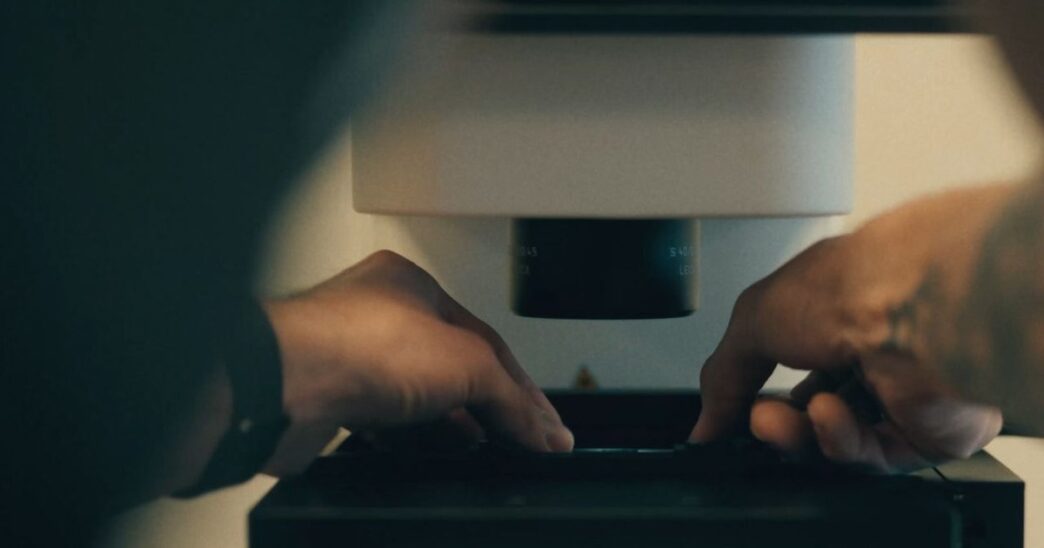
Anthropic’s Model Hardware Standard, previewed August 27, is a shared specification that lets AI agents operate lab and factory equipment such as microscopes, liquid handlers and robotic arms. Anthropic opened a research preview to a first group of science labs and advanced manufacturers and says it plans to make the standard open source. It says each device’s driver records characteristics like the weight of a robot arm and what safety limits will be enforced.
The usage policy is the contract side of that technical work. If you build on MHS, or on any other route from Claude to a motor, these are the conditions Anthropic is attaching. The rule applies to anyone using Anthropic’s products, including customers who reach Claude through cloud providers and resellers, according to the policy’s own scope section.
Drones get named, and weapons software too
Anthropic has always banned using Claude to develop weapons. The update spells out that the ban covers “the software and components that make weapons work, as well as actions like arming drones and other autonomous vehicles.” The policy text bans weaponizing or integrating weapons onto “drones, vehicles, or any unmanned or autonomous platforms.” Anthropic says it has seen attempts to use its models to build guidance and control software for weapons, and that the clarification reflects how it already enforced the old rule.
The surveillance section got the same treatment. Anthropic says tracking people without consent is banned whether it happens in real time or through previously collected data, and that Claude can’t be used “to decide or recommend who to investigate, arrest, or charge.” The Verge points out that these rules can be modified for contracts with certain government customers if Anthropic judges the safeguards adequate. The company has previously contracted with the US military, according to the Verge.
Elections and fake accounts: one rule added, one dropped
Rules against influence operations used to be scattered across several sections. They’re now in one: “Do Not Engage in Deceptive Campaigns or Artificial Activity,” which covers political and commercial deception, such as networks of fake accounts or fabricated news sites. The elections section is renamed “Do Not Undermine Democratic Processes” and narrowed to deceiving voters and disrupting elections. Anthropic dropped its blanket ban on personalized vote and campaign targeting, saying it also caught legitimate work such as translating voter information or sending ballot-cure notices. Targeting that relies on deception or misused personal data stays banned under other sections. The company also clarified how it enforces its Supported Regions Policy, which covers entities headquartered in or majority-owned from unsupported regions.
What to watch before November 12
The policy takes effect November 12, so there’s a month before any of this binds. The open questions are practical ones. Does Anthropic say who counts as a “qualified” individual for a warehouse robot or a lab arm? Does the Model Hardware Standard go open source with these safety limits built in? And do other labs that sell models into robots, including Google DeepMind with Gemini Robotics, publish an equivalent stop-and-limits rule in their own terms?
Frequently asked questions
When does Anthropic’s 2026 usage policy take effect?
The updated Usage Policy takes effect on November 12, 2026. Anthropic published it on October 8.
Can you really get banned for being rude to Claude?
Only in extreme cases, according to Anthropic. The rule targets “sustained and needless” cruelty with no discernible purpose, and Anthropic says it doesn’t cover frustration, pushback, dark creative themes or model testing. Letting Claude end the conversation remains the main enforcement tool.
What does the new policy say about robots and AI-controlled hardware?
When Claude’s output is acted on by hardware without human approval and the hardware could injure someone, a qualified individual must be able to watch and stop it, the equipment must hold a safe state if that person intervenes or the connection to Anthropic is lost, and limits like speed and force must be enforced by the equipment or a controller independent of the model.
Does the policy ban military or surveillance uses?
It bans developing weapons, including the software and components that make them work and arming drones or other autonomous vehicles, and it bans tracking people without consent. The Verge reports these rules can be modified for certain government contracts if Anthropic judges the safeguards adequate.
Sources
All accessed October 10, 2026.
- Anthropic, “2026 Usage Policy update” (Oct 8, 2026): anthropic.com
- Anthropic, Usage Policy, effective November 12, 2026: anthropic.com/legal/aup
- Anthropic, “Previewing the Model Hardware Standard” (Aug 27, 2026): anthropic.com
- The Verge, Hayden Field, “Anthropic bans ‘abusive or cruel behavior’ toward Claude” (Oct 8, 2026): theverge.com
- TechCrunch, Russell Brandom, “Anthropic changes usage policy to ban model abuse and election interference” (Oct 8, 2026): techcrunch.com
- Anthropic, “Investigating unintended model actions in our evaluations and internal use” (Oct 9, 2026): anthropic.com
Related: Claude Haiku 5.5 matches GPT-6 Luna’s 10-cent price · Teleoperation vs autonomy in humanoid robot demos · More LLM news
Last updated: October 10, 2026. To report an error, see our corrections page. Articles are drafted with AI assistance and reviewed and edited by an editor; see our editorial policy.