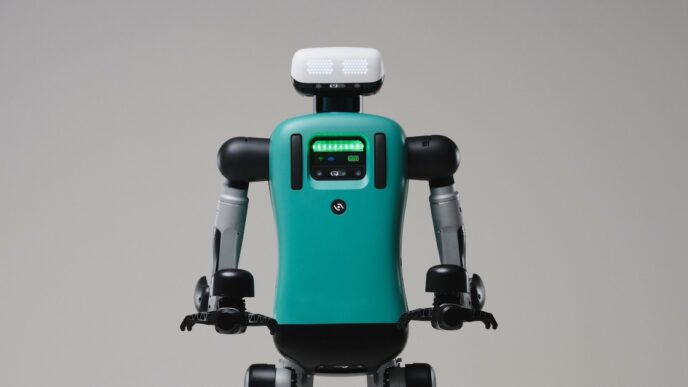
NVIDIA doesn’t build humanoid robots. As of May 31, 2026, though, it does publish a reference design for one. The company announced an Isaac GR00T reference humanoid for academic research, and Unitree quickly said its H2 Plus is built on that stack. It was the clearest sign yet that NVIDIA wants GR00T to be the default software layer for other people’s humanoids.
That’s also why GR00T is so easy to misread. NVIDIA Isaac GR00T isn’t a finished robot brain that ships inside Digit, Atlas or Figure. It’s a developer platform: models, tools and now a hardware blueprint. Knowing which is which matters if you’re evaluating a vendor that says it “uses GR00T.”
What NVIDIA Isaac GR00T actually is
At its core, GR00T is NVIDIA’s research and developer platform for generalist robot policies. These are AI models meant to handle many tasks, especially vision-language-action (VLA) models that take camera input and an instruction and output robot actions. If that term is new, start with our VLA explainer.
The current model release is GR00T N1.7. NVIDIA and its Hugging Face materials describe it as an open, commercially licensed VLA from the April 2026 timeframe, with paths for fine-tuning it to custom robot bodies. Around the models, NVIDIA positions GR00T as plugging into its Isaac tools and Jetson computers, which is where the business logic lives. Every GR00T developer is a potential NVIDIA hardware customer.
“Open” here has a specific meaning. You can download the weights and code from NVIDIA’s Isaac-GR00T repository and Hugging Face, but you should read the current model card for licence terms and supported embodiments before deploying anything.
The reference humanoid, and where Unitree comes in
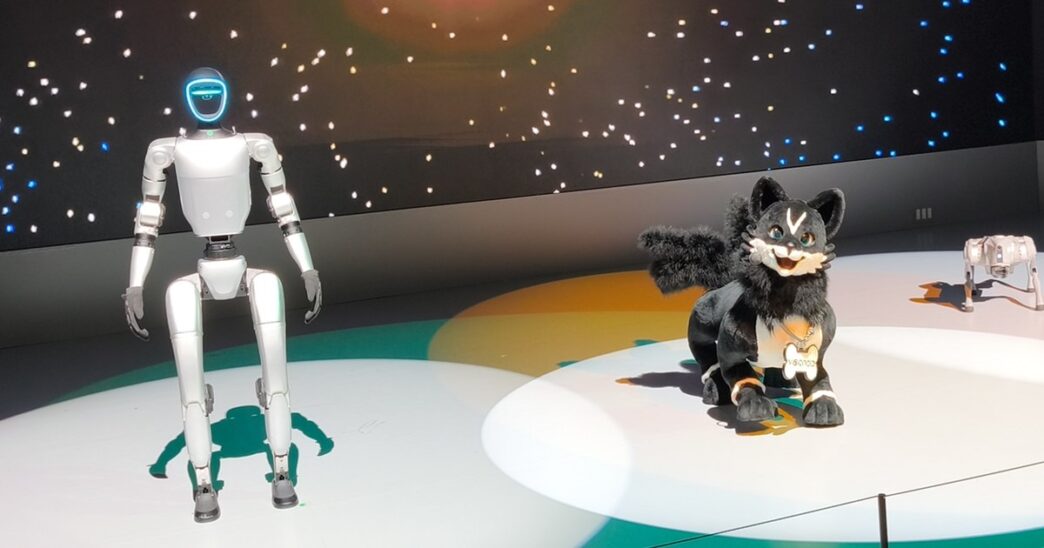
The May 31 announcement added hardware to the story. NVIDIA’s Isaac GR00T reference humanoid is aimed at academic researchers. Unitree’s parallel release describes the H2 Plus as built on that reference stack. It pairs an H2-class body with specified hands and compute, and Unitree uses late-2026 availability language.
Treat the H2 Plus details as company claims for now. When we checked Unitree’s US store data around October 7, 2026, it showed the H2 Plus as a $100,000 contact-sales listing rather than a buy-now product. Check the store again before quoting that figure; it may change by the time you read this.
What “built on GR00T” doesn’t tell you
Three things are easy to assume and aren’t true by default:
- It doesn’t mean any particular factory humanoid, whether Digit, Atlas, Apollo or Figure, runs GR00T in production.
- It isn’t a substitute for task-specific safety certification. A model release isn’t a certified controller.
- It isn’t proof of full autonomy. Benchmarks and demos are chosen by the vendor until someone else replicates them.
How GR00T compares with other 2026 robot models
The useful comparison isn’t which model is “smartest.” Nobody has published a fair head-to-head. It’s how much each maker lets you see and use:
| Stack | Open weights? | Tied hardware | Where the details come from |
|---|---|---|---|
| NVIDIA Isaac GR00T / N1.7 | Described as open and commercially licensed (check model card) | Reference humanoid; Unitree H2 Plus marketing | NVIDIA, Hugging Face and Unitree releases |
| Google DeepMind Gemini Robotics | No public weight release for general use | Partner robots (Apptronik says it supplies data) | DeepMind posts |
| Figure Helix | No | Figure humanoids | Figure posts |
| Unitree UnifoLM-WLA-1.0 | Weights on Hugging Face (verify licence) | Unitree robots, per training claims | Hugging Face and GitHub |
For a buyer, the same questions apply to all of them. What’s the licence, which robot bodies does it support, how many real-robot hours went into training, and what are the measured success rates? Our robot foundation model explainer turns that into a checklist.
The thing to watch next is whether the reference humanoid spreads beyond Unitree. If a second or third hardware maker ships a GR00T-based robot with a public price, NVIDIA’s bet on becoming the default humanoid software layer starts to look real. If H2 Plus stays a $100,000 contact-sales listing, the reference design is mostly a research tool.
Frequently asked questions
What is NVIDIA Isaac GR00T?
It’s NVIDIA’s humanoid-focused robot foundation-model platform. It includes vision-language-action models such as GR00T N1.7 and developer tools in the Isaac ecosystem.
What is the GR00T reference humanoid?
NVIDIA announced it on May 31, 2026 as a reference humanoid design for academic research. Unitree markets its H2 Plus as built on that Isaac GR00T reference stack.
Can I download GR00T?
Yes, for the model releases. NVIDIA and Hugging Face describe releases such as N1.7 as open and commercially licensed. Check the current model card for licence terms and supported robots before you deploy it.
Sources
- NVIDIA Newsroom: Isaac GR00T reference humanoid announcement (May 31, 2026)
- NVIDIA and Hugging Face materials for GR00T N1.7
- Unitree / PR Newswire: H2 Plus as an NVIDIA Isaac GR00T reference humanoid
- GitHub: NVIDIA/Isaac-GR00T
Last updated: October 7, 2026. To report an error, see our corrections page. Articles are drafted with AI assistance and reviewed and edited by an editor; see our editorial policy.