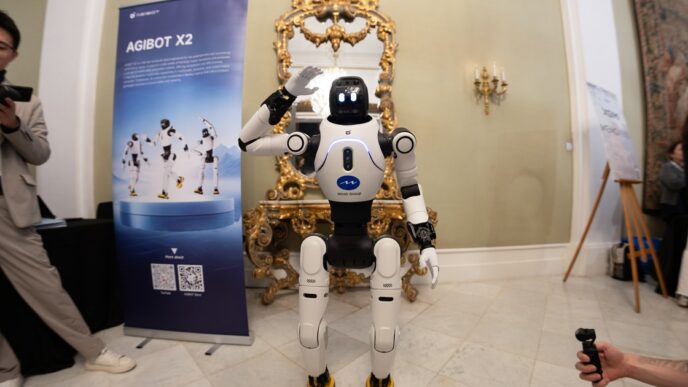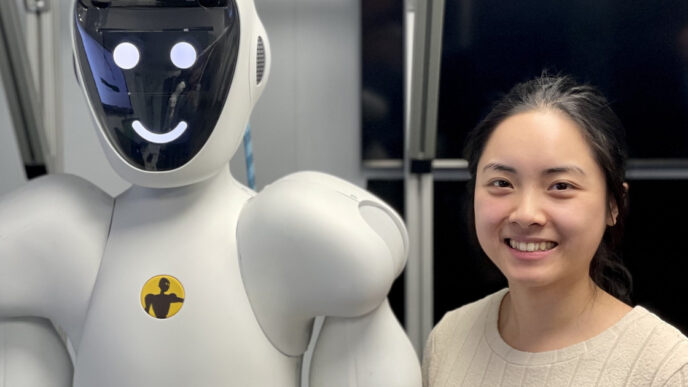
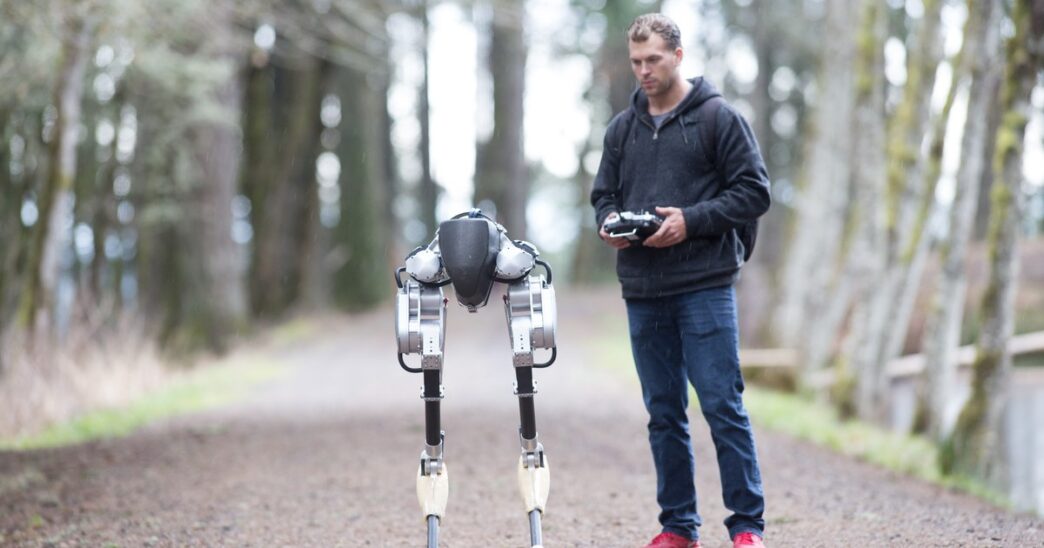
There’s no ISO certificate that says “safe humanoid.” The standard written for robots like Digit and Atlas, ISO 25785-1, covers dynamically stable industrial mobile robots, meaning machines on legs, wheels or other locomotion that have to actively keep their balance. As of October 7, 2026, ISO’s catalogue still lists it as a committee draft.
That leaves buyers in an awkward spot. Humanoid robots inherit decades of industrial robot safety practice, and they break several of its assumptions. Legs, mobile bases, force-controlled arms and AI policies don’t fit neatly inside a fenced robot cell. So the job falls to you: map the robot onto the standards that do exist, and make the vendor show its work. Here’s the short list of humanoid robot safety standards that should come up in any request for proposal, and what each one can and can’t tell you.
The standards that apply today, and their blind spots
| Standard family | Why it comes up | The humanoid caveat |
|---|---|---|
| ISO 10218 (industrial robots) / ANSI/RIA R15.06 | Baseline industrial robot safety; ISO 10218-1:2025 is the current edition of Part 1 | Written around traditional arms; a mobile humanoid needs extra analysis |
| ISO/TS 15066 (collaborative robots) | Power and force limiting, pain thresholds, collaborative modes | Useful concepts, but not a free pass for a walking robot in open aisles |
| ISO 3691-4 / ANSI B56 (driverless industrial trucks) and AMR guidance | Traffic rules for mobile robots | Wheeled AMRs aren’t bipedal humanoids, but the aisle-management ideas carry over |
| ISO 13849 / IEC 62061 | Performance of safety-related control systems | Ask for PL or SIL ratings on e-stops, speed limits and perception-triggered stops |
| EU Machinery Regulation, regional CE / UKCA marks | Market access | Jurisdiction-specific; get competent counsel |
The pattern across that table is the point. Each standard covers a piece of a humanoid: the arm, the controller, the mobile base, the market. None covers the whole walking, grasping, learning machine in a shared space. That’s why a site risk assessment still does the heavy lifting.
For how makers build the safety systems themselves (sensing, stops, soft covers), see our humanoid robot safety systems explainer. And don’t confuse any of this with US telecom rules. The FCC Covered List is about supply chains and equipment authorization, not machinery safety.
Six questions to make every vendor answer in writing
- Which standards, and which editions, is this specific model designed to meet?
- Is there a third-party certificate, or only a self-declaration?
- What validated speed-and-separation or power-and-force mode is used for work near people?
- What happens when perception fails? Does the robot default to a safe state?
- Who’s the integrator of record for our site?
- What teleoperation mode exists, and how was it risk-assessed?
Answers like “we follow ISO best practice” aren’t answers. You want document names, edition years, and the name of whoever signed off.
What’s still unsettled
Three gaps matter most right now. First, there’s no single global certificate for “humanoid walking in a retail aisle” that replaces a site risk assessment, and the draft that comes closest, ISO 25785-1, isn’t published. Second, AI policy updates can change how a robot behaves after it’s been assessed, so your contract needs change-control language for software and model updates. Third, home humanoids such as 1X’s NEO raise different product-safety and privacy questions than factory cells. Industrial standards don’t map onto a living room.
What to watch: the ISO 25785-1 record moving from committee draft to a published standard. Until it does, any vendor claiming its humanoid is “certified safe” should be able to tell you exactly which existing standard it means, and that’s the question to ask first.
Frequently asked questions
Is there an ISO standard specifically for humanoid robots?
Not a finished one. ISO 25785-1, for dynamically stable industrial mobile robots including legged ones, is still a committee draft. Buyers usually map humanoids onto existing industrial, collaborative and mobile robot standards, plus a site-specific risk assessment.
Does ISO/TS 15066 make a walking humanoid “collaborative”?
No. ISO/TS 15066 informs collaborative operation concepts, but a bipedal robot moving through open spaces still needs a full risk assessment and appropriate controls.
Are FCC Covered List rules the same as ISO safety standards?
No. The FCC Covered List is about telecom supply chains and equipment authorization, not machinery safety certification.
Sources
- ISO 10218-1:2025 catalogue entry: iso.org/standard/73933.html (checked Oct 7, 2026)
- ISO/CD 25785-1 catalogue entry (committee draft): iso.org/standard/91469.html (checked Oct 7, 2026)
- ISO 10218, ISO/TS 15066, ISO 13849 overview pages (ISO store and national adoptions)
- ANSI/RIA R15.06 materials
- Vendor safety white papers, treated as claims until certificates are produced
Last updated: October 7, 2026. To report an error, see our corrections page. Articles are drafted with AI assistance and reviewed and edited by an editor; see our editorial policy.