


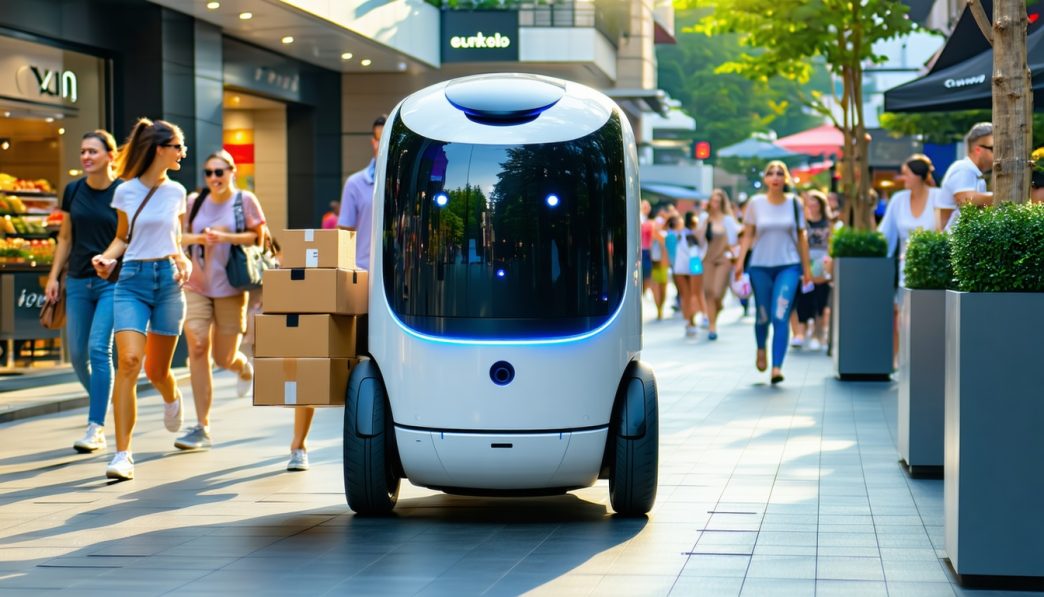
Revolutionizing Last Mile Logistics
The Role of Delivery Robots in Last Mile Logistics
Delivery robots are becoming integral to last mile logistics, which refers to the transportation of goods from a distribution center to the final customer. These machines enhance efficiency by helping businesses meet consumer demands for faster and more convenient delivery options. They navigate urban environments, optimized for direct routes, ensuring timely arrival of packages.
The use of delivery robots can significantly reduce operational costs associated with traditional delivery methods. Businesses can automate deliveries, allowing human resources to focus on more complex tasks. This shift not only streamlines logistics operations but also improves overall productivity.
Benefits of Implementing Delivery Robots
Implementing robot delivery services offers several advantages for businesses and customers alike. The benefits include: 
| Benefit | Description |
|---|---|
| Cost Efficiency | Reduces labor costs and minimizes dependency on human drivers. |
| Speed of Delivery | Provides quicker deliveries, enhancing customer satisfaction. |
| 24/7 Availability | Operates around the clock, catering to the needs of customers at any time. |
| Increased Capacity | Capable of delivering multiple packages simultaneously, improving service rates. |
| Environmental Impact | Reduces carbon footprint through lower emissions compared to traditional vehicles. |
These robots are designed to manage various delivery tasks across different sectors, including e-commerce, food service, and retail. As more businesses recognize these benefits, the adoption of delivery robots continues to grow, fostering innovation and efficiency in last mile logistics. To further explore the role of robots in various industries, consider checking our articles on service and utility robots and robots in retail customer service.
Types of Delivery Robots
Delivery robots play a pivotal role in modern logistics, enhancing efficiency and convenience, especially in the last mile delivery process. There are three main types of delivery robots, each designed to address specific needs and environments.
Ground-Based Robots
Ground-based delivery robots are automated units that navigate sidewalks and streets to deliver packages. These robots are often equipped with sensors and cameras to navigate safely and avoid obstacles. They have a compact design, enabling them to maneuver in urban and suburban settings.
| Feature | Description |
|---|---|
| Average Speed | 3–5 mph |
| Payload Capacity | 20–30 lbs |
| Typical Range | 2–5 miles |
Ground-based robots can operate in both residential and commercial areas, making them suitable for delivering groceries or small packages. For more insights on various service robots, visit our article on service and utility robots.
Aerial Delivery Drones
Aerial delivery drones are flying units designed to transport goods over longer distances and avoid ground obstacles. These drones are capable of reaching rooftops and remote locations that may be challenging for ground delivery methods.
| Feature | Description |
|---|---|
| Average Speed | 30–50 mph |
| Payload Capacity | 2–5 lbs |
| Typical Range | Up to 10 miles |
Due to their ability to bypass traffic and other ground-level issues, aerial delivery drones are increasingly utilized for urgent deliveries, such as medical supplies. An example of their application can be found in our coverage of robot hotel staff.
Wheeled Delivery Carts
Wheeled delivery carts are hybrid devices featuring both robotic and manual controls. These carts are often used in controlled environments such as hospitals or large commercial spaces. They assist staff by transporting items efficiently within designated areas.
| Feature | Description |
|---|---|
| Average Speed | 2–4 mph |
| Payload Capacity | 50–100 lbs |
| Typical Range | Varies by environment |
Wheeled delivery carts offer a cost-effective solution for moving larger items, minimizing the physical burden on staff. To learn more about other types of robots enhancing efficiency, refer to our article on warehouse utility robots.
Each type of delivery robot offers unique advantages suited for different delivery challenges, significantly improving logistics efficiency in various sectors, from e-commerce to healthcare.
How Delivery Robots Work
Understanding the inner workings of delivery robots is essential for grasping their impact on logistics and service industries. This section covers the navigation systems, payload capacity, delivery range, and safety features that define these innovative machines.
Navigation Systems
Delivery robots utilize a variety of navigation technologies to traverse their environments effectively. Common systems include:
- GPS (Global Positioning System): Provides general location data for outdoor travel.
- Lidar (Light Detection and Ranging): Uses laser light to create a 3D map of surroundings, essential for obstacle detection.
- Cameras and Computer Vision: Facilitate real-time object recognition to navigate complex environments.
- Inertial Measurement Units (IMUs): Helps maintain stability and orientation during movement.
By combining these technologies, delivery robots can navigate efficiently, avoid obstacles, and deliver packages accurately.
Payload Capacity and Delivery Range
The payload capacity and delivery range of robots vary significantly depending on their design. Below is a table detailing the typical specifications of different types of delivery robots:
| Robot Type | Payload Capacity (lbs) | Delivery Range (miles) |
|---|---|---|
| Ground-Based Robots | 10 – 30 | 2 – 5 |
| Aerial Delivery Drones | 5 – 10 | 1 – 3 |
| Wheeled Delivery Carts | 20 – 50 | 5 – 10 |
Payload capacity determines how much cargo a robot can carry, while delivery range indicates how far it can travel before needing to return or recharge. This information is crucial for businesses that rely on robot delivery services.
Safety Features
Safety is a primary concern for the deployment of delivery robots. Common safety features include:
- Obstacle Detection Sensors: Ensure the robot can navigate around pedestrians, vehicles, and other obstacles safely.
- Emergency Stop Mechanisms: Allow operators to halt the robot’s operation immediately if necessary.
- LED Lights and Sound Alerts: Enhance visibility and awareness in public spaces, notifying people of the robot’s presence.
- Speed Regulation: Robots adjust their speed based on environmental conditions and obstacles to prevent accidents.
These safety measures help in fostering public acceptance while ensuring reliable operations in various environments. For more insights into different types of robots that assist in various tasks, explore our articles on service and utility robots and home utility robots.
Use Cases of Delivery Robots
Delivery robots are proving to be transformative in various sectors, optimizing the way goods reach consumers. Their applications span from e-commerce to healthcare, providing effective solutions to meet the growing demand for convenience and efficiency.
E-commerce Deliveries
The e-commerce industry has rapidly adopted robot delivery services to enhance last mile logistics. These robots can navigate urban environments, delivering packages directly to customers’ doorsteps. The efficiency of robots in handling deliveries can reduce shipping times and costs significantly.
| Delivery Method | Average Delivery Time | Common Payload | Area of Operation |
|---|---|---|---|
| Delivery Robots | 30-60 minutes | Up to 5 lbs | Urban residential areas |
| Typical Courier | 1-5 hours | 10-30 lbs | City-wide and suburban areas |
Robot delivery services can streamline operations for e-commerce companies, allowing them to meet customer expectations for fast and reliable service.
Meal and Grocery Deliveries
Meal and grocery delivery services have begun utilizing robots to facilitate quicker deliveries. These robots not only transport food items but also maintain the required temperature during transit, ensuring quality and freshness.
| Delivery Service | Typical Payload | Time Savings Compared to Traditional Delivery |
|---|---|---|
| Meal Delivery Robot | Up to 15 lbs | 20-30% faster |
| Grocery Delivery Robot | Up to 20 lbs | 15-25% faster |
With the rise in demand for convenience, robots are well-suited to navigate neighborhoods, handling multiple deliveries in a single trip. This not only improves efficiency but also reduces the environmental footprint associated with traditional delivery methods.
Medical and Pharmaceutical Deliveries
In the medical industry, delivery robots serve a crucial role in transporting medical supplies, prescriptions, and even lab samples. Their ability to deliver quickly and securely can be critical, especially in emergency situations or for time-sensitive medications.
| Application | Payload Capacity | Delivery Range |
|---|---|---|
| Pharmaceutical Deliveries | Up to 10 lbs | Typically 1-3 miles |
| Medical Sample Deliveries | Up to 5 lbs | Typically 2-5 miles |
These robots can navigate hospital corridors and urban environments, ensuring that vital products reach healthcare facilities and patients efficiently. Their implementation in healthcare settings shows promise in improving operational efficiency and patient care.
Delivery robots are reshaping how goods and services are transported to consumers, making them integral to a modern logistics strategy. For further insights on different types of robots that assist in various service settings, visit our article on service and utility robots.
Challenges and Considerations
The implementation of robot delivery services brings several challenges and considerations that need to be addressed for successful integration into everyday logistics.
Regulatory Hurdles
One of the primary challenges facing delivery robots is navigating the complex landscape of regulations. Laws governing the use of robotic systems for delivery can vary significantly by region and municipality. These regulations may include restrictions on where robots can operate, speed limits, and liability issues in case of accidents.
For instance, municipalities might require delivery robots to follow pedestrian traffic laws or restrict their operation to specific hours. Understanding these regulations is essential for businesses aiming to implement robotic delivery solutions.
| Regulatory Aspect | Details |
|---|---|
| Operating Zones | Must comply with local restrictions |
| Speed Limits | Vary between jurisdictions |
| Liability | Defined responsibilities in case of accidents |
Technical Limitations
Technical limitations present another significant hurdle for delivery robots. Challenges such as navigation in various environmental conditions, obstacle detection, and payload capacity can impact their performance.
Delivery robots often rely on sophisticated navigation systems, but difficulties may arise in crowded urban areas or adverse weather conditions. Payload capacity is also crucial; if a robot cannot carry the required weight or volume for delivery, its efficiency is compromised.
| Technical Aspect | Details |
|---|---|
| Navigation Challenges | Issues in complex environments |
| Obstacle Detection | Necessity for advanced sensors |
| Payload Capacity | Limits on what can be delivered |
Public Acceptance and Ethical Concerns
Public acceptance of robot delivery services is essential for their widespread adoption. Many individuals have varying levels of comfort regarding robots operating in public spaces. Factors influencing acceptance include the perceived reliability of robots, privacy concerns, and fears of job displacement.
Ethical considerations also come into play. Questions around data privacy, safety, and the environmental impact of robots need to be addressed to gain public confidence. Educating the community about the benefits of delivery robots, including their potential to reduce traffic and emissions, could be pivotal in improving acceptance.
| Acceptance Factors | Details |
|---|---|
| Reliability | Trust in robotic performance |
| Privacy Concerns | Handling of personal data |
| Job Displacement | Effects on employment in delivery sectors |
Understanding the regulatory environment, technical limitations, and public reception are crucial for the effective implementation of robot delivery systems. These challenges must be addressed to fully realize the potential of service and utility robots in logistics and beyond, such as in robot hotel staff and warehouse utility robots.
Future of Delivery Robots
The future of delivery robots holds immense potential as technology evolves and innovation drives change. As companies explore advanced solutions to meet consumer demands, delivery robots will play a significant role in reshaping logistics.
Advancements in Robot Technology
Continual advancements in robot technology are crucial for enhancing the efficiency and effectiveness of delivery services. Several areas of development are particularly influential:
| Technology | Description | Benefits |
|---|---|---|
| AI and Machine Learning | Integrates algorithms to improve navigation and decision-making. | Enhances operational efficiency and reduces errors. |
| Advanced Sensors | Utilizes LIDAR, cameras, and ultrasonic sensors for obstacle detection. | Improves safety and navigation in complex environments. |
| Battery Technology | Developments in lithium-ion and solid-state batteries provide longer operational hours. | Increases delivery range and reliability. |
These innovations not only streamline operations but also pave the way for enhanced functionality and capabilities of service robots.
Integration with Autonomous Vehicles
The integration of delivery robots with autonomous vehicles is set to fundamentally change the logistics landscape. This convergence allows for increased efficiencies in the delivery process. The synergy can leverage the strengths of both technologies.
| Integration Aspects | Description | Potential Benefits |
|---|---|---|
| Coordinated Routes | Delivery robots can operate at the last mile, while autonomous vehicles handle bulk transport. | Reduces transportation costs and speeds up delivery times. |
| Increased Coverage | Vehicles can drop off robots at predetermined locations for local delivery. | Expands service area and reach for delivery services. |
| Data Sharing | Autonomous vehicles can provide real-time data to robots for better decision-making. | Enhances operational insights and responsiveness. |
This collaboration can potentially optimize the delivery network, making it more scalable and efficient.
Potential Impact on Logistics Industry
The adoption of robot delivery services is poised to have a significant impact on the logistics sector.
| Impact Area | Description | Expected Changes |
|---|---|---|
| Cost Reduction | Reduced labor costs through automation and efficiency gains. | Increased profitability for logistics providers. |
| Speed of Delivery | Quicker turnaround times for deliveries, meeting consumer expectations. | Enhancements in customer satisfaction and service quality. |
| Workforce Transformation | Shift in job roles as traditional positions evolve or decline. | New opportunities in robot maintenance, programming, and fleet management. |
These changes mark a move toward a more automated logistics framework, offering opportunities for innovation and growth in the industry. As delivery robots become prevalent, they will shape how goods are transported in various settings, from e-commerce to healthcare. Exploring the implications of these technologies can provide insights into the future of service and utility robots, which can be further understood by visiting articles on service and utility robots and warehouse utility robots.


