


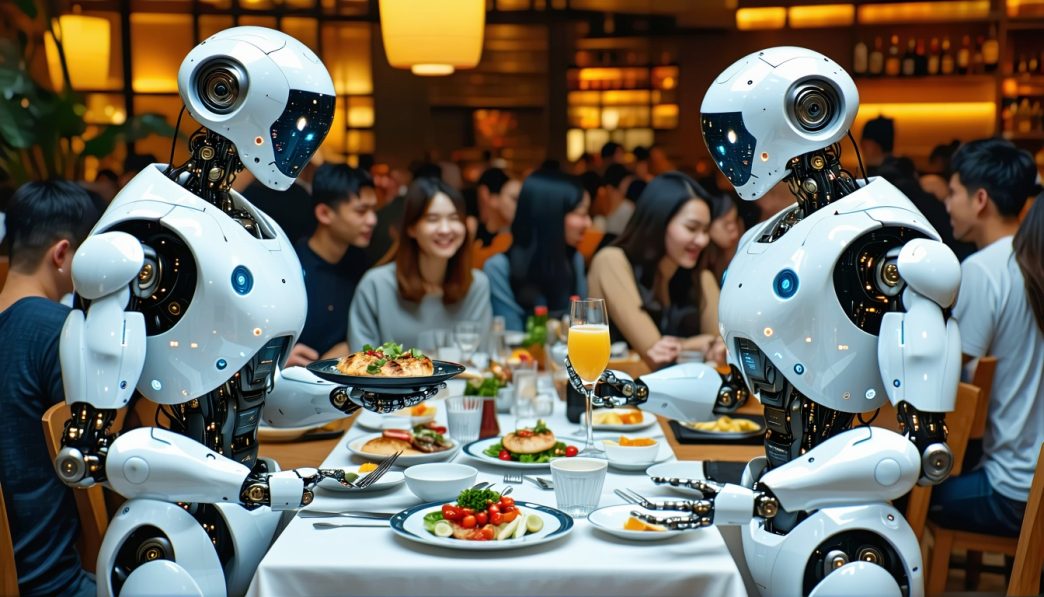
The Rise of Service Robots
Overview of Service Robots
Service robots are designed to assist humans in a variety of tasks across different sectors. These robots can perform functions ranging from simple tasks like cleaning to complex operations such as serving food or handling customer inquiries. The key feature of service robots is their ability to operate autonomously or semi-autonomously, enhancing efficiency and productivity.
The growth of service robots has significantly transformed industries by improving operational workflow and customer service. A survey conducted in 2022 indicated that the market for service robots is projected to reach $150 billion by 2025, reflecting their increasing integration into everyday operations.
| Year | Estimated Market Value (in Billion USD) |
|---|---|
| 2021 | 75 |
| 2022 | 100 |
| 2023 | 120 |
| 2025 | 150 |
Adoption of Robots in Various Industries
The adoption of robots has been particularly pronounced in sectors such as hospitality, healthcare, retail, and food service. Across these industries, robots serve various roles, including as robot waiters and servers, delivery personnel, and customer service representatives. 
Below is a overview of different industries embracing service robots:
| Industry | Examples of Robot Applications |
|---|---|
| Hospitality | Robot hotel staff, kitchen assistants |
| Healthcare | Patient monitoring robots, medication delivery |
| Retail | In-store assistants, inventory management |
| Food Service | Robot order takers, food delivery systems |
Overall, the increasing reliance on technology is reshaping how businesses operate, and service robots are at the forefront of this change. Their ability to handle repetitive tasks allows human employees to focus on more complex and interpersonal roles. As technology continues to advance, the presence of service robots in various sectors is expected to grow, enhancing service delivery and operational capabilities.
Robot Waiters and Servers
How Robot Waiters Operate
Robot waiters and servers utilize advanced technology to streamline dining experiences. Equipped with sensors, cameras, and software, they navigate restaurant floors, delivering food and drinks directly to customers. These robots typically rely on a combination of:
- Obstacle Detection: Using sensors to avoid collisions with furniture and patrons.
- Mapping Technology: Creating a digital map of the restaurant layout for efficient navigation.
- Voice Recognition: Responding to customer or staff inquiries verbally, enhancing interaction.
Robot systems can be programmed with menus and can direct customers on where to find their table or the nearest restroom, increasing their utility within a dining setting.
Benefits of Robot Waiters in the Service Industry
The integration of robots in the service industry carries numerous advantages.
| Benefit | Description |
|---|---|
| Labor Cost Reduction | Robots minimize the need for staff, lowering labor expenses in restaurants. |
| Increased Efficiency | Robots can perform multiple tasks simultaneously, such as taking orders and serving meals, speeding up service. |
| Consistent Performance | Robots execute tasks with uniform accuracy, ensuring that orders are served as intended without human error. |
| Enhanced Customer Experience | With robots managing deliveries, staff can devote more time to personalized customer interactions, improving overall satisfaction. |
| Data Collection | Robots can gather data on customer preferences and behaviors, allowing for better decision-making in menu offerings. |
For more insights on how automation impacts service roles, explore our article on service and utility robots. The growing reliance on robot waiters and servers exemplifies the transformation of the service industry, reflecting a shift towards technology-driven solutions that enhance efficiency and customer engagement. Additionally, interested parties can learn about related innovations in industries such as robot delivery services and robots in retail customer service.
Robot Delivery Systems
Introduction to Robot Delivery Systems
Robot delivery systems are revolutionizing how consumers receive their orders. These autonomous robots are designed to transport food and other goods from restaurants or stores to customers’ locations. These systems utilize advanced navigation technology to move efficiently through urban environments, making deliveries quicker and more reliable. The integration of sensors and software allows them to avoid obstacles and navigate through pedestrian traffic effectively.
Delivery robots can carry various items, primarily focusing on food and beverages, streamlining the last-mile delivery process. Their development is part of a broader trend toward automation in various industries. Each bot is uniquely equipped to handle specific delivery tasks, depending on its design and intended use. For a deeper insight into the broader category of service robots, refer to our article on service and utility robots.
Integration of Robots in Food Delivery
As the demand for efficient and contactless delivery solutions increases, the integration of robotic technologies in food delivery is seeing significant growth. Many restaurants and food service businesses are adopting these robots to enhance their delivery capabilities.
The table below summarizes key statistics about the adoption of robot delivery systems in the food service sector:
| Year | Number of Robot Deliveries | Percentage Increase |
|---|---|---|
| 2018 | 10,000 | – |
| 2019 | 25,000 | 150% |
| 2020 | 50,000 | 100% |
| 2021 | 100,000 | 100% |
| 2022 | 200,000 | 100% |
The growth in robot deliveries highlights how businesses are adapting to consumer expectations for convenience. These systems are also particularly advantageous in densely populated urban areas where traditional delivery methods may face delays due to traffic. Restaurants can streamline their operations and improve efficiency, allowing human staff to focus on more complex tasks.
The integration of robots in food delivery not only enhances service efficiency but also improves customer satisfaction by reducing wait times. This trend showcases the potential of robots to further penetrate the service industry, as they complement existing workforce initiatives, such as robot hotel staff and robots in retail customer service.
Robot Baristas in Cafes
Role of Robot Baristas in Cafes
Robot baristas are revolutionizing the coffee experience in cafes by effectively taking on the role of preparing and serving beverages. These automated systems are designed to handle various tasks, including brewing coffee, steaming milk, and serving drinks—reducing the workload of human staff and creating a unique customer interaction.
Robot baristas can function in different capacities:
| Function | Description |
|---|---|
| Brewing | Automated methods for precise coffee extraction |
| Milk Steaming | Consistent temperature control for milk frothing and steaming |
| Order Processing | Integration with digital ordering systems for optimal workflow |
The implementation of robot baristas can help increase the efficiency of coffee service, especially during peak hours in busy cafés.
Efficiency and Consistency in Coffee Preparation
One of the standout benefits of robot baristas is the efficiency they bring to coffee preparation. The robots are equipped with advanced algorithms and technology, allowing them to make coffee with precision and speed. This capability results in faster service times and significantly reduces waiting periods for customers.
Key aspects of their efficiency include:
- Consistent Quality: Robot baristas ensure that each cup of coffee is brewed to the same standard, eliminating variability often found in human-made beverages.
- Reduced Wait Times: With their ability to rapidly prepare drinks, customers receive their orders promptly, enhancing overall satisfaction.
| Metric | Human Barista | Robot Barista |
|---|---|---|
| Average Drink Preparation Time (seconds) | 30 | 15 |
| Order Accuracy (%) | 85 | 98 |
| Peak Hour Output (drinks/hour) | 80 | 200 |
The combination of efficiency and consistency not only improves the customer experience but also allows human staff to focus on more complex tasks alongside providing personalized service. The rise of robot baristas represents a significant advancement in the integration of service and utility robots within the café industry.
As technology evolves, the capabilities of robot baristas will likely expand, creating new possibilities for automated beverage service. Their role in transforming the café landscape cannot be overstated, and they stand as a testament to the growing presence of robots in various sectors. For more insights into how robots are utilized across different fields, including robot delivery services and robots in retail customer service, further exploration is encouraged.
Automation in Food Halls
The implementation of robots in food halls is becoming increasingly popular as businesses look for efficient and innovative ways to enhance service delivery. The integration of robotics not only streamlines operations but also meets the demand for faster service in busy environments.
Implementing Robots in Food Halls
Food hall operators are leveraging robotics to manage various service tasks, from taking orders to delivering meals. The technology used in these robots can vary, but they often employ sensors, cameras, and artificial intelligence to navigate the food hall environment and interact with customers.
The deployment of robots requires careful planning, including the layout of the food hall, the type of cuisine offered, and the technology infrastructure in place. Here is a summary of noteworthy aspects related to robot implementation in food halls:
| Aspect | Description |
|---|---|
| Navigation | Robots use sensors to avoid obstacles and choose optimal paths. |
| Interaction | Many robots are designed with touchscreens for easy customer interactions. |
| Communication | Robots may connect with kitchen staff to streamline order processing. |
| Maintenance | Regular updates and maintenance ensure robots operate effectively. |
Enhancing Customer Experience through Automation
The introduction of robotic services can significantly enhance customer satisfaction in food halls. Robot waiters and servers can manage high volumes of orders with precision and speed, reducing wait times and improving the overall dining experience.
Customers appreciate the novelty and efficiency that robots bring to food halls. The use of automation allows human staff to focus on more complex tasks, such as customer service, while robots handle routine operations. This dual approach enhances service quality and customer interaction.
Here are some benefits of integrating robots in food halls:
| Benefit | Description |
|---|---|
| Speed | Robots can process orders and deliver meals faster than traditional methods. |
| Efficiency | Automation reduces the likelihood of human error in order processing. |
| Consistency | Robots provide uniform service and product delivery every time. |
| Engagement | Robots can create an interesting dining environment, drawing in more patrons. |
The increasing use of service and utility robots in food halls highlights a broader trend toward automation in the dining industry. This not only meets consumer expectations for quick service but also optimizes operational efficiency, paving the way for future innovations.
Challenges and Limitations
As the integration of robots, particularly robot waiters and servers, advances in various sectors, there remain significant challenges and limitations that must be addressed. These include technological hurdles and ethical considerations that shape the deployment and acceptance of service robots.
Technology Limitations to Consider
Service robots face several technological challenges that can hinder their efficiency and usability. Key limitations include:
| Limitation | Description |
|---|---|
| Navigation and Interaction | Robots may struggle with navigating complex environments, particularly in crowded settings like restaurants or food halls. Their ability to understand and interact with human customers can also be limited. |
| Task Complexity | While robots excel at repetitive tasks, they can find it challenging to handle complex or unpredictable situations, such as modifying an order based on customer requests or managing special requests. |
| Reliability | Service robots must operate consistently over long periods. Technical malfunctions or software bugs can lead to service interruptions, affecting customer satisfaction. |
Addressing these limitations requires ongoing investment in research and development. Enhancements in artificial intelligence and machine learning can improve robot adaptability and reliability, paving the way for more effective utilization in various environments.
Ethical and Social Implications of Service Robots
The introduction of robots into service roles raises important ethical and social considerations. These include potential impacts on employment, customer interactions, and the overall dining experience. Some key implications are:
| Implication | Description |
|---|---|
| Job Displacement | The integration of robots may lead to concerns about job losses for human workers, especially in entry-level positions within the service industry. Striking a balance between human and robotic labor is essential. |
| Customer Acceptance | Not all patrons may be comfortable with robots taking over roles traditionally held by humans. This can affect the overall dining experience and customer satisfaction. Understanding customer perceptions is critical for successful implementation. |
| Privacy Concerns | Robots equipped with advanced sensors and cameras may raise concerns about privacy, particularly regarding data collection and surveillance in public spaces. Businesses must navigate these concerns responsibly. |
Engaging in thoughtful discussions about these ethical implications can foster a more transparent approach to the adoption of service robots. Stakeholders from various sectors, including hospitality and retail, must collaborate to create a framework that maximizes benefits while addressing concerns.
Further exploration of the implications and future developments of service and utility robots can provide deeper insight into this evolving landscape.
The Future of Service and Utility Robots
As technology continues to advance, so does the potential for service robots to transform various industries. This section explores the latest innovations in service robot technology and predicts the trajectory of robot waiters and servers.
Innovations in Service Robot Technology
Innovations in robotics are driving the evolution of service robots, leading to systems that are more capable, efficient, and user-friendly. Some notable developments include:
| Innovation | Description |
|---|---|
| Advanced AI Algorithms | Enhanced machine learning capabilities allow robots to better understand and anticipate customer needs. |
| Improved Sensor Technology | High-definition cameras and LiDAR sensors enable robots to navigate complex environments safely and effectively. |
| Enhanced Communication Systems | Robots can now interact with customers through voice recognition and natural language processing, creating more engaging experiences. |
| Increased Autonomy | Robots are becoming more independent in their operations, handling tasks such as placing orders, serving food, and even cleaning up spills. |
| Sustainable Practices | Many new robots are designed with energy efficiency in mind, utilizing eco-friendly materials and technologies to reduce their carbon footprint. |
These innovations not only improve efficiency and accuracy but also enhance the overall customer experience. As these technologies advance, businesses in industries such as food service, retail, and hospitality will increasingly adopt service robots.
Predictions for the Evolution of Robot Waiters and Servers
The future of robot waiters and servers is promising, with several key predictions emerging:
| Prediction | Details |
|---|---|
| Increased Market Adoption | The integration of robots will become more commonplace in cafés, restaurants, and hotels as businesses seek to streamline operations and reduce labor costs. |
| Customization and Flexibility | Future robots will be equipped with features allowing them to adapt to different dining environments and customer preferences, including menu selections and dietary restrictions. |
| Enhanced Customer Interaction | Robots will focus on building customer relationships through personalized interactions, utilizing data to provide tailored services. |
| Collaborative Robot Systems | Robots will work alongside human staff, optimizing tasks such as serving food and beverages while allowing human employees to focus on more complex customer service roles. |
| Expansion into New Markets | Beyond traditional dining venues, robot servers will likely find uses in hospitals, schools, and corporate offices, elevating service standards in various sectors. |
As these predictions unfold, the landscape of service and utility robots will reshape how businesses operate and interact with customers. This evolution presents both opportunities and challenges, influencing the future growth of industries reliant on service robots. For more insights on the types of robots transforming workplaces and homes, visit our article on service and utility robots.


