


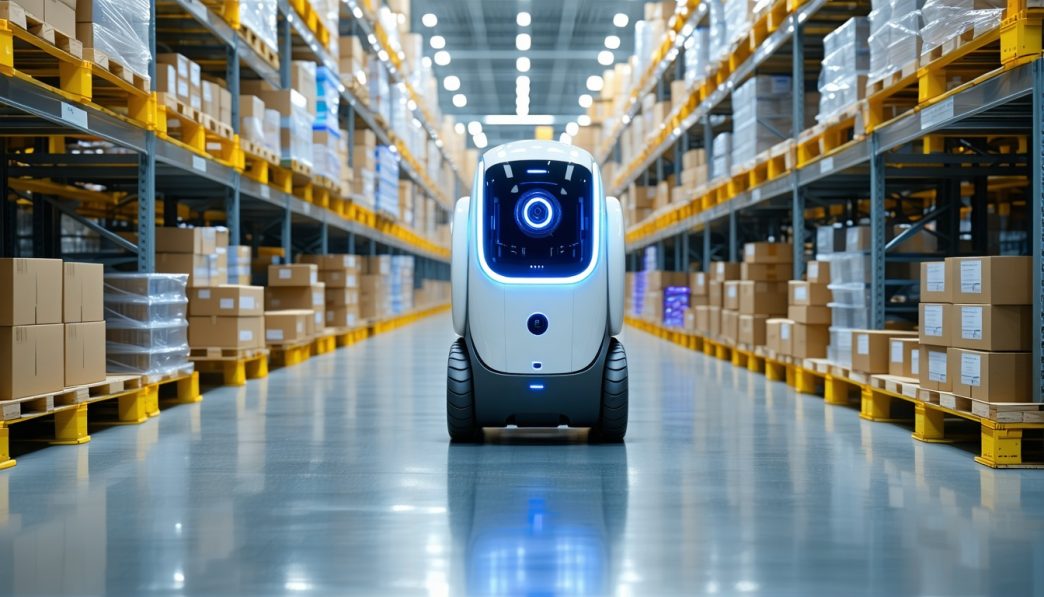
Introduction to Warehouse Utility Robots
The Role of Robots in Warehouse Operations
Warehouse utility robots have become vital in modern logistics and distribution centers. These machines perform specific tasks that enhance operational efficiency. By automating routine processes, warehouse robots reduce the workload on human workers, streamline operations, and increase the speed of service delivery.
Common roles for these robots include sorting, stacking, and transporting goods throughout the warehouse. Their precision minimizes errors that can occur during manual handling, further improving overall productivity. As industries evolve, the integration of these machines demonstrates a significant shift toward automation in warehouse management.
Benefits of Using Utility Robots
The adoption of warehouse utility robots brings numerous advantages to businesses. Below are some key benefits: 
| Benefit | Description |
|---|---|
| Increased Efficiency | Robots perform tasks faster and more accurately, minimizing downtime and maximizing throughput. |
| Cost Savings | Automation reduces labor costs and operational expenses, allowing for significant savings over time. |
| Improved Safety Measures | Robots can handle heavy loads or perform dangerous tasks, reducing the risk of workplace injuries. |
| Enhanced Inventory Management | Robots improve inventory accuracy and help maintain optimal stock levels to meet demand. |
| Scalability | Businesses can easily scale operations up or down using robots to adapt to fluctuating demand. |
By utilizing warehouse utility robots, organizations in various sectors can enhance their operational capabilities. For further exploration of different robot types, view our article on service and utility robots.
Types of Warehouse Utility Robots
Warehouse utility robots come in various forms, each designed to perform specific tasks that enhance operational efficiency. The primary categories of these robots include sorting robots, stacking robots, and transport robots.
Sorting Robots
Sorting robots are specially designed to identify, organize, and separate items based on predefined criteria. These robots can rapidly process large volumes of goods, making them invaluable in high-demand environments. They often use advanced vision systems and artificial intelligence to recognize items and sort them into designated locations or bins.
| Functionality | Applications |
|---|---|
| Identifying and categorizing items | E-commerce fulfillment, parcel sorting |
| Sorting by size, weight, or type | Distribution centers, inventory management |
For businesses looking to improve efficiency in sorting processes, the implementation of sorting robots can lead to significant time savings and increased accuracy.
Stacking Robots
Stacking robots are designed to optimize the arrangement and storage of goods within a warehouse. These robots can lift and stack items vertically, making them essential for maximizing space utilization. They are often equipped with specialized arms and sensors that allow for precise movements.
| Functionality | Applications |
|---|---|
| Lifting and arranging goods in warehouses | Palletizing, inventory organization |
| Managing heavy and bulky items | Industrial settings, cold storage |
Utilizing stacking robots can greatly enhance warehouse management by creating more efficient storage solutions and reducing the physical strain on human workers.
Transport Robots
Transport robots are responsible for moving goods from one location to another within a warehouse. They typically navigate autonomously, utilizing various mapping and sensor technologies to avoid obstacles. These robots contribute to a streamlined supply chain by ensuring timely delivery of materials and products.
| Functionality | Applications |
|---|---|
| Moving goods between storage and packing areas | Manufacturing, assembly lines |
| Delivering supplies to specific locations | Retail, logistics centers |
Transport robots are transforming the speed and reliability of logistics operations, minimizing delays, and helping ensure that inventory is where it needs to be when it is needed.
By understanding the different types of warehouse utility robots and their functionalities, businesses can make informed decisions about how to integrate these technologies into their operations. For more insights into how robots are being utilized in various sectors, explore our articles on service and utility robots and robot delivery services.
Sorting Robots in Detail
Functionality and Operations
Sorting robots play a vital role in the efficiency of warehouse operations. These robots are designed to quickly and accurately identify, organize, and distribute items based on specific criteria. Through advanced technology, sorting robots can process large volumes of products without human intervention, leading to streamlined workflows.
Typically, a sorting robot uses various sensors, cameras, and artificial intelligence algorithms to detect and categorize items. Once sorted, the robots can either deliver the items to the next stage of the operation or package them for shipment. The use of sorting robots reduces handling time and minimizes errors, which enhances overall productivity.
The functionality of sorting robots can be summarized in the following table:
| Feature | Description |
|---|---|
| Detection Method | Sensors and cameras for item identification |
| Sorting Speed | Up to 600 items per hour, depending on complexity |
| Accuracy Rate | 99% accuracy in sorting |
| Automation Level | Fully automated sorting without human assistance |
Applications in Different Industries
The applications of sorting robots are vast and span multiple industries. Key sectors utilizing these robots include e-commerce, retail, food and beverage, and logistics. The following table outlines how sorting robots are applied in various industries:
| Industry | Application |
|---|---|
| E-commerce | Sorting packages for improved fulfillment |
| Retail | Grouping products for display and restocking |
| Food and Beverage | Organizing inventory and order fulfillment |
| Logistics | Streamlining sorting processes in distribution |
In e-commerce, sorting robots expedite the processing of online orders, ensuring quick delivery times. In retail, they help in maintaining aisle organization and inventory accuracy. The food and beverage industry benefits from improved handling of perishables, while in logistics, sorting robots enhance warehouse efficiency by reducing the time taken to move items from one point to another.
For more insights into the integration and utility of robots in various settings, explore our articles on service and utility robots and robots in retail customer service.
Stacking Robots in Detail
Functionality and Operations
Stacking robots are an integral part of warehouse utility robots, designed to automate the stacking and unstacking of goods within storage areas. These robots utilize advanced technologies, including sensors and artificial intelligence, to navigate through the warehouse environment. They can identify, pick, and position items accurately, optimizing the use of vertical space.
The operations of stacking robots involve several key functions:
- Automated Picking: Stacking robots can assess the layout of the warehouse and determine the most efficient route to pick items from shelves.
- Load Management: They can handle heavy loads with precision, lifting items that may be cumbersome for human workers.
- Optimal Positioning: After picking, these robots place items in designated locations, ensuring that the stacking is stable and aligned for easy retrieval.
| Functionality | Description |
|---|---|
| Automated Picking | Assessing warehouse layout to pick items efficiently |
| Load Management | Handling heavy loads accurately and safely |
| Optimal Positioning | Placing items in a stable and organized manner |
Efficiency in Warehouse Management
The implementation of stacking robots significantly enhances efficiency in warehouse operations. By automating the stacking process, businesses can achieve higher throughput while reducing the likelihood of human error. Stacking robots allow for quicker response times in fulfilling orders, contributing to faster inventory turnover rates.
Key efficiency benefits include:
- Increased Productivity: Stacking robots can operate continuously without breaks, increasing productivity by managing multiple tasks simultaneously.
- Space Optimization: By stacking items vertically, these robots help maximize warehouse space, allowing for more products to be stored in a smaller footprint.
- Labor Reduction: Automation reduces the dependency on manual labor, enabling staff to focus on more complex tasks that require human judgment.
| Efficiency Benefit | Description |
|---|---|
| Increased Productivity | Continuous operation leads to higher throughput |
| Space Optimization | Maximizes storage capacity through vertical stacking |
| Labor Reduction | Frees up workforce for more complex tasks |
The rise of stacking robots aligns with the overall trend towards automation and efficiency in warehouses, which is an essential aspect of modern supply chain management. For further insights into various applications of service robots, explore our article on service and utility robots.
Transport Robots in Detail
Transport robots are a crucial component of warehouse utility robots, designed to autonomously move goods throughout a warehouse or distribution center. They streamline logistics and enhance operational efficiency.
Functionality and Operations
Transport robots are equipped with sensors, cameras, and navigation systems that allow them to operate safely within busy warehouse environments. These robots can navigate through aisles, avoid obstacles, and follow mapped routes to transport items from one location to another.
The functionality of transport robots can be categorized into various operations:
| Operation Type | Description |
|---|---|
| Automated Routing | Robots autonomously select the best path based on real-time data. |
| Load Capacity | Many transport robots can carry various loads, typically ranging from 100 to 1,500 pounds. |
| Docking and Unloading | Robots can automatically dock at designated areas to load or unload items. |
| Communication | These robots can communicate with warehouse management systems to receive instructions and report their status. |
Transport robots are ideal for repetitive tasks such as moving pallets, picking merchandise, and delivering stock to different areas. By automating these processes, they free up human workers to focus on more complex tasks.
Contribution to Supply Chain Logistics
Transport robots significantly impact supply chain logistics by improving efficiency and reducing operational costs. Their ability to operate continuously without breaks leads to higher throughput in warehouse operations. Key contributions include:
Enhanced Efficiency
Transport robots enable faster product movement, resulting in shorter order fulfillment times. This efficiency can lead to an increase in overall productivity within the supply chain.
| Metric | Before Robots | After Robots |
|---|---|---|
| Average Fulfillment Time (hours) | 12 | 6 |
| Daily Item Movements | 500 | 1,200 |
Cost Reduction
By automating transportation tasks, businesses can reduce labor costs. Transport robots minimize the risk of human error and the associated costs, leading to streamlined operations and fewer damages.
Flexibility and Adaptability
These robots can be programmed for various tasks, allowing warehouses to adapt quickly to changing inventory needs. As businesses scale, transport robots can be integrated without the need for extensive additional training or workforce expansion.
Transport robots are vital for modern supply chain operations, adding value through increased productivity and cost savings. They complement other service and utility robots, creating a more efficient and effective logistics framework.
Integration of Warehouse Utility Robots
Challenges and Considerations
Integrating warehouse utility robots into existing operations poses several challenges. Businesses must evaluate their current workflows and infrastructure to ensure compatibility with robotic systems. Key considerations include:
-
Cost of Implementation: The initial investment for warehouse utility robots can be substantial. This includes purchasing robots, necessary software, and training staff.
-
Workforce Adaptation: Employees may require training to work alongside robots. Resistance to change can also be an obstacle, as workers may fear job displacement.
-
Maintenance and Support: Ongoing maintenance is essential for operational efficiency. Companies must establish support systems to ensure robots function correctly over time.
-
Safety and Compliance: Integrating robots into warehouse environments raises safety concerns. Companies must adhere to regulations and implement safety protocols to protect human workers.
| Challenge | Description |
|---|---|
| Cost of Implementation | Initial investments can be high, including training and software. |
| Workforce Adaptation | Employees need training to work safely with robotic systems. |
| Maintenance and Support | Establishing a routine for maintenance is crucial for efficiency. |
| Safety and Compliance | Adhering to regulations and safety protocols is essential. |
Future Trends in Robotics in Warehousing
The future of robotics in warehousing looks promising, with several emerging trends shaping the industry. These trends include:
-
Increased Automation: As technology advances, warehouses will see a rise in fully automated operations, where robots handle the majority of tasks.
-
Collaboration Between Robots and Humans: Future systems will likely involve collaborative robots (cobots) designed to work alongside human workers, enhancing efficiency while maintaining safety.
-
Data-Driven Decision Making: The integration of artificial intelligence (AI) and machine learning will allow robots to learn from data, optimizing operations and improving accuracy in tasks.
-
Enhanced Adaptability: Future utility robots will possess better adaptability to changing environments and tasks, making them more versatile for various warehouse operations.
| Trend | Description |
|---|---|
| Increased Automation | More warehouses will automate most operations using robots. |
| Collaboration Between Robots and Humans | Future robots will be designed to work alongside human workers safely. |
| Data-Driven Decision Making | AI integration will enhance efficiency and accuracy in operations. |
| Enhanced Adaptability | Future robots will be more versatile and adaptive to change. |
As businesses navigate the challenges of integrating warehouse utility robots, they can also look forward to a future where automation and technology work in harmony with human capabilities, creating efficient and effective warehousing solutions. Explore more about service and utility robots to gain deeper insights into the evolving landscape of robotic technology.
Advantages of Using Warehouse Utility Robots
Warehouse utility robots bring several advantages to operations, making them a valuable asset in both commercial settings and larger supply chains.
Increased Efficiency
The implementation of warehouse utility robots significantly boosts operational efficiency. These robots can work continuously without fatigue, processing tasks that would typically require extensive manpower. They are designed to optimize workflow by sorting, stacking, and transporting goods at much faster rates than human workers.
| Task | Time Taken by Humans (hrs) | Time Taken by Robots (hrs) |
|---|---|---|
| Sorting Items | 4 | 1 |
| Stacking Pallets | 3 | 0.5 |
| Transporting Goods | 2 | 0.25 |
This table showcases the average time savings observed when utilizing utility robots compared to human effort.
Cost Savings
Utilizing warehouse robots can lead to significant cost savings over time. Although initial investment costs may be high, the reduction in labor costs and increased productivity deliver a positive return on investment (ROI). Businesses can allocate human resources to more complex tasks that require critical thinking, rather than repetitive manual handling.
| Cost Factors | Without Robots ($) | With Robots ($) |
|---|---|---|
| Labor Costs (annually) | 100,000 | 60,000 |
| Maintenance Costs | 30,000 | 10,000 |
| Productivity Loss | 20,000 | 5,000 |
This table illustrates the potential for lowering costs associated with labor, maintenance, and productivity losses by incorporating utility robots into warehouse operations.
Improved Safety Measures
Implementing warehouse utility robots enhances workplace safety. Robots can handle heavy loads and perform hazardous tasks, reducing the risk of injuries commonly associated with manual labor. This not only protects workers but also lowers insurance costs and minimizes lost workdays due to accidents.
| Safety Metrics | Before Robots | After Robots |
|---|---|---|
| Injury Rate (per year) | 15% | 5% |
| Lost Workdays (annually) | 200 | 50 |
This table highlights the impact of warehouse utility robots on injury rates and lost workdays, demonstrating improved safety in operations.
By integrating warehouse utility robots, companies can achieve greater efficiency, realize substantial cost savings, and enhance safety protocols within their operations. This reflects the trend towards modernizing logistics and warehousing with advanced technology. For more information on various types of robots, visit our article on service and utility robots.


