Transforming Education with AI-Powered Robots
Understanding the Role of Educational Robots
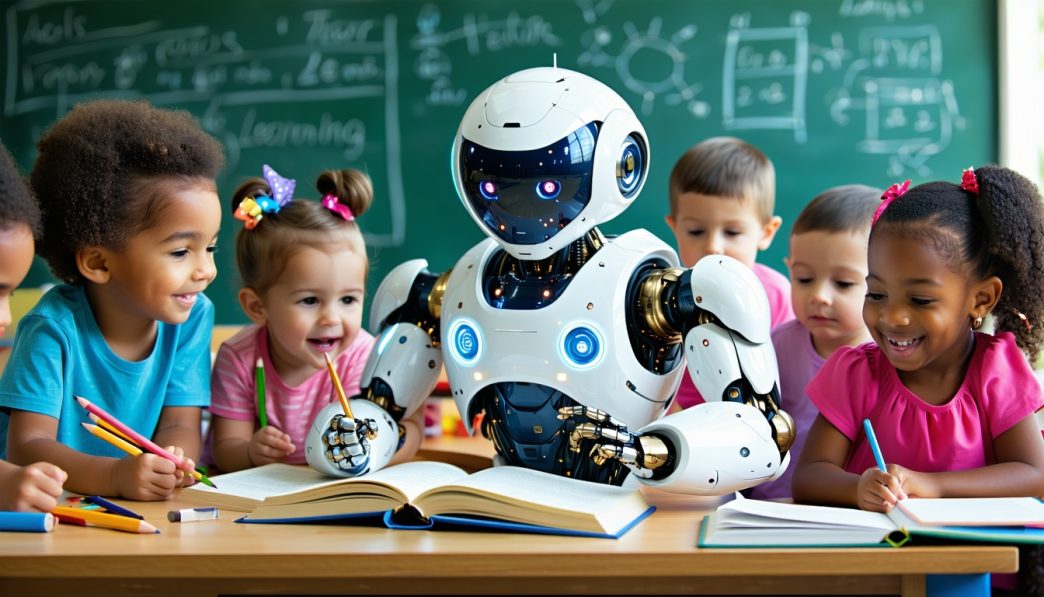
Educational robots play a key role in enhancing the learning experience for students. These innovative tools are designed to assist educators by engaging learners in interactive and hands-on activities. By incorporating technology into the classroom, robots provide unique functionalities that traditional teaching methods may lack.
The primary role of these robots is to facilitate a personalized approach to learning. They can cater to the individual needs of students, adjusting their teaching methods and pace based on each student’s learning style. This adaptability makes them invaluable as AI tutors and learning companions.
| Functionality | Description |
|---|---|
| Personalization | Customizes lessons based on student performance |
| Engagement | Uses interactive features to hold student interest |
| Support | Provides help on specific subjects or skills |
| Collaboration | Encourages teamwork through joint tasks |
How AI Revolutionizes Learning
Artificial intelligence (AI) is at the core of the technological shift within education. AI-powered robots not only provide information but also analyze student performance and adapt accordingly. This constant feedback loop enhances the learning process, ensuring that students master concepts effectively. 
AI enables these robots to offer real-time assessments, providing immediate feedback that traditional methods might miss. This capability helps students identify strengths and areas that need improvement. For example, an AI tutor can track a student’s progress in coding or STEM-related subjects, making it easier to adjust learning materials as needed.
The integration of AI into the educational system transforms traditional classrooms into tech-friendly environments where students can thrive. The following table summarizes how AI enhances various aspects of learning:
| Aspect of Learning | Impact of AI |
|---|---|
| Customizable Curriculum | Tailors lesson plans to individual proficiency |
| Enhanced Engagement | Encourages participation through interactive elements |
| Efficient Assessment | Provides instant feedback on assignments and tests |
| Skill Development | Improves specific subject comprehension actively |
Through these advancements, the use of educational robots continues to revolutionize how subjects are taught, making learning more accessible and enjoyable for students. For more insights into the potential of these technologies in learning environments, visit our section on robots in classrooms.
Advantages of AI Tutors and Learning Companions
AI tutors and learning companions offer a number of significant benefits that enhance the educational experience for students. These benefits stem from their ability to personalize learning and provide real-time feedback.
Personalized Learning Experience
One of the most notable advantages of AI-powered educational tools is their capacity to tailor learning experiences to meet individual student needs. Unlike traditional methods, AI tutors analyze each student’s performance, strengths, and weaknesses, then adjust learning paths accordingly.
This personalized approach addresses diverse learning styles and paces, ensuring that each student grasps concepts effectively. In classrooms, this can lead to improved academic outcomes as students engage with materials that resonate with their unique abilities. The table below illustrates some aspects of personalized learning through AI companions:
| Feature | Benefit |
|---|---|
| Individualized Learning Paths | Adapts to each student’s strengths and weaknesses |
| Customizable Content | Offers materials suited to varying learning styles |
| Progress Tracking | Monitors student performance and goals over time |
For educators seeking to implement these tools, research shows that schools integrating educational robots observe enhancements in student engagement and understanding.
Real-time Feedback and Adaptability
AI learning companions also excel in providing immediate feedback, a critical element in the learning process. Students receive assessments as they progress through tasks, allowing them to recognize mistakes and rectify them in the moment. This instant feedback loop fosters a deeper understanding of concepts and encourages continuous improvement.
Additionally, AI systems adapt to students’ needs, adjusting challenges and questions based on their current understanding. This capability promotes a more dynamic learning environment, as students can advance at their own pace without feeling rushed or unsupported.
| Feedback Type | Description |
|---|---|
| Instant Feedback | Students can adjust their learning strategies in real-time |
| Adaptive Questioning | The system offers questions that match the learner’s skill level |
| Skill Reinforcement | Students can revisit topics needing additional practice |
These features create a more supportive environment, enhancing learning potential. For families interested in exploring how AI can support their children’s education, visit articles on robots teaching coding and robots in classrooms for additional insights.
By leveraging the advantages of AI tutors and learning companions, both students and educators can optimize the educational experience, increasing engagement and academic performance.
Applications in Mastering Subjects
AI-powered robots are becoming instrumental in enhancing educational experiences, particularly in STEM fields. Their applications span various domains, equipping students with practical skills that are essential for succeeding in today’s technology-driven world.
STEM Education Enhancement
Integrating robots into STEM education allows students to experience hands-on learning that reinforces theoretical concepts. These educational robots facilitate exploration in science, technology, engineering, and mathematics by providing immediate, interactive feedback and motivating students to engage with complex material.
| Subject Area | Benefits of Robots in STEM |
|---|---|
| Science | Experiments and simulations can be conducted with robots to visualize complex processes. |
| Technology | Students can learn coding concepts and software applications through robot interaction. |
| Engineering | Building and programming robots enhance critical thinking and design skills. |
| Mathematics | Robots offer real-world problem-solving scenarios that utilize mathematical concepts. |
Coding and Programming Proficiency
AI tutors assist students in learning coding and programming languages through interactive lessons. They provide challenges and allow learners to troubleshoot issues in real time, enhancing their understanding of algorithmic thinking and software development.
| Learning Aspect | Description |
|---|---|
| Interactive Lessons | Students can engage in practical coding scenarios with immediate adaptive feedback from AI tutors. |
| Gamification | Learning coding through games keeps students motivated and incentivized to improve their skills. |
| Project-Based Learning | Students can create projects using their programming skills, applying concepts in a practical context. |
For more insights on how robots can teach coding, explore our article on robots teaching coding.
Problem-Solving Skills Development
Robots not only help in learning technical skills but also foster important problem-solving abilities. By engaging with AI companions, students learn to approach challenges systematically, think critically, and collaborate with others in projects.
| Skills Developed | Description |
|---|---|
| Analytical Thinking | Students analyze problems and determine effective strategies to solve them. |
| Collaboration | Team-based tasks with robots teach students teamwork and communication skills. |
| Persistence | Encountering challenges encourages students to iterate on their solutions and develop resilience. |
Visit our article on robots teaching teamwork and problem solving for further information on how robotics encourages effective collaboration among peers.
Through these applications, AI tutors and learning companions are revolutionizing how subjects are mastered, providing a dynamic and engaging learning experience for students.
Impact on Student Engagement
The introduction of AI-powered robots into educational settings significantly enhances student engagement. These advanced tools create interactive learning environments that foster curiosity and encourage active participation among students.
Interactive Learning Environments
AI tutors and learning companions transform traditional education into an engaging experience. They utilize a variety of multimedia resources, such as animations, games, and adaptive quizzes, to present information in a captivating manner. This interactive approach keeps students motivated and focused on learning.
Robots can also simulate real-world scenarios, making subjects like science, technology, engineering, and mathematics (STEM) more relatable. For instance, robots can facilitate hands-on experiments or coding challenges, providing an immersive experience that is difficult to achieve through conventional teaching methods.
| Feature | Description |
|---|---|
| Hands-On Activities | Involves students in practical experiments, enhancing comprehension. |
| Multimedia Integration | Uses videos and animations to create an engaging learning experience. |
| Real-World Simulations | Offers scenarios that mimic actual challenges in STEM fields. |
Encouraging Active Participation
Active participation is crucial for effective learning. AI-powered robots encourage students to be proactive in their education. They engage students in discussions, ask questions, and promote collaboration among peers.
Students often feel more comfortable participating when interacting with robots rather than traditional instructors. This increased comfort level can lead to greater success in mastering subjects. Moreover, robots can facilitate group projects, allowing for the development of teamwork skills and problem-solving abilities. For more on how robots teach teamwork and problem solving, visit our article on robots teaching teamwork and problem solving.
| Engagement Strategy | Benefits |
|---|---|
| Interactive Quizzes | Reinforces learning and provides instant feedback. |
| Peer Collaboration | Encourages teamwork and social interaction among students. |
| Customized Learning Paths | Allows students to learn at their own pace, increasing confidence and understanding. |
The integration of AI tutors and learning companions into classrooms not only enhances engagement but also prepares students for future challenges in a technology-driven world. By creating a dynamic educational atmosphere, educational robots contribute to a holistic and practical learning experience. For more insights on the impact of robots in classrooms, explore our article on robots in classrooms.
Addressing Concerns and Limitations
As educational technology evolves, concerns regarding data privacy and security, as well as the balance of human interaction with technology, become increasingly prominent.
Data Privacy and Security
When integrating AI tutors and learning companions into educational settings, safeguarding students’ personal information is essential. Educational robots often collect data on student performance, learning habits, and preferences. This data can improve personalized learning experiences but raises significant privacy concerns. Parents and educators must ensure that the platforms used adhere to strict privacy regulations and that students’ information is securely stored and processed.
Key concerns include:
| Concern | Description |
|---|---|
| Data Collection | Types of data gathered from students during interactions. |
| Storage Security | Measures taken to protect sensitive information from breaches. |
| User Consent | Ensuring that parents and students understand what data is collected and how it is used. |
Educators should seek out educational robots that prioritize data safety and comply with legal standards. For further insights into using technology in education, check out our article on robots in classrooms.
Balancing Human Interaction and Technology
While AI-powered robots provide significant benefits to students, it is crucial to maintain a balance between technology and human interaction. Over-reliance on AI tutors can lead to reduced social skills and connection with peers and teachers. The educational process should foster collaboration and communication, qualities that traditional learning environments promote effectively.
To achieve a successful integration of technology, teachers and parents should:
| Strategy | Description |
|---|---|
| Hybrid Learning Models | Combine traditional teaching methods with robotic assistance for a comprehensive approach. |
| Encouraging Group Activities | Promote teamwork through robots teaching teamwork and problem solving activities. |
| Scheduling Human Interventions | Regularly involve teachers and mentors in the learning process to provide emotional and social support. |
Understanding the importance of human touch alongside AI technologies will contribute to well-rounded educational experiences. For more resources on enhancing student engagement, explore our article on robot learning platforms.
Future Prospects and Trends
The landscape of education is rapidly changing due to the advancement of technology, particularly with the emergence of AI-powered robots. These learning companions are continuously evolving, offering innovative solutions and opportunities for enhancing educational experiences.
Evolution of Educational Robotics
In recent years, educational robotics has seen significant progress. The growth of AI technology has enabled these robots to become more sophisticated, allowing for enhanced interaction between students and machines. Educational robots are now capable of supporting a wide range of subjects and skills, significantly contributing to students’ understanding of complex concepts.
As educational robotics evolves, the technology utilized in these devices is becoming more accessible and cost-effective. Schools are increasingly investing in robots to complement traditional teaching methods. The evolution can be seen in features such as:
| Feature | Traditional Robots | AI-Powered Robots |
|---|---|---|
| Interactivity | Limited | High-level interactivity with students |
| Customization | Basic programming | Adaptive learning tailored to individual needs |
| Feedback | Delayed or manual | Immediate, real-time feedback |
As these advancements continue, the performance and capabilities of educational robots are likely to improve further, assisting educators in creating more dynamic learning environments.
Integration into Mainstream Education
Integrating AI-powered robots into mainstream education is becoming a reality. Schools are recognizing the value of incorporating technology in the classroom as a means to engage students and enhance their learning opportunities. A growing number of classrooms are starting to employ robots not only for teaching coding and STEM concepts but also for fostering teamwork and problem-solving skills.
The integration process typically includes phases such as:
- Pilot Programs: A select number of classrooms utilize robots to assess their effectiveness.
- Training for Educators: Teachers receive training on how to incorporate robotics into their curriculum.
- Curriculum Development: Development of lesson plans that include robots as learning tools.
- Expansion: Successful pilot programs lead to a broader implementation across schools.
The following table illustrates the projected growth of robots in educational settings over the next few years:
| Year | Number of Schools Using Robots | Percentage Increase |
|---|---|---|
| 2023 | 500 | – |
| 2024 | 800 | 60% |
| 2025 | 1,300 | 62.5% |
| 2026 | 2,000 | 53.8% |
As AI tutors and learning companions become more prevalent, the educational landscape will continue to shift. The potential for these tools to transform how subjects are taught and learned is immense, making education more engaging and effective for students. For more insights into the impact of robotics in education, explore our articles on robot learning platforms and robots in classrooms.