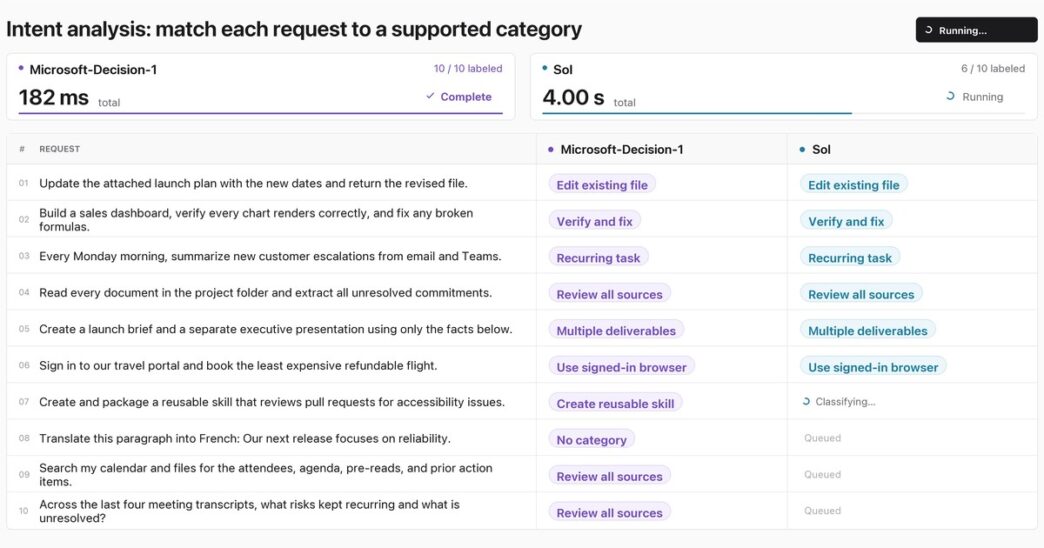
Microsoft has released an AI model that can’t write a sentence. Microsoft-Decision-1 reads a request, looks at the answer options you give it and returns a probability for each one: this ticket goes to billing, that message is urgent, this reply promises a refund. Microsoft charges $0.042 per million input tokens for it, and output tokens are free.
That’s the same price TypeSafe AI lists for Jev, a rival decision model that The Register says was announced about three weeks ago. Microsoft’s announcement is also worth a second look: the speed claim in it changed within a day of publication. Here’s what the model does, what Microsoft says about it, and where robots come in.
Microsoft-Decision-1 picks from a list instead of writing
Microsoft announced the model on October 9 in a post on its Command Line blog by Achint Srivastava, a VP of software engineering in the Office of the CTO. It’s built for routing, classification, prioritization, verification and workflow control: the small yes-or-no and pick-one calls that software makes thousands of times a day. Microsoft’s documentation describes three kinds of question: is this true, which option is it, and how much of something is there on an ordered scale.
What it won’t do is talk. OpenRouter’s listing says it isn’t intended for open-ended generation, conversation, translation or summarization, and the Foundry docs say it returns “a typed, numerical decision” with no written rationale. The context window is 32,768 tokens, per OpenRouter. The selling point is confidence. The probabilities let an application act on a clear answer and send a murky one to a person or a bigger model.
$0.042 per million tokens, and two rivals at similar prices
Microsoft’s price covers input only. As a rough example (our arithmetic from Microsoft’s rate), sorting 1,000 support tickets of 500 tokens each would cost about two cents. The model is in Microsoft Foundry and on OpenRouter, where Azure is the only provider and the page showed a median latency of 0.32 seconds over the previous three days when we checked on Sunday. That’s OpenRouter’s measurement, not Microsoft’s.
| Decision model | Input, per 1M tokens | Output | Status on Oct 11 |
|---|---|---|---|
| Microsoft-Decision-1 | $0.042 | Free | Foundry and OpenRouter since Oct 9 |
| TypeSafe AI Jev | $0.042 | Free | Early access, per TypeSafe’s blog |
| OpenAI Decisions API (gpt-6-luna) | $0.10 | No output charge | Public beta, general availability “in the coming weeks” |
OpenAI’s Decisions API currently runs only gpt-6-luna, the small model we covered when GPT-6 went free in ChatGPT. OpenAI says the endpoint is about 10 times faster than its Responses API. The Register says more than 100 such models are now competing.
Microsoft’s speed claim changed within a day
Microsoft’s post says Decision-1 “achieved the highest accuracy in our 36-benchmark comparison,” which spans nearly 150,000 questions kept blind from training. It also says the model was “the fastest measured: 2.5 times quicker than H2O-Lightning-4B v1.1, the runner-up, and 35 times quicker than GPT-6 Sol.”
An Internet Archive copy of the post from the evening of October 9 said something different: “4.5 times quicker than Quyet-1.0-Large, the runner-up.” The live page now carries an editor’s note saying it was updated “to add benchmarks for Jev on accuracy and calibration.” It doesn’t say why the runner-up and the multiple changed.
The Register, which read the added Jev numbers, reports Microsoft’s figures as 2.8 times faster than Jev, 83.5% accuracy across the 36 benchmarks, and second place on confidence (92.2%) behind Quyet-1.0-Large. All of it is Microsoft’s own benchmarking. The post also doesn’t say what reasoning setting GPT-6 Sol ran at, which matters when you time a one-pass scorer against a model that can think before it answers.
Underneath, it’s Alibaba’s Qwen, for now
Microsoft built Decision-1 by post-training Qwen3.5-9B, which The Register describes as an open-weight model from Alibaba’s Qwen family, for “fast, single-pass decision scoring.” It says it will “soon rebase it on other models, including Microsoft AI (MAI) and OpenAI.” It hasn’t said when, or why.
OpenRouter’s listing adds that the model’s “weights are updated continually while the API shape stays the same,” so the Decision-1 you test this week isn’t guaranteed to be the one you call next month. Microsoft’s docs also warn that it “might reflect biases from its base model and training data.”
What Microsoft’s own testing shows
Microsoft cites internal trials. Xbox Research used the model to sort more than 10,000 pieces of open-ended feedback, from surveys, Steam reviews and posts on X, into fixed themes, and found it “competitive on quality with GPT-6 Sol while running over 14 times faster and 200 times less expensive.” Microsoft also says the model changes its decision on just 1.3% of reworded, reordered or otherwise perturbed inputs. Those are Microsoft’s tests, run by Microsoft, against rivals Microsoft chose.
Robots are on the use-case list, with no demo
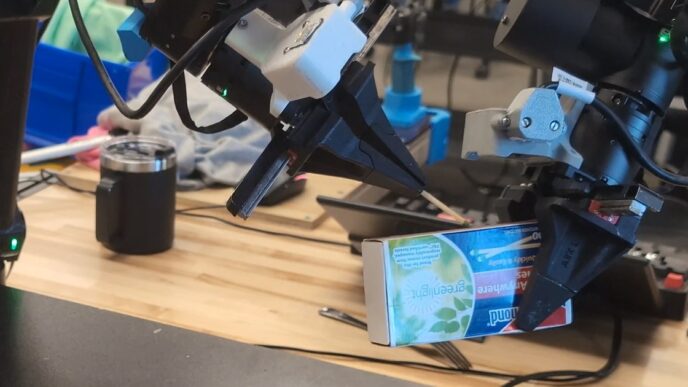
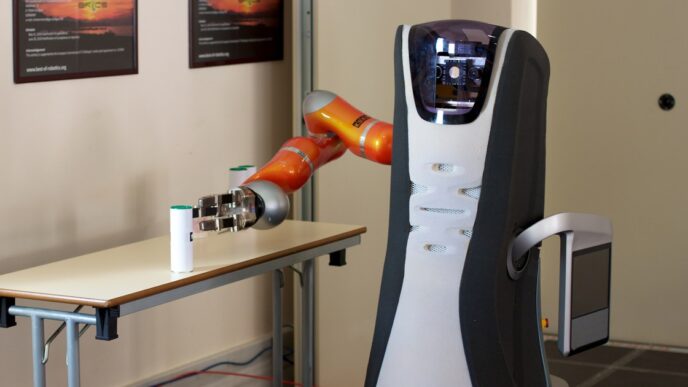
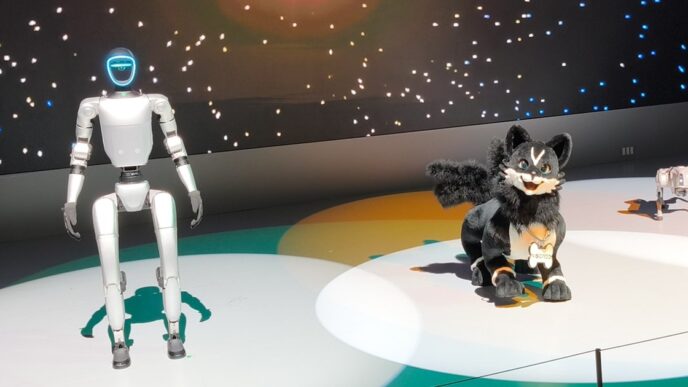
Microsoft’s post suggests 16 uses. One of them reads: “Robotics: Select among predefined robot actions based on observations, task goals, and operating constraints.” That’s a fixed menu of moves, a different job from the vision-language-action models that output continuous motion. The post shows no robot, no robotics customer and no robotics benchmark. Its closing section says only that decision models could help people “guide and control” AI agents as they take action “in the real world.”
Microsoft’s docs tell developers to validate the model on their own data and set confidence thresholds by the cost of false positives and false negatives. For a mis-routed support ticket that cost is small. For a machine that moves near people it isn’t, so the first robot demo will matter more than the next benchmark.
The next dates to watch are OpenAI’s general-availability release for the Decisions API, which it puts in the coming weeks, and Microsoft’s rebased version, which has no date. When the second one ships, the 35x and 83.5% figures will need to be run again.
Frequently asked questions
How much does Microsoft-Decision-1 cost?
Input tokens cost $0.042 per million and output tokens are free, according to Microsoft’s announcement. OpenRouter lists the same rate.
Is Microsoft-Decision-1 a chatbot?
No. It’s post-trained from Alibaba’s Qwen3.5-9B language model, but it only returns probabilities for options you supply and doesn’t write explanations. Microsoft’s docs say to use a regular LLM when you need to create, summarize, rewrite or explain, and suggest combining the two: let Decision-1 gate or route a request, then pass approved ones to a generative model.
Where can I use Microsoft-Decision-1?
In the Microsoft Foundry model catalog, which needs an Azure subscription, and through OpenRouter’s Decisions API, where Azure is the only provider. It’s a hosted model. We found no weights to download.
Is it really 35 times faster than GPT-6 Sol?
That’s Microsoft’s median (P50) latency comparison from its own benchmarking, and the post doesn’t say how Sol was configured. It applies to one-pass decision tasks, not to general use: Decision-1 returns a score, while Sol can reason and write. OpenRouter’s live data showed a median of 0.32 seconds for Decision-1 over three days when we checked on October 11.
Sources
All accessed October 11, 2026.
- Achint Srivastava, Microsoft, “Introducing Microsoft-Decision-1, our model for fast decision-making,” Command Line (October 9, 2026; updated October 10): commandline.microsoft.com
- Internet Archive copy of the same post saved October 9, 2026 (original “4.5 times quicker than Quyet-1.0-Large” wording): web.archive.org
- Microsoft Learn, “Deploy and use Microsoft-Decision-1 in Microsoft Foundry” (question types, deployment types, limitations): learn.microsoft.com
- OpenRouter, Microsoft-Decision-1 model page (price, 32,768-token context, release date, latency, provider): openrouter.ai
- OpenAI API docs, “Decisions” guide (public beta, gpt-6-luna, $0.10 per 1M input tokens): developers.openai.com
- TypeSafe AI, “Introducing System One Models & Jev” (Jev price comparison table): typesafe.ai
- Thomas Claburn, “Microsoft leans on open weight model from Chinese AI lab to challenge Jev,” The Register (October 10, 2026): theregister.com
Related: GPT-6 is free in ChatGPT, but free users get Luna, not Sol · Claude Haiku 5.5 matches GPT-6 Luna’s 10-cent price · What is a robot foundation model? · More LLM news
Last updated: October 11, 2026. To report an error, see our corrections page. Articles are drafted with AI assistance and reviewed and edited by an editor; see our editorial policy.