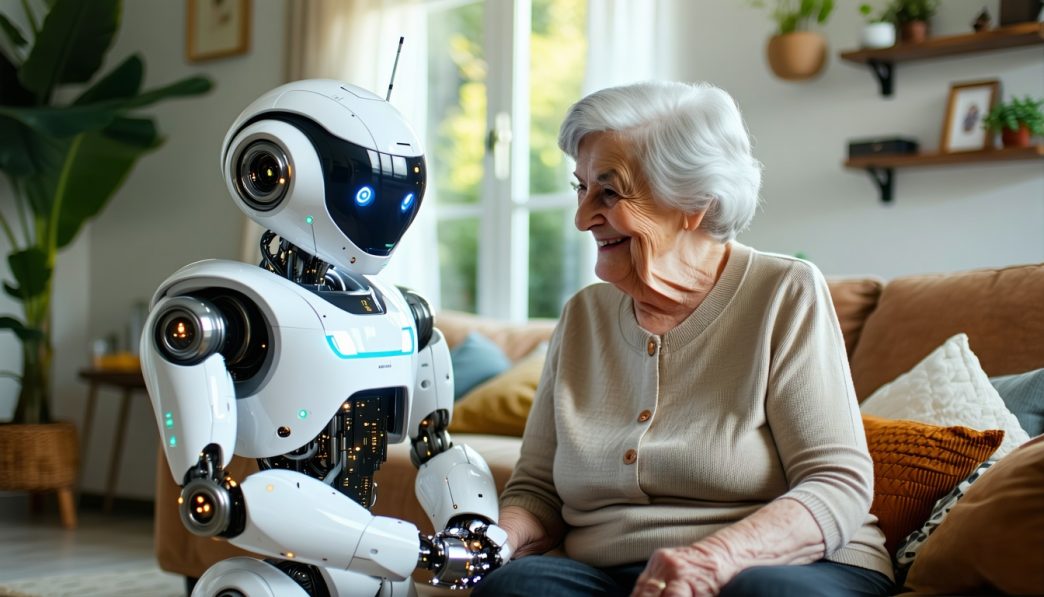
Aging in Place with AI and Robotics
The Concept of Aging in Place
Aging in place refers to the ability of elderly individuals to live independently in their own homes or familiar surroundings as they age. This concept emphasizes comfort and autonomy while accommodating the needs that arise with aging, such as increased healthcare demands and mobility assistance. Aging in place allows seniors to maintain their independence and improve their quality of life.
Several studies have shown that aging in place can lead to better mental health outcomes and reduced feelings of loneliness among seniors. The support of technology, specifically AI and robotics, plays a vital role in making aging in place a feasible and sustainable option.
| Aspect | Importance |
|---|---|
| Independence | Enhances self-reliance and emotional well-being. |
| Familiarity | Retains home environment and personal history. |
| Accessibility | Addresses mobility and healthcare needs with support. |
Introduction to AI and Robotics in Elder Care
The introduction of AI and robotics into elder care marks a significant advancement in how society supports aging populations. Technology solutions leverage artificial intelligence to communicate, assist, and facilitate daily living activities for seniors. These innovations contribute to the future of elder care robotics, changing the landscape of how care is perceived and delivered. 
AI and robotics offer various functionalities tailored to seniors, including companionship, mobility assistance, and healthcare monitoring. For example, robots can provide reminders for medications, alert caregivers in emergencies, and offer companionship to reduce social isolation.
Innovations in this field are not only focused on providing convenience but also aim to enhance the safety and well-being of seniors. Research indicates that robots in elder care can significantly improve the overall quality of life for elderly individuals and ease the concerns of their family members.
| Technology | Application |
|---|---|
| Companion Robots | Provide social interaction and emotional support. |
| Mobility Assistance Robotics | Help seniors navigate their environment safely. |
| Smart Home Integration | Automate daily tasks and enhance security. |
For those interested in exploring more about how robotics can assist the elderly, articles such as elder care and companionship robots and robots helping with daily tasks for seniors offer deeper insights into specific applications and benefits.
Benefits of AI and Robotics in Elder Care
AI and robotics are rapidly transforming elder care, providing numerous advantages that enhance the quality of life for elderly individuals. By focusing on reducing social isolation, enhancing safety and security, and improving healthcare monitoring, these advanced technologies hold great potential in the future of elder care robotics.
Reducing Social Isolation
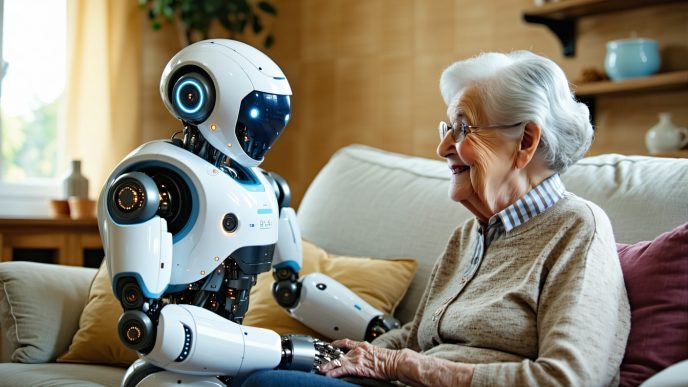
Social isolation is a common issue faced by the elderly, often leading to feelings of loneliness and depression. Robotics can play a crucial role in mitigating this problem. Companion robots can engage in conversations, play games, and provide emotional support, creating a sense of companionship for seniors.
| Impact Area | Benefits |
|---|---|
| Companionship | Reduces feelings of loneliness |
| Engagement | Encourages social interaction |
| Emotional Support | Aids in mental health |
For more on the types of robots available, check our article on elder care and companionship robots.
Enhancing Safety and Security
Safety and security are paramount for elderly individuals living independently. Robotics can significantly enhance these aspects through features such as fall detection, emergency alerts, and support for daily tasks.
| Safety Feature | Description |
|---|---|
| Fall Detection | Detects falls and alerts caregivers or family members |
| Emergency Alerts | Provides immediate assistance in emergencies |
| Monitoring Systems | Keeps track of movements to ensure safety |
Robots can also assist with medication reminders, promoting adherence to healthcare routines. For more information on how robots are assisting with medication reminders, refer to our article on robots assisting with medication reminders.
Improving Healthcare Monitoring
Healthcare monitoring is essential for elderly individuals, especially those with chronic conditions. Robotics can facilitate continuous health monitoring, ensuring timely interventions when necessary. These systems can track vital signs, and health metrics, and help manage medication schedules.
| Monitoring Aspect | Benefits |
|---|---|
| Vital Signs Tracking | Provides real-time health data |
| Health Intervention | Promotes early detection of health issues |
| Medication Management | Ensures timely medication adherence |
Robots can serve a critical role in supporting elderly individuals with various health challenges, including dementia. For more on this topic, explore our article on ai companions for dementia patients.
The integration of AI and robotics in elder care not only offers practical solutions but also improves the overall well-being of elderly individuals. The positive outcomes related to companionship, safety, and health monitoring illustrate the transformative potential of technology in the realm of elder care.
Use Cases and Applications
AI and robotics are transforming the landscape of elder care, providing various use cases and applications that enhance the quality of life for elderly individuals. This section explores three prominent applications: companion robots, mobility assistance robotics, and smart home integration.
Companion Robots
Companion robots are designed to provide social interaction and emotional support to seniors. These robots can engage in conversations, play games, and help reduce feelings of loneliness among older adults. Many studies have shown that social interaction with a robotic companion can improve mental well-being and provide companionship.
| Feature | Benefits |
|---|---|
| Conversation | Engages seniors in meaningful dialogue |
| Emotional Support | Helps alleviate feelings of loneliness |
| Entertainment | Provides games and activities to stimulate thinking |
For more information on how these robots function, visit our article on elder care and companionship robots.
Mobility Assistance Robotics
Mobility assistance robots are essential for enhancing independence among elderly individuals. These robots can assist with walking, providing support and stability. They help prevent falls and enable seniors to move safely within their homes and communities.
| Feature | Benefits |
|---|---|
| Physical Support | Aids in walking to prevent falls |
| Navigation Help | Guides seniors safely through their environment |
| Activity Encouragement | Motivates seniors to remain active |
For further insights into this technology, check our article on assistive robots for elderly mobility and robots providing physical support.
Smart Home Integration
Smart home technologies combined with robotics create an integrated system that can monitor and assist elderly individuals effectively. These systems can manage daily tasks, adjust lighting, control temperatures, and send alerts if something is amiss.
| Feature | Benefits |
|---|---|
| Automated Task Management | Simplifies daily chores for seniors |
| Remote Monitoring | Family members can oversee their loved one’s well-being |
| Safety Alerts | Notifies caregivers in case of emergencies |
Smart home integration allows elderly individuals to maintain their independence while ensuring safety and convenience. For more on how robots assist with daily tasks, visit our article on robots helping with daily tasks for seniors.
As the future of elder care robotics unfolds, these applications play a vital role in supporting aging individuals and providing peace of mind to their families.
Addressing Concerns and Challenges
As the integration of AI and robotics in elder care progresses, several concerns and challenges arise. It is crucial to examine these issues to ensure that the future of elder care robotics remains beneficial and effective.
Privacy and Ethical Considerations
The use of AI and robotics in elder care raises significant privacy and ethical questions. The collection of personal data by robots designed to assist seniors can lead to concerns about how this information is used and who has access to it. For example, companionship robots and health-monitoring devices may track sensitive information including health status and activity patterns.
The ethical implications of relying on technology instead of human interaction need to be addressed. While robots can provide assistance and companionship, they should support rather than replace human caregivers. For more insights on robots providing companionship, visit our article on elder care and companionship robots.
Cost and Accessibility
The cost associated with implementing AI and robotics technology in elder care can be a barrier to accessibility for many families and care facilities. The initial investment for advanced robotic systems can be substantial, which may discourage adoption, especially among lower-income households.
The table below depicts potential costs related to different categories of elder care robotics:
| Type of Robot | Estimated Cost |
|---|---|
| Companion Robots | $1,000 – $3,000 |
| Mobility Assistance Robotics | $2,000 – $5,000 |
| Medication Reminder Systems | $500 – $1,500 |
| Smart Home Devices | $200 – $2,000 |
Affordable options and subsidies need to be explored to ensure that all elderly individuals can benefit from these advancements. Information on robots that assist with medication reminders can be found in our article on robots assisting with medication reminders.
Acceptance and Adoption Rates
The acceptance of robotic systems in elder care is not universally embraced. Factors contributing to this reluctance include fear of technology, perceived lack of effectiveness, and generational attitudes towards robots. Older adults may require education and demonstration to feel comfortable utilizing these systems.
Community campaigns and training programs can play an important role in enhancing acceptance. The table below outlines potential approaches to encourage adoption rates:
| Approach | Objective |
|---|---|
| Community Education Programs | Raise awareness and understanding of technology benefits |
| Demonstration Workshops | Hands-on experiences to alleviate fears |
| Feedback Mechanisms | Involve end-users in the development process |
Addressing these concerns and challenges is vital for paving the way for the future of elder care robotics. The balance between technology and human interaction is essential in maintaining dignity and quality of life for elderly individuals. For additional insights, explore our articles on robots helping with daily tasks for seniors and assistive robots for elderly mobility.
The Future Landscape of Elder Care
As technology continues to evolve, the future of elder care robotics holds significant promise for improving the quality of life for older adults. Innovations in artificial intelligence (AI) and robotics will reshape how aging populations receive support and care.
Advancements in AI Technology
Recent advancements in AI technology play a crucial role in developing robotic systems tailored for elder care. These innovations enable robots to become more intuitive and responsive, facilitating better interaction with older adults. As AI algorithms improve, robots gain the ability to learn from user behavior, adapt to individual needs, and provide personalized experiences.
One significant area of focus is the development of AI companions that understand and respond to the emotional and physical needs of seniors. For instance, AI companions can offer reminders for medications, reducing the risk of missed doses, or engage in conversations that can reduce feelings of loneliness. These advancements are essential for enhancing the well-being of elderly individuals living independently. More on this can be found in our article on robots assisting with medication reminders.
Integration with Healthcare Systems
The integration of robotics and AI with existing healthcare systems is vital for the future of elder care. By connecting robotic systems to health monitoring platforms, caregivers can gain access to real-time data about seniors’ health conditions. This integration enables early intervention and more efficient management of chronic illnesses.
| Integration Aspect | Benefits |
|---|---|
| Health Monitoring Systems | Allows continuous tracking of vital signs and alerting caregivers for any anomalies. |
| Emergency Response Systems | Facilitates immediate support in case of falls or other medical emergencies, enhancing safety. |
| Remote Consultations | Bridges the communication gap between healthcare providers and elderly patients, ensuring regular check-ups. |
Robots for fall detection and emergencies are becoming integral tools, providing peace of mind for families and caregivers. Their ability to swiftly alert emergency services is vital in enhancing safety measures for seniors. For more information, check out our article on robots for fall detection and emergency alerts.
Supporting Aging Populations
Robotics and AI are set to support aging populations in various ways. As daily tasks become more challenging for seniors, assistive robots can help with household chores and mobility. These robots not only ease the burden of daily responsibilities but also encourage independence among older adults.
The following table summarizes some key applications of robots in supporting elderly individuals:
| Application | Description |
|---|---|
| Assistive Robots for Mobility | Provide physical support and ensure safety during movement. More details can be found in our article on assistive robots for elderly mobility. |
| AI Companions for Dementia Patients | Offer companionship and cognitive support to dementia patients. More information is available in our article on ai companions for dementia patients. |
| Robots Helping with Daily Tasks | Assist with chores like cleaning and cooking, enhancing daily living. Explore more in our article on robots helping with daily tasks for seniors. |
The future of elder care robotics presents vast opportunities to improve the lives of seniors, ensuring they remain connected, supported, and cared for in their homes.