The White House has decided that imported robots are a national security problem, and that tariffs can wait. In a Section 232 proclamation signed on Wednesday, October 28, President Donald Trump agreed with a Commerce Department finding that imports of robotics, industrial machinery and their parts “threaten to impair the national security.” He then ordered trade negotiations, not duties, and gave Commerce and the U.S. Trade Representative 180 days to report back.
For anyone buying or building robots in the United States, that means nothing changes at the border today. But the Section 232 robotics proclamation keeps tariffs, quotas and fees on the table if talks fail. It also names humanoid and quadruped robots as defense-relevant, so the next step matters to more than industrial arm makers. Here’s what the document says, what it leaves out and what to watch before the spring of 2027.
- What’s new: on October 28, 2026, Trump concurred that imports of robotics, industrial machinery and their components threaten U.S. national security.
- Tariffs: none for now. The proclamation orders Commerce and the U.S. Trade Representative to negotiate agreements with trading partners instead.
- Deadline: a progress update is due within 180 days, which falls on April 26, 2027.
- The catch: tariffs, duties, quotas, fees and an investment-incentive program remain possible later, and the Commerce report behind the finding hasn’t been published.
What the Section 232 robotics proclamation says
Section 232 of the Trade Expansion Act of 1962 lets the President adjust imports that the Commerce Department finds threaten national security. It’s the same law used for tariffs on steel, aluminum, copper, autos, trucks, lumber, semiconductors, pharmaceuticals, polysilicon and drones, all of which the White House fact sheet lists as earlier actions.
The robotics proclamation summarizes the Commerce Secretary’s findings in several steps:
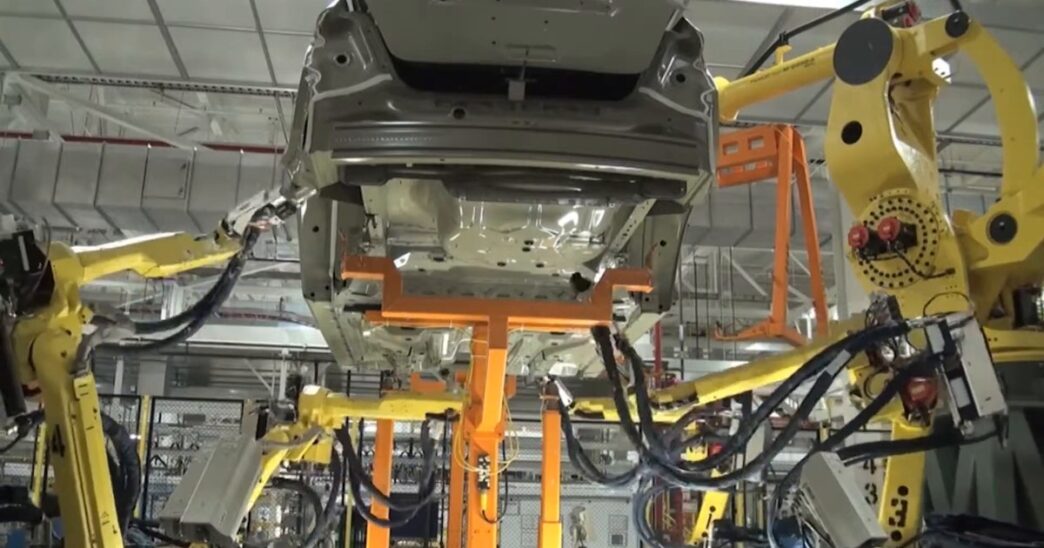
- Defense use. Robots and industrial machinery help build aircraft, tanks, ships, weapons and munitions, and the defense industry’s ability to surge production “relies on industrial robotics and machinery.”
- Economic weight. The document cites about $7.1 trillion in shipments of manufactured goods in 2024 and about $86 billion worth of equipment produced in 2024.
- Import reliance. The United States “relies on foreign imports for most types of robotics and industrial machinery,” and the value of those imports has grown over the last decade.
- Security risk. Robots and machinery “from certain foreign entities pose unique security and safety risks,” including cybersecurity vulnerabilities, because they process and store sensitive data.
- Capacity gap. Despite recent factory investment, the country “still produces less robotics and industrial equipment than it consumes.”
The President wrote that he concurs with the finding and that “it is necessary and appropriate to enter into negotiations with trading partners.” The fact sheet says those talks cover imports “from any country.”
No tariffs now, but the proclamation keeps them on the table
The operative part of the proclamation has three instructions. Commerce and the Trade Representative must jointly pursue, or continue, negotiations of agreements on robotics and machinery imports. They must update the President on those talks from time to time, with one update due within 180 days of October 28. And Commerce must keep monitoring imports and flag anything that “might indicate the need for further action.”
The proclamation sets no tariff, duty, quota or fee, but it spells out what could follow. Depending on how negotiations go, the President “may consider alternative remedies in the future, including imposing or modifying tariffs, duties, quotas, and fees; and establishing a program to incentivize new investment in United States production of robotics and industrial machinery.” Under the statute, the document notes, he can also act if an agreement isn’t reached within 180 days, isn’t being carried out or is ineffective.
The 180-day mark is a deadline for an update and a trigger point under the law. It isn’t an automatic tariff date. The proclamation doesn’t name a rate, a list of tariff codes or an effective date for any future measure.
What the investigation covered
Commerce opened the investigation on September 2, 2025, and asked for public comments in a Federal Register notice published September 26, 2025 (docket BIS-2025-0257). Comments were due October 17, 2025. The notice defined “robotics and industrial machinery” broadly: robots and programmable, computer-controlled mechanical systems, plus CNC machining centers, turning, milling, grinding and stamping machines, tool changers, jigs and fixtures, welding and handling tools, and specialty metalworking gear such as EDM and laser-cutting machines. Drones were excluded because they had their own Section 232 case.
The proclamation says the Secretary sent his report to the President within the past 90 days, but the report itself hasn’t been released. The National Association of Manufacturers described it as “unreleased.” Without it, there’s no public list of which product categories, countries or companies Commerce considers most risky, and no public figure for how much each category is imported.
Humanoids and quadrupeds are named. Companies and countries aren’t
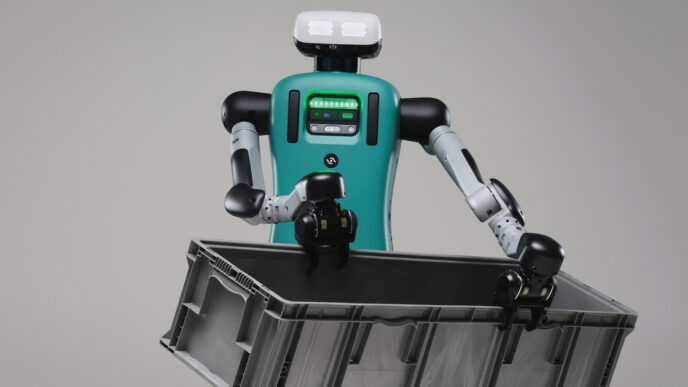
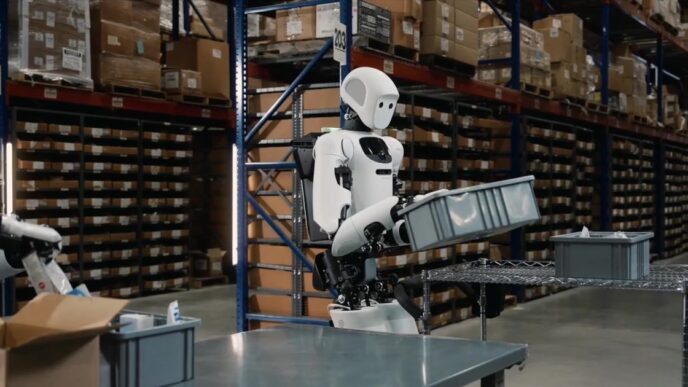
One line stands out for this site’s readers. The proclamation says advanced robots, “such as autonomous robots, humanoid and quadruped robots, and autonomous ground vehicles,” “provide combat support to the United States military,” including reconnaissance, casualty extraction and mine clearing. That puts mobile robots in the same national security frame as industrial arms and machine tools.
The document doesn’t name any company, product or country. Its security language refers only to “certain foreign entities.” That differs from the FCC’s July 28, 2026 action, which added foreign-produced mobile robots, including humanoids, to the agency’s Covered List and affects equipment authorization. The two actions are separate. The Section 232 proclamation doesn’t change FCC rules, and the FCC listing doesn’t set import duties.
How industry is reading it
Manufacturers who rely on imported equipment welcomed the pause on duties. “This is an important decision to help strengthen manufacturing in America,” said Jay Timmons, president and CEO of the National Association of Manufacturers, which called the outcome “a big win.”
Robot makers focused on what comes next. Brendan Schulman, vice president of policy and government relations at Boston Dynamics, wrote on LinkedIn that the next step is “negotiations over the next six months with trading partners to adjust imports, and then further consideration of other trade policy measures,” according to The Robot Report. Ash Sharma of Interact Analysis told the publication: “This shouldn’t be read as a new robotics tariff today, but it is a clear indication of the direction of travel.” He added that any later measures could affect “not just finished robots,” but also their components.
Robert Little, a former chief of robotics strategy at Novanta, told The Robot Report that gaps in domestic supply of “sensors, actuators, precision gears, encoders and more” worry him most. The Association for Advancing Automation (A3) argued in its October 2025 comments that tariffs would raise costs for U.S. system integrators and urged a national robotics strategy instead. Demand hasn’t stalled while the case ran: A3 reported on October 28 that North American companies ordered 10,989 robots worth $723.5 million in the third quarter, up 24.8% in units from a year earlier.
What to watch next
Watch for any announced agreement with a major robot-exporting partner, a published version of the Commerce report and the 180-day update due by April 26, 2027. If talks stall, the signal will be a new proclamation that names tariff rates, product codes or an investment-incentive program. Until then, the Section 232 robotics finding is a warning to importers, not a price change.
Frequently asked questions
Did Trump put tariffs on imported robots?
No. The October 28, 2026 proclamation found that robotics and industrial machinery imports threaten national security, but it ordered trade negotiations instead of tariffs. It doesn’t set any tariff, duty, quota or fee.
What is the 180-day deadline?
Commerce and the U.S. Trade Representative must update the President on negotiations within 180 days of October 28, 2026, which is April 26, 2027. The law also lets the President take other action if no agreement is reached in that window.
Which robots does the Section 232 proclamation cover?
It covers robotics, industrial machinery and their parts and components. The 2025 investigation notice listed robots, programmable computer-controlled systems, CNC machines and metalworking equipment, and excluded drones. The proclamation names humanoid and quadruped robots as defense-relevant.
Does the proclamation target Chinese robots?
It doesn’t name any country or company. It refers to security risks from “certain foreign entities,” and the White House fact sheet says negotiations cover imports from any country.
Will robot prices go up now?
Not because of this proclamation, which adds no new import charge. Future tariffs or quotas are possible if negotiations fail, and analysts say they could affect components as well as finished robots.
Sources
- The White House, “Adjusting Imports of Robotics, Industrial Machinery, and Their Parts and Components Into the United States” (proclamation, October 28, 2026; findings, quotes and the 180-day update): whitehouse.gov
- The White House, “Fact Sheet: President Donald J. Trump Adjusts Imports of Robotics, Industrial Machinery, and their Parts and Components into the United States” (October 28, 2026; “from any country” and earlier Section 232 actions): whitehouse.gov
- Federal Register, Proclamation 11077, “Adjusting Imports of Robotics, Industrial Machinery, and Their Parts and Components Into the United States” (FR Doc. 2026-22385; filed for public inspection October 30, 2026; scheduled for publication November 2, 2026 at 91 FR 69199): federalregister.gov
- Bureau of Industry and Security, “Notice of Request for Public Comments on Section 232 National Security Investigation of Imports of Robotics and Industrial Machinery,” 90 FR 46382 (September 26, 2025; start date, scope and comment deadline): federalregister.gov
- National Association of Manufacturers, “Trump Holds Off on New Machinery, Robotics Tariffs in Win for Manufacturers” (October 29, 2026; Jay Timmons quote): nam.org
- The Robot Report, Eugene Demaitre, “White House makes Section 232 determination regarding foreign-made robots” (October 29, 2026; Schulman, Little and Sharma comments): therobotreport.com
- Association for Advancing Automation, comments on the Section 232 investigation (October 17, 2025): automate.org (PDF)
- Association for Advancing Automation, “North American Robot Orders Increase 24.8% in Third Quarter of 2026” (October 28, 2026): automate.org
All sources accessed October 30, 2026, between about 7:15 and 7:50 AM ET.
Last updated: October 30, 2026. To report an error, see our corrections page. Articles are drafted with AI assistance and reviewed and edited by an editor; see our editorial policy.