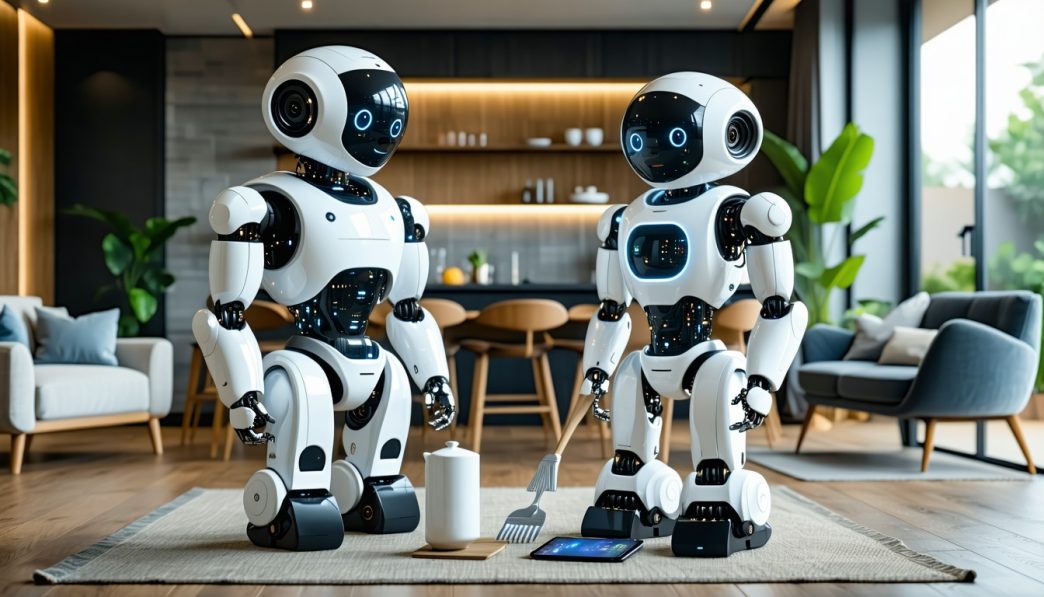
Evolution of Human-Robot Interaction
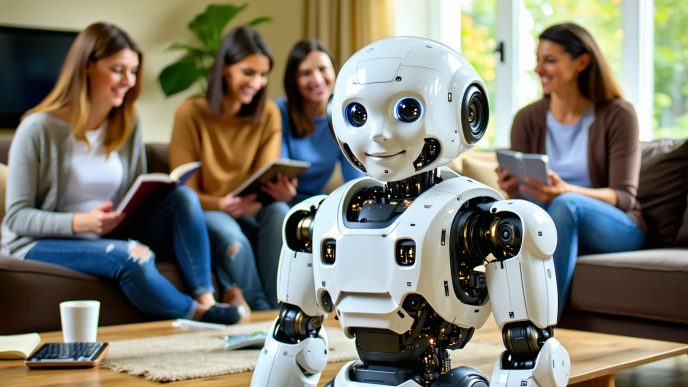
The field of human-robot interaction (HRI) has experienced significant evolution, particularly with the rise of collaborative robots. These advancements have transformed the way robots and people interact within various environments, including homes.
The Rise of Collaborative Robots
Collaborative robots, often referred to as cobots, are designed to work alongside humans, performing tasks that promote efficiency and enhance productivity. Unlike traditional robots that operate in isolation, cobots are equipped with advanced technologies that allow them to recognize and respond to human presence, making them suitable for home environments.
The continuous improvement in robotic technologies has led to their increased adoption in daily household activities. Key features of collaborative robots include user-friendly interfaces and safety protocols that ensure smooth interactions. More individuals are recognizing the advantages of incorporating these robots into their routines for tasks such as cleaning, personal assistance, and entertainment. 
To illustrate the growth of collaborative robots in homes, the following table summarizes their rising prevalence:
| Year | Number of Collaborative Robots in Homes |
|---|---|
| 2015 | 1 million |
| 2018 | 3 million |
| 2021 | 5 million |
| 2023 | 8 million |
Importance of Safe Human-Robot Interaction
As robots become more integrated into everyday life, ensuring safe human-robot interaction is paramount. The design of collaborative robots prioritizes safety features to prevent accidents and create a harmonious coexistence. This includes implementing sensors that can detect human motions and obstacles, allowing robots to intelligently navigate their environments.
Establishing trust between humans and robots plays a crucial role in successful interactions. Factors such as responsive behavior, understanding human emotions, and adherence to robot etiquette can significantly impact the level of trust that individuals place in these machines. For more on building trust, visit our article on trust between humans and robots.
The emotional aspect of HRI is also noteworthy. As robots increasingly engage in daily life, recognizing and responding to human feelings becomes essential. Research has shown that incorporating robotic social cues can enhance interactions, leading to a more engaging experience. For further insights on how robots understand emotions, explore our article on robots understanding human emotions.
By addressing safety and emotional connections, the collaboration between humans and robots can flourish, leading to more effective and enjoyable experiences in homes. Key considerations include encouraging robot responsiveness to human actions and ensuring a comfortable atmosphere for all parties involved. For tips on improving interaction, check out our article on robot responsiveness to humans.
Understanding Collaborative Robots
Collaborative robots, often referred to as cobots, are designed to work alongside humans in a shared environment. This section explores the defining characteristics of these robots, along with the significant benefits they offer in home settings.
Characteristics of Collaborative Robots
Collaborative robots possess several features that distinguish them from traditional industrial robots. They are designed for safe interaction with human operators, making them ideal for home use. Key characteristics include:
| Characteristic | Description |
|---|---|
| Safety Features | Equipped with sensors and emergency stop mechanisms to prevent accidents. |
| Intuitive Controls | Designed with user-friendly interfaces for easy operation and programming. |
| Versatility | Able to perform a variety of tasks, adapting to different home environments. |
| Compact Design | Generally smaller and more flexible, allowing for easy movement and placement. |
| Responsive Interaction | Ability to respond to human actions and cues, enhancing teamwork in task completion. |
These characteristics enable effective teamwork between collaborative robots and people, fostering a smoother human-robot interaction. For a deeper understanding of interaction principles, explore our article on human robot interaction.
Benefits of Collaborative Home Robots
The introduction of collaborative robots in homes comes with numerous advantages. These benefits enhance the quality of life for users by providing support in various daily activities.
| Benefit | Description |
|---|---|
| Increased Efficiency | Automating mundane tasks, such as cleaning and cooking, allows individuals to focus on more important responsibilities. |
| Improved Accessibility | Providing assistance to elderly or disabled individuals, enabling them to maintain independence at home. |
| Enhanced Interaction | Facilitating engagement through robotic social cues that promote positive interactions. |
| Personalized Support | Adapting to individual needs and preferences, contributing to a more tailored user experience. |
| Emotional Engagement | Supporting robots understanding human emotions and building trust between humans and robots adds an emotional layer to assistance. |
Collaborative robots significantly enhance home life, fostering a more efficient and supportive environment. Their design reflects an emphasis on robot etiquette and behavior design, ensuring they integrate smoothly into everyday tasks and interactions. As these technologies advance, understanding their role in society continues to grow, especially in regards to robot responsiveness to humans and overcoming barriers to human robot collaboration.
Design Considerations
Designing collaborative robots in homes involves various factors that enhance their effectiveness in working alongside humans. Key design considerations include intuitive user interfaces, safety mechanisms, and adaptability to human behavior.
Intuitive User Interfaces
The user interface is crucial for effective interaction between humans and robots. An intuitive design allows users to operate robots without needing extensive technical knowledge. Features such as touchscreens, voice commands, and gesture controls are essential for creating a seamless experience.
| Interface Type | Description | User-Friendly Features |
|---|---|---|
| Touchscreen | A visual interactive display | Icons, easy navigation |
| Voice Commands | Understanding human speech | Natural language processing |
| Gesture Controls | Recognizing hand and body movements | Simple motions for commands |
Effective interfaces improve user satisfaction and promote engagement with the robot. Insights into human-robot interaction show that intuitive design leads to better collaboration.
Safety Mechanisms and Sensors
Safety is a top priority in the design of collaborative robots. Robots must be equipped with various safety mechanisms and sensors to ensure secure interactions with people and the environment.
Key safety features include:
- Proximity Sensors: Detect objects and people nearby to avoid collisions.
- Emergency Stop Buttons: Allow users to immediately halt robot operations in emergencies.
- Safety Shields: Protect users from moving parts or heated surfaces.
These safety features are essential for providing a worry-free environment, allowing individuals to feel comfortable using these robots.
Adaptability to Human Behavior
Collaborative robots must be able to adapt to the nuances of human behavior. Understanding and responding to human cues enhances the interaction experience. Design considerations focus on the following aspects:
- Robot Responsiveness to Humans: Robots should quickly react to human commands and behavior. This responsiveness fosters trust and encourages collaboration. Check out more about robot responsiveness to humans.
- Robotic Social Cues: Integrating social cues into robot behavior can help bridge the gap between humans and robots. Recognizing facial expressions or responding to tone can create a more engaging experience. Read about robotic social cues for additional insights.
- Understanding Human Emotions: The ability to recognize and respond to human emotions is vital for creating a strong bond between humans and robots. This helps robots become more relatable and supportive. More information can be found on robots understanding human emotions.
Considering these design aspects ensures that collaborative robots in homes not only operate effectively but also foster positive interactions with their human companions.
Shared Tasks Between Robots and People
Collaborative robots in homes are designed to assist with a variety of tasks, making everyday activities more efficient and enjoyable. This section explores some common areas where robots and humans work together, including household chores, personal assistance, and entertainment.
Household Chores and Cleaning
One of the primary roles of collaborative robots in homes is to assist with household chores, specifically cleaning tasks. Many robots are equipped to perform repetitive jobs, reducing the burden on homeowners.
| Task | Robot Capability | Human Involvement |
|---|---|---|
| Vacuuming | Autonomous navigation and cleaning | Initial setup and monitoring |
| Mopping | Wet cleaning capabilities | Prepping the surface |
| Dishwashing | Load and unload dishes | Pre-rinsing and organizing |
| Lawn mowing | Scheduled mowing paths | Setting boundaries |
Robots designed for cleaning can navigate efficiently through home environments. They often feature sensors that allow them to avoid obstacles and safely maneuver around furniture. By taking over these repetitive tasks, robots free up time for individuals to focus on more rewarding activities.
Personal Assistance and Care
Robotic assistants also play a significant role in personal care and assistance, particularly for the elderly or individuals with disabilities. These collaborative robots can perform various functions that enhance the quality of life.
| Function | Robot Capability | Human Involvement |
|---|---|---|
| Medication reminders | Alerts for dosage times | Monitoring adherence |
| Mobility assistance | Support for walking | Personal oversight |
| Home monitoring | Sensors for safety | Emergency response |
These robots may remind individuals about medications, provide mobility support, and even monitor home safety to ensure users’ well-being. Such interaction not only helps those in need but also serves to foster a deeper connection between humans and machines, as robots increasingly cater to emotional and social needs. For more on this topic, refer to our article on robots understanding human emotions.
Entertainment and Social Interaction
Robots are also designed to engage in entertainment and social interaction, providing companionship and enhancing social experiences. This adds a new dimension to the human-robot relationship, allowing for engaging interactions.
| Activity | Robot Capability | Human Involvement |
|---|---|---|
| Games and puzzles | Play alongside or assist | Participation in the activity |
| Conversational skills | Basic dialogue and prompts | Engaging in conversation |
| Music and storytelling | Playback and narration | Audience reaction |
Collaborative robots designed for entertainment often feature advanced interaction skills, using robotic social cues to respond appropriately to human behavior. They can follow simple conversational prompts and engage in storytelling, contributing positively to the emotional well-being of users.
By facilitating household chores, strengthening personal assistance, and offering entertainment, collaborative robots significantly enhance the daily experiences of individuals. With advancements in the design of these robots, the potential for deeper integration into human lives continues to grow. For insights on social engagement, check out our article on trust between humans and robots.
Space Sharing and Navigation
As collaborative robots, or cobots, integrate into home environments, efficient navigation and effective space sharing become crucial elements of their design. These capabilities ensure that robots and people can coexist and perform tasks without disrupting each other’s activities.
Efficient Navigation in Home Environments
Successful navigation in home settings involves the ability to move seamlessly while avoiding obstacles and maintaining awareness of human presence. Robots are equipped with various sensors and algorithms that help them understand their surroundings. Technologies such as LIDAR, cameras, and ultrasonic sensors enable robots to create an accurate map of their environment, allowing for smooth traversal.
Factors affecting navigation efficiency include:
| Factor | Description |
|---|---|
| Sensor Range | Determines how far the robot can detect obstacles. |
| Mapping Accuracy | Affects the robot’s ability to navigate without collisions. |
| Speed | The rate at which the robot moves, balancing efficiency and safety. |
Dividing Tasks and Areas
Collaborative robots in homes must be able to distinguish between different tasks and allocate areas effectively. This requires a clear understanding of both human and robot activities. Intelligent task allocation helps prevent overlaps in responsibilities, which may lead to confusion or interruption.
Common methods for task division include:
| Method | Description |
|---|---|
| Proximity Awareness | Robots assess their distance from humans and adjust their tasks accordingly. |
| Task Priority | Certain tasks may be prioritized based on urgency or importance, influencing how they are assigned. |
| Shared Scheduling | Collaborative robots can sync with human schedules to optimize task completion without interfering with daily routines. |
Ensuring Safety and Privacy
Safety is paramount in any human-robot interaction. Cobots must be designed with safety mechanisms to avoid accidents. This includes features such as emergency stop functions and predictive algorithms that estimate human movement patterns.
Privacy considerations are also essential. As robots navigate the home, they may collect data on human habits and preferences. Implementation of data security measures ensures that sensitive information is protected.
Key safety features to consider:
| Safety Feature | Description |
|---|---|
| Collision Detection | Sensors that instruct the robot to stop or reroute when an obstacle is detected. |
| Emergency Stop | A manual or automatic function to halt operations in case of an emergency. |
| Privacy Settings | Options to limit data collection and ensure user consent for information gathering. |
Overall, effective space sharing and navigation are vital components of designing collaborative robots for homes, facilitating a harmonious living environment. Efforts to understand human-robot interaction continue to make these systems more intuitive and reliable. For insights on social aspects, look into robotic social cues and trust between humans and robots for a deeper understanding of these interactions.
Emotional Connection in Human-Robot Interaction
The emotional connection between humans and robots is a key factor in fostering effective collaboration in environments such as homes. Understanding how to design robots that can engage emotionally with people enhances their usability and acceptance.
The Role of Emotions in Robot Design
Incorporating emotions into robot design involves creating robotic social cues that enable robots to respond appropriately to human feelings. By imbuing robots with emotional intelligence, designers aim to make interactions more intuitive and relatable. Key aspects include:
| Emotion | Design Feature |
|---|---|
| Happiness | Smiling interfaces, positive tones |
| Sadness | Sombre colors, gentle tones |
| Frustration | Responsive feedback, calming features |
Effective design can influence how users perceive and interact with collaborative robots in homes. This can be explored further in our article on robotic social cues.
Building Trust and Engagement
Trust is a fundamental element in human-robot interaction, particularly with collaborative robots in homes. Establishing trust involves several factors, including transparency in robot actions, consistent behavior, and reliability. The following elements contribute to building trust:
| Factor | Description |
|---|---|
| Predictability | Robots must perform tasks consistently |
| Communication | Clear and informative feedback mechanisms |
| Responsiveness | Immediate reactions to human interactions |
By focusing on strategies that enhance trust between humans and robots, developers can create more effective and engaging robots that positively impact user experiences.
Addressing Social and Emotional Needs
Addressing the social and emotional needs of users involves designing robots that can understand and respond to human emotions. Robots that can read emotional cues, such as facial expressions or vocal tones, can provide more personalized interactions. This capability includes:
| Need | Robot Response |
|---|---|
| Loneliness | Engaging conversation, companionship |
| Stress | Calming interactions or entertainment |
| Motivation | Encouragement and positive reinforcement |
By exploring how robots understand human emotions, developers can enhance the emotional connection between users and robots, thus improving overall interaction quality. For practical applications, the integration of voice and gesture interaction with robots is also important, as it allows for natural communication methods.
In summary, the emotional connection in human-robot interaction is vital for successful collaboration in home environments. By emphasizing emotional intelligence, trust-building features, and the ability to meet social and emotional needs, developers enhance the bond between humans and collaborative robots.
Future Prospects
Advancements in Robotics Technology
The field of robotics is evolving rapidly. Future advancements are expected to enhance the functionality of collaborative robots in homes, focusing on improved artificial intelligence (AI), machine learning, and sensory technology. These developments aim to create robots that can better understand and respond to human needs and preferences.
| Technology | Description |
|---|---|
| Artificial Intelligence | Integration of sophisticated algorithms for better decision-making and adaptability. |
| Machine Learning | Ability for robots to learn from interactions and improve performance over time. |
| Sensory Technology | Enhanced sensors for better perception of human actions and environmental conditions. |
Integration with Smart Homes
The integration of collaborative robots with smart home systems is growing. These robots will work seamlessly with other smart devices, allowing for better task management and coordination. The future will likely see robots that can communicate with smart appliances, lighting, and security systems, creating a fully automated and safe living environment.
| System | Functionality |
|---|---|
| Smart Appliances | Robots can coordinate tasks such as dishwashing or laundry. |
| Smart Lighting | Adjusting lighting based on time of day or activity. |
| Security Systems | Monitoring home security in collaboration with surveillance cameras and alarms. |
Ethical Considerations and Future Trends
As the use of collaborative robots increases, ethical considerations become essential. Issues surrounding privacy, job displacement, and the emotional well-being of users must be addressed. Future trends may include establishing guidelines and regulations to ensure that robots are designed and used in a way that is safe and beneficial for society.
| Ethical Concern | Description |
|---|---|
| Privacy | Ensuring that robots do not infringe on personal privacy while collecting data. |
| Job Displacement | Addressing potential job losses due to automation. |
| Emotional Impact | Understanding how interactions with robots affect human emotions and social relationships. |
Ongoing research in human robot interaction is crucial in shaping the future landscape of collaborative robots in homes. It seeks to balance technological advancements with ethical implications, ensuring a harmonious coexistence between humans and machines.