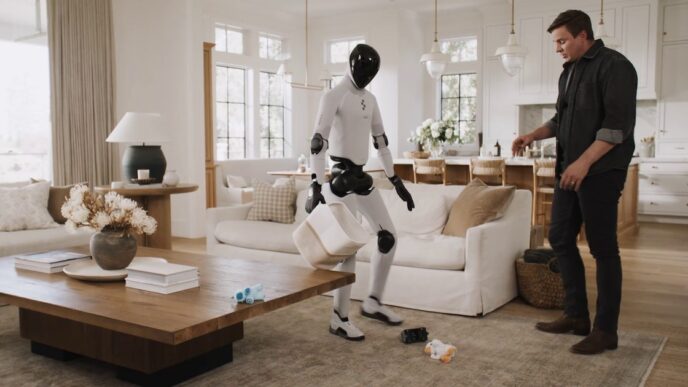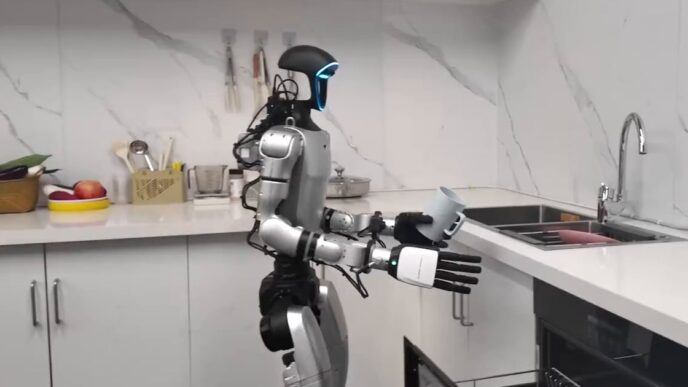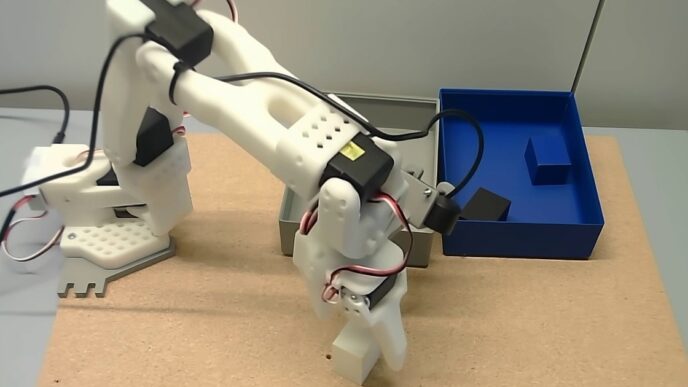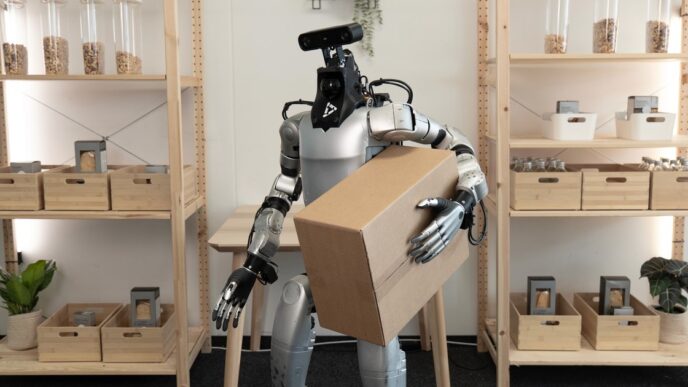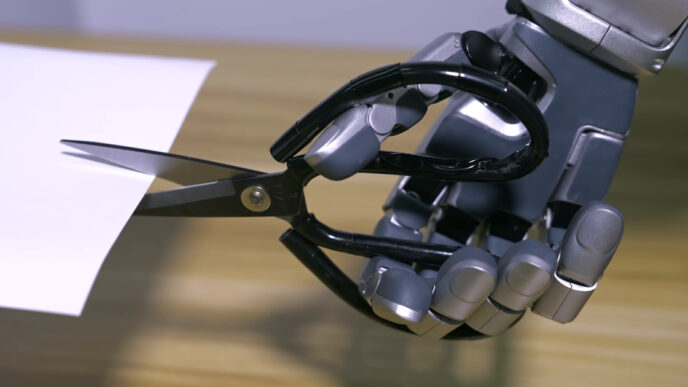
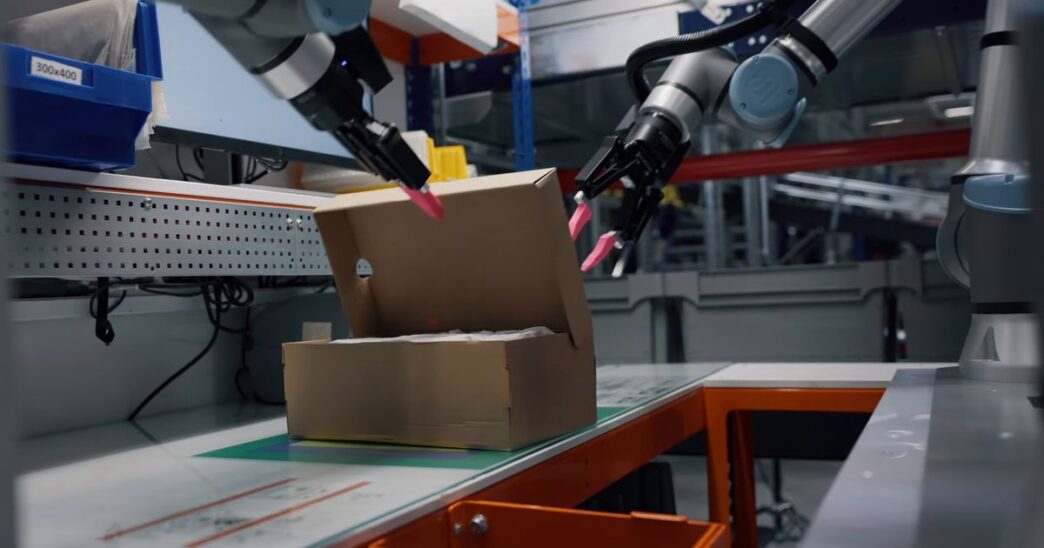
Otto Group, the Hamburg-based retail group, will test up to 25 robots from Sereact on one of e-commerce’s messiest jobs: sorting returned orders. The two companies said on Wednesday, October 28, that ten dual-arm systems will start at an Otto Group logistics center in Poland, with 15 more planned “based on initial results.” The robots will grasp, identify, assess and sort returned items using Cortex, Sereact’s AI model for robots.
It’s a pilot, not a rollout. Otto Group says it will weigh a wider rollout across its logistics network only if the second phase succeeds, and neither company disclosed the contract value, the site, a start date or performance targets. What makes the Otto Group Sereact deal worth a close look is the problem itself, and the fact that Sereact already runs similar stations for Zalando.
- What’s new: Otto Group and Sereact announced a two-phase returns-processing project on October 28, 2026: 10 dual-arm robot systems first, up to 25 in total.
- Where: an Otto Group logistics center in Poland. The site and start date weren’t named.
- Price: not disclosed. Sereact runs and maintains the robots under a Robotics-as-a-Service model.
- The catch: this is a test. Phase two depends on early results, and a wider rollout is only being evaluated.
What the Otto Group Sereact pilot covers
The announcement describes a staged project. In phase one, ten “AI-controlled dual-arm systems” go into the Polish site. In phase two, “15 more robotic arms are planned to be added based on initial results, scaling the program to a total of 25.” The release switches between systems and arms, so it isn’t fully clear whether 25 means 25 dual-arm stations. The headline figure is “up to 25 AI-controlled robots.”
The two companies say they are developing the system together during the project and that each stage will feed operational data back into it. The stated aim is to find out whether the technology meets “the reliability, flexibility, and quality standards required for broader use.” In other words, the standards haven’t been met yet, or at least haven’t been shown.
“Returns are notoriously hard to automate, and Physical AI has the potential to change that,” said Martin Umland, Group Vice President Supply Chain Management at Otto Group. “This project lets us find out, at real scale, how far Physical AI can take us.”
On our readiness scale, that puts the Otto project at the pilot stage: real site, real items, limited scale and no commitment beyond the test. Otto Group says the project is part of a medium-term plan to invest €350 million in technology and AI.
Otto Group is a big test bed. It reported revenue of €13.8 billion for the 2025/26 financial year, which ended February 28, and says it has well over 30,000 employees in more than 30 countries. The release says the Sereact project builds on a series of robotics investments across its logistics operations, though it doesn’t list them.
Why returns are hard for robots
Most warehouse automation works because it knows what’s coming: fixed products, known barcodes, predictable packaging. Returns break all three. Items come back folded, crumpled or stuffed into a different bag, and a retailer with many product categories keeps changing its range. Sereact CEO Ralf Gulde put it this way: “A robot that only knows yesterday’s catalog is of little use in a returns center. Cortex has to deal with whatever comes out of the next parcel.”
Sereact says Cortex can handle items it has never seen without product-specific teaching or a fixed catalog. The model decides in real time how to grasp an item, assess its condition and route it. People stay in the loop: the release says employees will move from repetitive grasping and lifting to supervision, exception handling and final quality decisions.
Sereact describes how it trains the model. It uses NVIDIA Isaac Sim and Isaac Lab to turn real picks from the returns line into thousands of simulated variants. It uses NVIDIA Cosmos world models to re-render those scenes with different garment states, packaging, materials and lighting. New policies are post-trained on NVIDIA Blackwell GPUs and tested against held-out cases before they reach the robots. Sereact says that when a robot struggles with an item, a tested fix can ship “within days instead of weeks.” That’s a company claim; neither partner published pick rates, error rates or throughput.
Sereact already runs returns stations for Zalando
The Otto project isn’t Sereact’s first returns job. On October 7, Sereact, Zalando and CEVA Logistics said Sereact’s dual-arm stations had entered live operations processing returned fashion items at sites in Greven, Germany, and Świebodzin, Poland. The companies called it the initial phase of a broader plan. Zalando joined Sereact’s Series B round as a strategic investor in July, and Sereact says that round raised $116 million.
The hardware is a known quantity too. On October 21, Teradyne Robotics, the parent of Universal Robots, announced a partnership under which Cortex runs on UR robot arms. Teradyne said the two companies have “already shipped hundreds of UR robots in dual-arm systems to live customer sites across Europe.” Its demo used two UR12e arms, and Teradyne said Cortex runs on NVIDIA Jetson Thor at the robot cell. The Otto release doesn’t name the arms it will use.
Gulde also pointed to a regulatory reason retailers care about returns. In the Teradyne release, he said reconditioning returned goods for resale helps retailers comply with European Union rules that prohibit destroying returned merchandise or sending it to landfill.
The business model matters as much as the robot. Under Robotics-as-a-Service, Sereact operates and maintains the systems, and the customer pays for the service rather than buying the hardware. That’s the same approach Formic uses for its robot fleets. It lowers the upfront risk for a retailer testing an unproven process, which may be why a 10-unit start is enough to begin.
What to watch next
The signal to wait for is phase two. If Otto Group adds the 15 extra arms, that means the first ten met its targets; if it names the targets, even better. Also watch for a start date and site name, any pick-rate or accuracy figures from either company, and whether Otto Group extends the system to other logistics centers. Until then, this is a real-site test of a hard problem, backed by a live deployment at Zalando, not yet a commitment.
Frequently asked questions
What did Otto Group and Sereact announce?
On October 28, 2026, they announced a two-phase project to test AI-controlled robots for processing returns at an Otto Group logistics center in Poland. Ten dual-arm systems come first, with up to 25 robots in total.
Is this a full rollout at Otto Group?
No. The second phase depends on initial results, and Otto Group says it will evaluate a broader rollout across its logistics network only if phase two succeeds. It’s a pilot.
What does the Sereact robot do with returns?
Sereact says its robots grasp, identify, assess and sort returned items using its Cortex AI model, which handles products it hasn’t seen before. Employees supervise, handle exceptions and make final quality decisions.
How much does the Sereact system cost?
Neither company disclosed pricing or the contract value. Sereact delivers the robots as a service, meaning it operates and maintains them and the customer pays for the service.
Where else does Sereact handle returns?
Sereact says its returns stations went live for Zalando at CEVA Logistics sites in Greven, Germany, and Świebodzin, Poland, in October 2026. Zalando is also an investor in Sereact’s Series B round.
Sources
- Sereact, “Otto Group and Sereact Bring NVIDIA-Powered Physical AI to Returns Processing” (October 28, 2026; phases, Cortex, NVIDIA training stack, RaaS, quotes, €350 million plan): sereact.ai
- Otto Group and Sereact press release via GlobeNewswire (October 28, 2026): globenewswire.com
- Sereact, “Sereact, Zalando and CEVA Logistics start AI-powered, automated returns handling in Germany and Poland” (October 7, 2026): sereact.ai
- Universal Robots / Teradyne Robotics, “Teradyne Robotics and Sereact partner to scale physical AI solutions for retail and logistics” (October 21, 2026): universal-robots.com
- Sereact, “Zalando & CEVA Logistics Automating Returns with Sereact” (official YouTube channel, October 2026): youtube.com
All sources accessed October 29, 2026, between about 7:20 and 7:55 AM ET.
Last updated: October 29, 2026. To report an error, see our corrections page. Articles are drafted with AI assistance and reviewed and edited by an editor; see our editorial policy.