


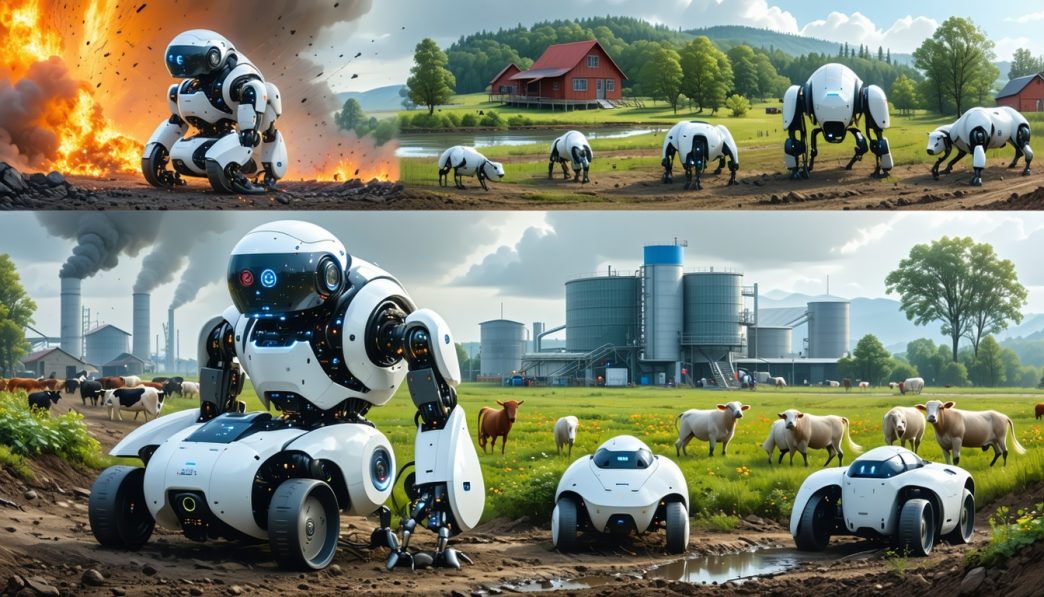
The World of Quadruped Robots
Introduction to Quadruped Robots
Quadruped robots, commonly known as four-legged robots, are designed to mimic the locomotion of animals such as dogs and horses. This unique configuration allows them to navigate various terrains more effectively compared to traditional wheeled robots. Quadruped robots can be utilized in diverse applications, from surveillance and exploration to delivery and entertainment. Their versatility makes them a subject of interest for tech enthusiasts, robotics hobbyists, and professionals alike.
The growing interest in quadruped robots can be attributed to advancements in engineering, artificial intelligence, and materials science. These robots are often equipped with sensors and cameras that enable them to interact with their environment, gather data, and execute tasks autonomously. For more information about specific models, readers may find interest in articles about the boston dynamics spot robot and xiaomi cyberdog.
Evolution of Quadruped Robotics
The journey of quadruped robotics has evolved significantly over the past few decades. To understand its current capabilities, it is important to trace its history and improvements. 
Historical Milestones in Quadruped Robotics:
| Year | Notable Development |
|---|---|
| 1980 | First prototypes using basic motors |
| 1990 | Introduction of basic sensing technology |
| 2000 | Advanced control algorithms developed |
| 2010 | Prototypes capable of navigating different terrains tested |
| 2020 | Commercial models introduced with enhanced AI |
The evolution began with rudimentary designs that could barely walk. Early models struggled with stability and efficiency. However, as technology progressed, innovations in robotics, control systems, and software algorithms led to significant improvements in performance. Recent advances allow quadruped robots to be more agile, stable, and capable of performing complex tasks, making them suitable for a variety of quadruped robot use cases.
Today’s quadruped robots are more than just robotic pets or toys. They have practical applications in areas such as delivery, security, and environmental monitoring. They are equipped with features that enable efficient quadruped robot navigation and adaptability to challenging terrains, further enhancing their utility in real-world applications. As the field continues to grow, future developments are expected to focus on improving power efficiency and stability across varied environments. For more insight into these aspects, the articles on quadruped robot stability and terrain provide valuable information.
Use Cases for Quadruped Robots
Quadruped robots are becoming increasingly versatile, demonstrating a range of applications across various industries. Their unique design and agility enable them to perform tasks that require adaptability and mobility. Below are some notable use cases for quadruped robots.
Surveillance and Security
Quadruped robots are well-suited for surveillance and security purposes. Their ability to navigate diverse terrains allows them to operate in various environments, from urban areas to rural landscapes. Equipped with advanced sensors and cameras, these robots can monitor premises, detect movements, and gather real-time data.
| Feature | Description |
|---|---|
| Mobility | Ability to traverse uneven surfaces and obstacles |
| Sensing | High-definition cameras and motion sensors for surveillance |
| Connectivity | Real-time data transmission for remote monitoring |
Organizations see the value in using quadruped robots for enhanced security measures, significantly improving safety in sensitive areas.
Search and Rescue Operations
In search and rescue scenarios, quadruped robots offer immense potential. They can access hard-to-reach locations, navigate through rubble, and assist rescue teams in locating individuals. Their mobility and stability make them effective in emergencies where traditional vehicles might struggle.
| Capability | Benefit |
|---|---|
| Terrain Navigation | Successfully traverse disaster-struck landscapes |
| Remote Operation | Operate in hazardous environments without risking human lives |
| Payload Capacity | Carry essential tools and supplies for first responders |
The use of quadruped robots in these operations can save lives and increase the efficiency of response efforts.
Delivery and Logistics
As e-commerce continues to grow, quadruped robots are being explored for their potential in the delivery and logistics sector. These robots can navigate sidewalks and streets, delivering packages directly to customers. Their ability to maneuver in urban environments makes them ideal for last-mile delivery.
| Application | Advantages |
|---|---|
| Urban Delivery | Navigate crowded streets and deliver efficiently |
| Package Size | Capable of carrying a variety of delivery parcels |
| Cost-Effectiveness | Reduce labor costs associated with traditional delivery methods |
For further insights on delivery applications of these robots, readers can check our article on quadruped robots for delivery.
Entertainment and Media Production
Quadruped robots have found their niche in the entertainment industry as well. They can be used in film production, performances, and even interactive displays. Their agility and ability to perform precise movements make them suitable for choreographed routines and filming in challenging environments.
| Use Case | Benefits |
|---|---|
| Filmmaking | Capture dynamic angles and movement with minimal crew |
| Live Performances | Engage audiences with robotic dancing or acting |
| Interactive Experiences | Create unique engagements in museums and exhibitions |
Quadruped robots offer innovative approaches to storytelling and entertainment, enhancing viewer experiences.
The various quadruped robot use cases illustrate their adaptability across industries. As technology continues to advance, their applications are likely to expand further, demonstrating their immense potential in everyday life.
Quadruped Robots in Exploration
Quadruped robots are emerging as versatile tools in various fields of exploration. Their unique design and agile movements allow for effective use in challenging environments, making them suitable for tasks ranging from planetary exploration to military applications.
Planetary Exploration
Quadruped robots are increasingly being considered for missions beyond Earth. Their ability to navigate rugged terrain makes them ideal candidates for exploring the surfaces of planets and moons. These robots can traverse rocky landscapes, climb steep hills, and endure extreme conditions, which are quintessential for gathering data and conducting scientific experiments on other celestial bodies.
| Feature | Capability |
|---|---|
| Mobility Type | Four-legged agility |
| Terrain Adaptability | Rocky, uneven surfaces |
| Payload Capacity | Varies per model |
| Power Source | Renewable energy options |
The exploration capabilities of quadruped robots can significantly enhance scientific research and increase the efficiency of missions by covering more ground in less time.
Environmental Monitoring
In addition to planetary exploration, quadruped robots play a critical role in environmental monitoring. These robots can traverse diverse ecosystems, collecting valuable data about the environment. They can access remote or difficult-to-reach locations such as forests, wetlands, and mountains, making them ideal for tasks like wildlife tracking and assessing habitat conditions.
| Monitoring Tasks | Examples |
|---|---|
| Wildlife Tracking | Observing animal movements |
| Habitat Assessment | Measuring vegetation health |
| Pollution Detection | Testing soil and water samples |
Their ability to navigate complex terrains allows researchers to gather comprehensive environmental data and monitor changes over time effectively.
Military Applications
Quadruped robots are also gaining traction in military applications, offering a range of operational advantages. Their versatility allows for various tasks such as reconnaissance, supply transport, and bomb disposal. Equipped with sensors and cameras, these robots can gather intelligence and provide situational awareness in conflict zones while minimizing risk to human personnel.
| Military Use Case | Description |
|---|---|
| Reconnaissance | Real-time data collection |
| Supply Transport | Moving equipment and supplies |
| Combat Support | Assisting in explosive disposal |
By integrating advanced technology, quadruped robots in military settings improve efficiency and safety, significantly impacting operations.
In exploring the diverse quadruped robot use cases, it’s evident that their capabilities span across multiple sectors, demonstrating their potential as valuable tools for exploration and beyond. Whether traversing rough planetary surfaces or monitoring environmental changes, these robots are paving the way for innovations in robotic utility. For more information on specific models, check out articles on the unitree go2 robot, the boston dynamics spot robot, and the xiaomi cyberdog.
Challenges and Innovations
Quadruped robots face numerous challenges in their development and deployment across various sectors, and innovations are continually being introduced to address these issues. This section discusses three primary challenges: maneuverability in different terrains, obstacle avoidance and navigation, and power efficiency and battery life.
Maneuverability in Different Terrains
One of the critical challenges for quadruped robots is their ability to maneuver effectively across various terrains. Unlike wheeled robots, four-legged robots must adapt to uneven surfaces, such as rocks, mud, or stairs. The design of the robot plays a significant role in its stability and capability to traverse these obstacles.
| Terrain Type | Maneuverability Challenges |
|---|---|
| Flat Surfaces | Standard movement |
| Rough Terrain | Stability issues and agility |
| Inclines | Grip and balance |
| Staircases | Adaptability requirements |
Quadruped robots designed with advanced algorithms can adjust their movements based on feedback from their sensors. Innovations in leg joint design and coordination strategies allow these robots to maintain stability while navigating complex environments. For insights into how different robots tackle terrain challenges, refer to our article on quadruped robot stability and terrain.
Obstacle Avoidance and Navigation
Effective navigation and obstacle avoidance are essential for the successful deployment of quadruped robots, particularly in unpredictable environments. These robots must be equipped with advanced sensor systems that enable them to detect and react to obstacles in real-time.
| Technology | Description | Advantage |
|---|---|---|
| LIDAR | Uses laser beams to measure distances | High precision in mapping |
| Cameras | Visual sensors for object recognition | Enhanced situational awareness |
| Ultrasonic Sensors | Detects nearby objects through sound waves | Effective for close proximity detection |
Incorporating artificial intelligence and machine learning algorithms enhances their ability to navigate complex areas and adapt to new challenges. This integration leads to safer and more efficient operations in various fields, including delivery and surveillance. For further details on navigation technologies, check our article on quadruped robot navigation.
Power Efficiency and Battery Life
Power efficiency and battery life are significant factors limiting the operational duration of quadruped robots. Many robots struggle to balance the energy demands of movement with the need for prolonged functionality. Improving battery technology and power management systems is crucial for advancing quadruped robotics.
| Battery Type | Capacity (mAh) | Runtime (hrs) |
|---|---|---|
| Lithium-ion | 2000 – 5000 | 1 – 4 |
| Lithium-polymer | 3000 – 8000 | 2 – 6 |
Innovations in battery technology and energy-efficient components can address these challenges, allowing quadruped robots to operate longer without the need for frequent recharging. This improvement is particularly beneficial for applications in exploration and logistics. To learn more about real-world implementations and advancements, see our article on quadruped robots for delivery.
These challenges and innovations in quadruped robotics enhance their functionality in diverse applications. Understanding these aspects is essential for tech enthusiasts and robotics hobbyists interested in the future of four-legged robots.
Future Developments
As quadruped robots continue to advance, several future developments will shape their usability in various sectors. Key areas of progress include advancements in artificial intelligence, integration with IoT and smart home systems, and ethical considerations related to their deployment.
Advancements in Artificial Intelligence
The integration of artificial intelligence (AI) into quadruped robots will enhance their capabilities significantly. AI algorithms can improve decision-making processes, enabling these robots to perform complex tasks autonomously. Enhanced machine learning techniques will allow robots to adapt to new environments and optimize their functions based on real-time data.
With AI improvements, quadruped robots can learn from their experiences, making them more effective in their roles, whether in surveillance or exploration. The ability to analyze sensory input, navigate obstacles, and interact with humans in a more intuitive manner presents exciting possibilities for the future.
Integration with IoT and Smart Home Systems
As the Internet of Things (IoT) continues to evolve, the integration of quadruped robots with smart home systems will become more prevalent. This connection allows quadruped robots to be controlled remotely, communicate with other IoT devices, and perform tasks in synchronization with home automation systems.
For instance, a quadruped robot could assist with home security by integrating with existing surveillance systems, alerting homeowners to unusual activities. This capability can also be extended to logistics and delivery, enhancing the efficiency of quadruped robots for delivery. The collaborative interaction with smart home technology will likely lead to innovative applications and improved user experiences.
Ethical Considerations and Regulations
As quadruped robots become widespread, ethical considerations and regulations will be essential to address various concerns. Issues such as privacy, surveillance, and the potential for misuse must be considered when deploying these robots in sensitive environments.
Establishing guidelines for their use in public spaces and ensuring transparency in their operations is vital. Responsible deployment will be necessary to gain public trust and acceptance. Regulatory frameworks may need to evolve to accommodate the rapid advancement of robotic technology.
| Aspect | Considerations |
|---|---|
| Privacy | Managing data collection and surveillance capabilities |
| Safety | Ensuring safe interactions with humans and animals |
| Accountability | Setting clear guidelines for responsibility in case of malfunction |
| Transparency | Informing users about AI decision-making processes |
Quadruped robot use cases will continue to expand, driven by advancements in technology and an increased understanding of ethical implications. Engaging with stakeholders, including the public, technologists, and policymakers, will facilitate a balanced approach to future developments in quadruped robotics. For more information on navigation and stability in quadruped robots, explore our articles on quadruped robot navigation and quadruped robot stability and terrain.


