


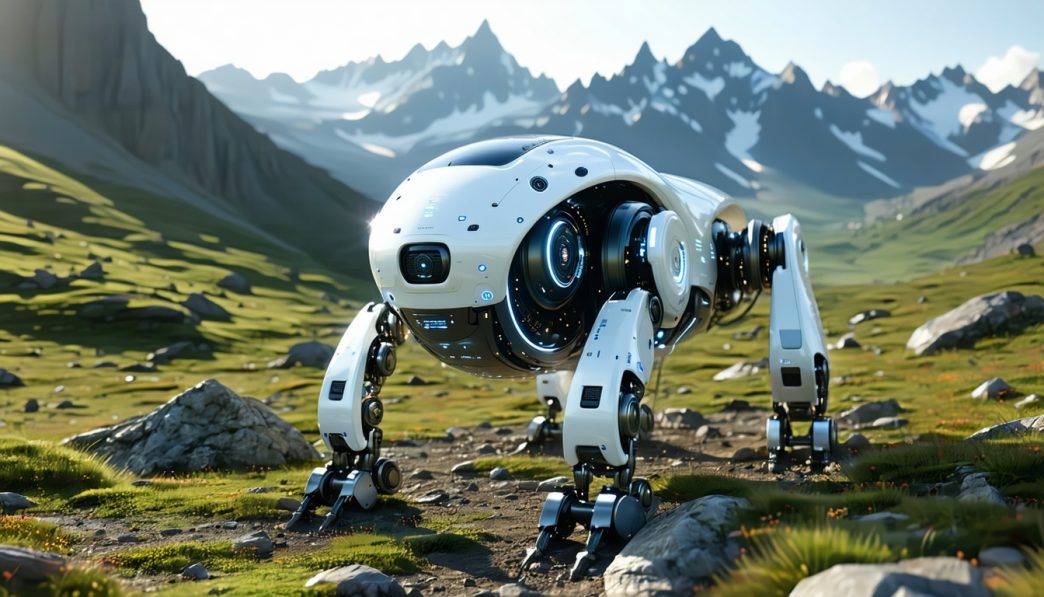
The Fascinating World of Quadruped Robots
Introduction to Quadruped Robots
Quadruped robots, commonly known as four-legged robots, are designed to mimic the locomotion of animals with four limbs. Their unique design allows for enhanced mobility and adaptability in various environments. These robots can traverse uneven terrain, navigate obstacles, and perform tasks that traditional wheeled robots may find challenging. With advancements in robotic technology, quadruped robots have become a focal point in the field of robotics, capturing the attention of tech enthusiasts and researchers alike.
The key aspect of any quadruped robot is its ability to maintain stability and balance while navigating diverse environments. This capability is crucial for ensuring effective performance in real-world applications, including home assistance, delivery, surveillance, and exploration. Understanding the intricacies of quadruped robot navigation is essential for enthusiasts interested in this technology.
Rise in Popularity and Applications
The popularity of quadruped robots has surged in recent years, owing to their versatility and the advancements in artificial intelligence and machine learning. Tech enthusiasts, engineers, and hobbyists are particularly drawn to the potential applications of these robots in various sectors. 
Below is a table showcasing some of the most common applications for quadruped robots:
| Application | Description |
|---|---|
| Home Use Applications | Assistance with household tasks, such as cleaning and security monitoring. |
| Delivery Robots | Transporting goods in urban areas and within buildings, optimizing logistics. |
| Surveillance | Monitoring premises or conducting search and rescue missions in challenging environments. |
| Exploration | Assisting in research and exploration of remote or hazardous locations, such as Mars or underwater. |
Several notable models have emerged as pioneers in this field. For instance, the Boston Dynamics Spot Robot is renowned for its agility and utility in industrial settings, while the unitree go2 robot offers impressive performance combined with affordability. Additionally, the Xiaomi Cyberdog showcases consumer interest in robotic companions for home use.
The versatility of quadruped robots continues to expand, driven by ongoing research and development, making them increasingly relevant in various real-world use cases. For a deeper understanding of how these robots perform tasks, readers can explore details on quadruped robot stability and terrain and quadruped robot use cases.
Fundamentals of Quadruped Robot Navigation
Importance of Navigation in Robotics
Navigation is a crucial component in robotics, particularly for quadruped robots. Effective navigation allows these machines to move through complex environments, perform tasks, and interact with their surroundings. The ability to navigate accurately is essential for tasks such as delivering goods, conducting surveillance, or exploring uncharted territories.
Quadruped robot navigation not only enhances operational efficiency but also ensures safety. For instance, robust navigation systems enable robots to avoid collisions and adapt their paths in real-time. Precision in navigation is vital for applications in home automation, where robots may need to navigate around furniture, or in surveillance tasks that require stealthy movement through varied landscapes.
| Key Aspects of Navigation Importance | Description |
|---|---|
| Task Efficiency | Allows robots to perform designated functions effectively. |
| Collision Avoidance | Minimizes the risk of accidents in dynamic environments. |
| Adaptability | Enables adjustment to unexpected obstacles or changes in terrain. |
| Autonomous Operation | Supports tasks without continuous human intervention. |
Challenges Faced by Quadruped Robots
Despite advancements, quadruped robots encounter several challenges in navigation. These challenges arise from the complexity of real-world environments and the intricacies of movement mechanics.
-
Terrain Variability: Quadruped robots must operate on diverse surfaces, from smooth floors to rugged terrains. Adapting to changes in terrain requires sophisticated control systems and stability management. For additional insights on stability, refer to our article on quadruped robot stability and terrain.
-
Obstacle Detection and Avoidance: Identifying and navigating around obstacles can prove difficult, particularly in cluttered or poorly illuminated settings. It requires advanced sensor technologies and algorithms to ensure effective obstacle avoidance.
-
Gait Adaptation: Different environments may require various locomotion patterns. Quadruped robots need to switch between gait patterns (like walking, running, or trotting) to maintain balance and efficiency. Understanding these patterns is essential for optimizing movement in diverse situations.
-
Robust Mapping: Creating an accurate representation of the environment is critical for navigation. Quadruped robots often struggle with mapping dynamic environments where objects can change location. Employing effective mapping technologies can mitigate this issue.
These challenges highlight the need for continuous improvement and innovation in quadruped robot navigation systems. For further exploration of real-world applications of quadruped robots, check out our article on quadruped robot use cases.
Sensor Technologies for Precise Navigation
In the realm of quadruped robot navigation, sensors play a pivotal role in enabling these machines to traverse complex environments. Understanding the function of these sensors and the technologies involved is essential for appreciating the capabilities of these agile robots.
Role of Sensors in Quadruped Robots
Quadruped robots rely heavily on sensors to perceive their surroundings and make decisions based on real-time data. These sensors help in mapping the environment, avoiding obstacles, and maintaining stability while moving. The information gathered is crucial for the robot to execute precise movements and adapt to various terrains.
The primary functions of sensors in quadruped robots include:
- Environmental Awareness: Sensors detect obstacles, terrain variations, and other critical features in the environment.
- Navigation Accuracy: Sensors assist in localization and mapping, allowing robots to determine their position and navigate effectively.
- Stability Maintenance: Real-time feedback from sensors helps in adjusting movements to ensure the robot remains balanced even on uneven surfaces.
Common Sensor Technologies Used
A variety of sensor technologies are utilized in quadruped robots to enhance their navigation capabilities. Below is a table summarizing some of the most common sensor types and their functions:
| Sensor Type | Function | Description |
|---|---|---|
| Lidar | Distance Measurement | Uses laser light to create a map of the environment by measuring distances. |
| Ultrasonic Sensors | Obstacle Detection | Utilize sound waves to identify nearby objects and measure distance. |
| Inertial Measurement Unit (IMU) | Motion Tracking | Monitors the robot’s orientation, acceleration, and angular velocity. |
| Cameras | Visual Recognition | Capture images or video to identify features in the environment for navigation. |
| GPS | Localization | Provides geographical positioning data for outdoor navigation. |
| Infrared Sensors | Proximity Detection | Used for detecting nearby objects and rough surfaces in close range. |
These sensor technologies work together to enable quadruped robots to navigate their environments effectively. For those interested in specific applications such as quadruped robots for delivery, understanding the role of these sensors is essential in enhancing their functionality and reliability. Exploring individual sensor capabilities can further improve the design and performance of quadruped robotic systems. For more insights into stability and terrain adaptability, refer to our article on quadruped robot stability and terrain.
Locomotion Techniques for Navigating Complex Environments
Quadruped robots are designed to traverse diverse and challenging terrains effectively. Their locomotion techniques play a vital role in ensuring stability and agility as they navigate through complex environments. This section covers the gait patterns of quadruped robots and their adaptive locomotion strategies.
Gait Patterns of Quadruped Robots
Gait patterns are critical for quadruped robot navigation. These patterns mimic the movements of natural quadrupeds, allowing robots to maintain balance and stability while moving over different surfaces. Common gait patterns include:
| Gait Pattern | Description | Typical Speed |
|---|---|---|
| Walk | Slow and stable movement where each leg moves alternately. | 0.5 – 1.5 meters/second |
| Trot | More dynamic movement with diagonal legs moving together. | 1.5 – 3.5 meters/second |
| Gallop | Fast movement using a more powerful push-off from hind legs. | 3.5 – 6.0 meters/second |
| Bound | Similar to galloping but with all legs lifting at once. | 2.0 – 4.0 meters/second |
These gaits allow quadruped robots to adjust their movements according to the terrain, maximizing efficiency and minimizing the risk of falling. Understanding these patterns is essential for optimizing their navigation capabilities, particularly in applications such as quadruped robots for delivery and terrain exploration.
Adaptive Locomotion Strategies
Adaptive locomotion strategies enable quadruped robots to respond dynamically to varying environmental conditions. These strategies involve real-time adjustments to movement based on sensor feedback and environmental cues. Key techniques include:
- Terrain Adaptation: Quadruped robots can shift their gaits according to the type of surface, adjusting leg movements on uneven or slippery terrains.
- Load Distribution: To maintain balance while carrying loads, these robots can adjust their center of gravity and modify their gait.
- Real-Time Adjustments: Using onboard sensors, quadruped robots can assess obstacles and make rapid changes to their locomotion strategy, ensuring safe navigation.
Adaptive locomotion enhances the reliability and functionality of quadruped robots. This adaptability is particularly useful in commercial and research applications, such as those involving the Agility Digit quadruped robot or the Boston Dynamics Spot robot.
These techniques combined enable quadruped robots to be versatile and effective in navigating complex environments, catering to the needs of tech enthusiasts and professionals in various fields. For further information on stability and terrain adaptation, explore our detailed article on quadruped robot stability and terrain.
Mapping and Planning for Efficient Navigation
Quadruped robot navigation relies significantly on effective mapping and planning techniques. These methods enable robots to understand their surroundings and make informed decisions about their movements.
Mapping Technologies in Robotics
Mapping technologies allow quadruped robots to create a visual representation of their environment. This process is essential for recognizing obstacles and navigating complex terrains. Several mapping technologies are pivotal for quadruped robot navigation, including:
| Mapping Technology | Description | Advantages |
|---|---|---|
| Lidar | Uses laser beams to create a 3D map of the environment. | High accuracy; effective in various light conditions. |
| Stereo Vision | Employs two cameras to determine depth and create a 3D model. | Provides rich visual data; favorable for object recognition. |
| SLAM (Simultaneous Localization and Mapping) | Combines the data from sensors to build a map while tracking the robot’s location. | Real-time adaptability; efficient for dynamic environments. |
| Depth Sensors | Uses infrared or ultrasonic waves to measure distances and build a map. | Good for close-range navigation; relatively inexpensive. |
These technologies work together to provide a comprehensive view of the robot’s surroundings, allowing it to autonomously assess and navigate its environment.
Planning Algorithms for Quadruped Pathfinding
Once a quadruped robot has mapped its environment, it utilizes planning algorithms to determine the best route to a given destination. These algorithms consider various factors, such as obstacles, terrain types, and the robot’s capabilities. Some common planning algorithms include:
| Algorithm | Description | Use Cases |
|---|---|---|
| A* Algorithm | A graph traversal algorithm for finding the shortest path between points. | Commonly used in grid-based environments. |
| RRT (Rapidly-exploring Random Tree) | A method for efficiently searching non-convex spaces by randomly exploring the environment. | Effective for complex, high-dimensional spaces. |
| Dijkstra’s Algorithm | Computes the shortest paths from a single source to all other nodes in a weighted graph. | Suitable for extensive networks where path efficiency is critical. |
| Potential Fields | Uses virtual forces to guide the robot towards a target while avoiding obstacles. | Useful for real-time navigation in dynamic environments. |
These algorithms enhance quadruped robot navigation by providing efficient pathfinding strategies, essential for applications in delivery, exploration, and more. To learn about specific use cases for quadruped robots, refer to our article on quadruped robot use cases.
The integration of robust mapping technologies and effective planning algorithms significantly advances quadruped robot navigation capabilities, making them effective tools for diverse applications.
Obstacle Avoidance Strategies
Effective navigation for quadruped robots hinges on their ability to detect and avoid obstacles. This capability enhances their performance across diverse applications, including home use, delivery, and exploration purposes.
Understanding Obstacle Detection
Obstacle detection involves identifying obstacles in the robot’s environment to prevent collisions and ensure smooth navigation. Quadruped robots typically rely on various sensors that gather data about their surroundings, allowing them to make informed decisions. Common sensor types include:
| Sensor Type | Functionality |
|---|---|
| Lidar | Creates 3D maps of the environment using laser pulses. |
| Ultrasonic Sensors | Measures distance by emitting sound waves. |
| Cameras | Captures visual information for object recognition. |
| Infrared Sensors | Detects nearby objects based on heat emission. |
The integration of these sensors helps quadruped robots gather real-time information about obstacles, creating a detailed understanding of their environment. This data is essential for executing navigation strategies effectively.
Methods of Obstacle Avoidance
Quadruped robots employ several methods for avoiding obstacles based on the data collected. Here are some common strategies:
| Method | Description |
|---|---|
| Dynamic Path Planning | Adjusts the robot’s trajectory in real-time to bypass obstacles. |
| Reactive Obstacle Avoidance | Implements immediate action (like stopping or redirecting) when an obstacle is detected. |
| Mapping and Re-routing | Uses pre-existing maps to identify potential obstacles and plan alternate paths. |
| Gait Adaptation | Alters gait patterns based on terrain and obstacles to maintain stability and navigate smoothly. |
These methods work together to enhance the ability of quadruped robots to navigate complex environments. For detailed information on how terrain impacts navigation, refer to our article on quadruped robot stability and terrain.
Effective obstacle avoidance strategies not only enhance navigation but also contribute to the operational efficiency of quadruped robots. As technology advances, these strategies will continue to evolve, enhancing the applicability of quadruped robots in various fields, including delivery and surveillance. Explore more about potential use cases in our article on quadruped robot use cases.
Real-World Applications of Quadruped Robots
Quadruped robots have captured the attention of tech enthusiasts and robotics hobbyists due to their versatility and adaptability in various environments. These four-legged machines are finding their way into practical applications that enhance everyday life and industrial operations. Below are some prominent areas where quadruped robots are used.
Home Use Applications
In domestic settings, quadruped robots can serve multiple roles, from companionship to household chores. These robots are designed to navigate through homes with ease, avoiding obstacles and adjusting their movements according to their surroundings.
| Application | Description |
|---|---|
| Home Security | Acting as mobile surveillance units, they can patrol homes and alert owners of potential intruders. |
| Personal Assistance | These robots can assist with simple tasks such as carrying items or reminding owners of important events. |
| Elderly Care | They can provide support for elderly individuals, helping them navigate their homes safely. |
Delivery and Surveillance Applications
Quadruped robots are making significant strides in delivery systems and surveillance operations. Their agility allows them to traverse complex terrains and navigate urban environments, making them ideal for these tasks.
| Application | Description |
|---|---|
| Autonomous Delivery | Equipped with advanced navigation systems, they can deliver packages efficiently, even in crowded areas. |
| Surveillance | They can monitor areas in real-time, providing valuable data and footage for security purposes. |
For more information on their applications in delivery, check out our article on quadruped robots for delivery.
Exploration and Research Applications
The exploration of remote or hazardous environments has become increasingly feasible with the help of quadruped robots. Their remarkable stability ensures safe navigation over rugged terrains, which is crucial for research missions.
| Application | Description |
|---|---|
| Environmental Monitoring | These robots can be deployed to gather data in challenging ecosystems, assisting researchers with data collection. |
| Disaster Response | In emergency scenarios, they can navigate debris effectively, searching for survivors or assessing damage. |
As technology progresses, quadruped robots like the Boston Dynamics Spot Robot and Unitree Go2 Robot continue to expand their functionalities, making them an integral part of various fields. Understanding the potential of these robots can lead to innovative applications that enhance both home life and professional settings. Explore more about the capabilities and use cases in our article on quadruped robot use cases.


