


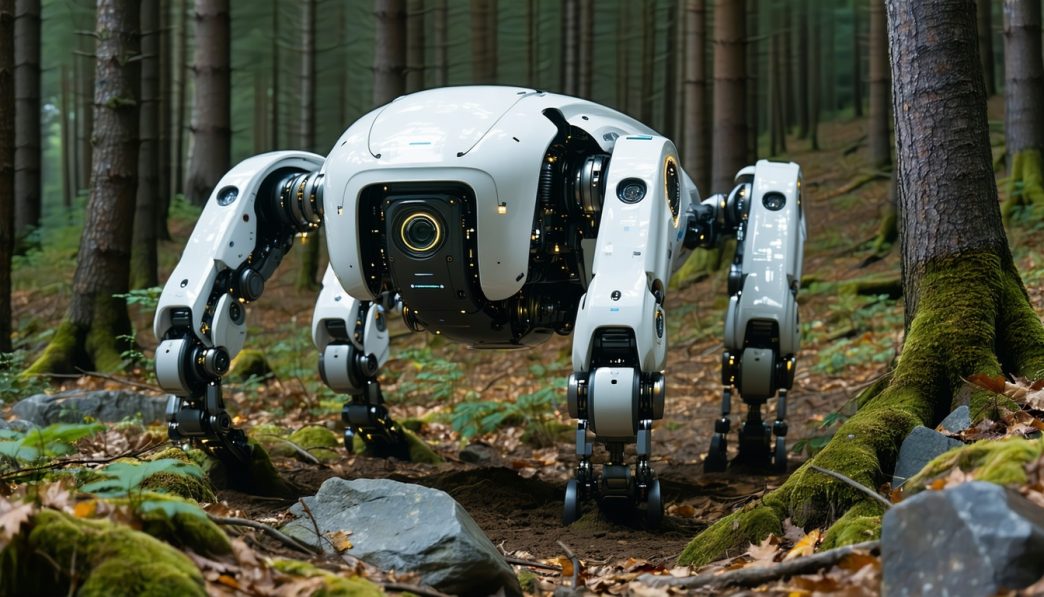
Exploring Quadruped Robots
Overview of Quadruped Robots
Quadruped robots are designed to mimic the locomotion of four-legged animals. They possess enhanced stability and maneuverability, making them well-suited for various applications. These robots are typically equipped with advanced sensors, cameras, and artificial intelligence, enabling them to navigate complex environments effectively.
Key features of quadruped robots include:
| Feature | Description |
|---|---|
| Number of Legs | Four, allowing for balanced movement |
| Sensors | Used for navigation and obstacle detection |
| AI Capabilities | Enable autonomous decision making |
| Terrain Adaptability | Capable of traversing diverse environments |
Quadruped robots are becoming increasingly popular among tech enthusiasts and researchers due to their versatility and capability to handle complex tasks. 
Role of Quadruped Robots in Various Industries
Quadruped robots have found applications across multiple sectors, showcasing their potential in real-world scenarios. These robots are used in industries such as manufacturing, agriculture, security, and healthcare.
Here are some specific roles they play in different industries:
| Industry | Application | Example Use Case |
|---|---|---|
| Manufacturing | Material transport | Delivering parts within a factory setting |
| Agriculture | Crop monitoring and analysis | Navigating fields to assess crop health |
| Security | Surveillance | Patrolling areas for enhanced security |
| Healthcare | Patient monitoring | Assisting with patient mobility and monitoring |
The versatility of quadruped robots, such as the Boston Dynamics Spot robot, underscores their evolving capabilities and their importance in diverse professional environments. For further information on these applications, explore our article on quadruped robot use cases.
As the technology behind quadruped robots continues to advance, the potential for their use in daily life and various industries will expand significantly. Enthusiasts and professionals are keenly observing the developments in robotic agility and operational efficiency, particularly with models like Unitree GO2 robot and Xiaomi CyberDog.
Evolution of Boston Dynamics Spot
History and Background of Boston Dynamics Spot
The Boston Dynamics Spot robot is a significant advancement in quadruped robotic technology. Launched in 2015, it was designed with agility and adaptability in mind, capable of traversing various terrains. The Spot robot is the result of years of innovation, building on the foundations set by earlier models like BigDog and Cheetah. These models showcased the potential for dynamic movement, but Spot brought this technology into more practical and commercial realms.
Spot’s design allows it to carry payloads, navigate complex environments, and perform tasks autonomously, making it suitable for a range of industries. Its flexible design is essential for tasks that require mobility and adaptability, characteristics that were highlighted during its development. The continual upgrades and enhancements have made it one of the most recognized quadruped robots available today.
Applications of Boston Dynamics Spot
The versatility of the Boston Dynamics Spot robot has led to its adoption across various sectors. Its applications are diverse, showcasing its ability to perform in numerous domains:
| Application Area | Description |
|---|---|
| Industrial Inspection | Spot can autonomously navigate factory floors, inspecting machinery and identifying maintenance needs without human intervention. |
| Construction | It assists in surveying construction sites, providing real-time data and ensuring safety measures are upheld. |
| Surveillance | Spot is utilized for security purposes, patrolling areas and monitoring for unusual activities. |
| Healthcare | In certain hospitals, Spot has been deployed to deliver medications and supplies, minimizing person-to-person contact. |
| Research | Educational and research institutions leverage Spot for studies in robotics, AI, and automation. |
The adaptability and intelligence of the Spot robot make it a valuable asset. Its efficacy in different environments aligns with the growing interest in quadruped robots among tech enthusiasts and robotics hobbyists. As new applications continue to emerge, Spot represents a significant leap forward in the capabilities of agile robotics.
Deployment of Boston Dynamics Spot
The Boston Dynamics Spot robot has found a wide range of applications across different sectors. Its versatility makes it suitable for various tasks, from industrial operations to security measures.
Industrial Use Cases
In industrial settings, the Boston Dynamics Spot robot excels in tasks that require mobility and adaptability. Its ability to navigate complex environments makes it a valuable asset for inspections, data collection, and transportation of materials. Here are some common industrial applications:
| Application | Description |
|---|---|
| Inspection | Spot can carry cameras and sensors to perform inspections in hard-to-reach areas, reducing human risk. |
| Data Collection | The robot gathers data on equipment performance and environmental conditions through onboard sensors. |
| Transportation | Spot can autonomously transport tools and materials across work sites, optimizing workflow and efficiency. |
The integration of Spot into industrial operations enhances productivity by allowing workers to focus on more complex tasks while the robot handles routine inspections and deliveries. For more detailed insights on various use cases for quadruped robots, refer to our article on quadruped robot use cases.
Surveillance and Security Applications
Security is another prominent field where the Boston Dynamics Spot robot is making an impact. Its ability to traverse challenging terrains and operate in various environments allows it to perform surveillance tasks effectively. The following are some notable applications in surveillance and security:
| Application | Description |
|---|---|
| Patrol | Spot can conduct routine patrols in areas requiring constant monitoring, such as construction sites or secure facilities. |
| Emergency Response | In emergencies, Spot can navigate hazardous environments and provide real-time video feeds for situational awareness. |
| Remote Monitoring | Equipped with cameras and sensors, Spot can monitor areas remotely, reducing the need for human presence in potentially dangerous situations. |
These capabilities enhance safety and effectiveness in security operations. Spot’s ability to adapt to real-time challenges makes it a valuable tool for security personnel, as it can assist in both routine and urgent scenarios. For more information on robot navigation and stability, check out our articles on quadruped robot navigation and quadruped robot stability and terrain.
Advancements in Quadruped Robotics
The field of quadruped robotics has witnessed significant advancements in recent years. The introduction of innovative technologies and design enhancements has propelled the capabilities of these four-legged robots and expanded their applications across various sectors.
Technological Innovations in Quadruped Robots
Recent developments in quadruped robotics have focused on improving mobility, autonomy, and versatility. Key technological innovations include:
-
Advanced Sensors: Modern quadruped robots are equipped with an array of sensors, including LIDAR, cameras, and ultrasonic sensors. These tools enable the robot to navigate complex environments and make real-time decisions based on its surroundings.
-
Artificial Intelligence: AI algorithms enhance the decision-making capabilities of quadruped robots, allowing them to adapt their locomotion patterns and behaviors based on environmental changes and obstacles.
-
Improved Power Sources: Innovations in battery technology have led to longer operational times for quadruped robots. Lithium-ion and advanced battery management systems provide the endurance necessary for extended missions.
-
Enhanced Stability Systems: New algorithms for gait analysis and real-time adjustments improve the stability of quadruped robots, allowing them to traverse uneven terrain more effectively. This is crucial for tasks in both outdoor environments and rugged industrial settings, where stability can be a challenge.
-
Remote Operation and Telemetry: Integrated communication systems facilitate remote operation, enabling users to control quadruped robots from a distance with real-time feedback. This capability is particularly valuable for surveillance and remote monitoring applications.
| Technology | Description | Benefits |
|---|---|---|
| Advanced Sensors | LIDAR, cameras, ultrasonic sensors | Enhanced navigation |
| Artificial Intelligence | Adaptive decision-making | Improved task efficiency |
| Power Sources | Advanced batteries and management systems | Longer operational times |
| Stability Systems | Gait analysis and adjustments | Better terrain navigation |
| Remote Operation | Communication systems for remote control | Flexibility in operations |
Comparison with Other Quadruped Robots
When comparing Boston Dynamics Spot to other quadruped robots, several factors highlight its unique position in the market. Below is a comparative analysis of Boston Dynamics Spot alongside other notable quadruped robots, such as the Unitree Go2, Xiaomi CyberDog, and Agility Digit.
| Feature | Boston Dynamics Spot | Unitree Go2 | Xiaomi CyberDog | Agility Digit |
|---|---|---|---|---|
| Payload Capacity | 14 kg | 5 kg | 3 kg | 10 kg |
| Speed | 1.6 m/s | 2.5 m/s | 3.2 m/s | 1.2 m/s |
| Battery Life | 90 minutes | 120 minutes | 60 minutes | 80 minutes |
| Terrain Adaptability | High | Moderate | Moderate | High |
| Application Versatility | Industrial, Security | Home, Hobby | Entertainment, Rescue | Industrial, Research |
This comparison showcases the strengths and weaknesses of each robot type. Boston Dynamics Spot is known for its robust design and versatility, making it ideal for various applications. In contrast, options like the Unitree Go2 and Xiaomi CyberDog may cater to more niche markets, including home use and educational purposes.
Advancements in quadruped robots highlight the dynamic nature of this field. The ongoing development of technologies will continue to expand possibilities for applications ranging from delivery to exploration. Exploring these innovative capabilities will help users choose the right quadruped robot for their specific needs. For those interested in delivery applications, refer to our article on quadruped robots for delivery.
Challenges and Ethical Considerations
Challenges Faced by Quadruped Robots
Quadruped robots, such as the Boston Dynamics Spot robot, face several challenges as they are deployed in various environments. Understanding these challenges is crucial for improving their efficiency and functionality. Below are some of the primary challenges encountered:
| Challenge | Description |
|---|---|
| Terrain Navigation | Quadruped robots must adapt to diverse terrains, including uneven, muddy, or rocky surfaces. Advanced algorithms are necessary for effective quadruped robot navigation. |
| Battery Life | Limited battery capacity can restrict operational time, particularly in remote or outdoor settings. Efficient energy management is a vital focus area. |
| Maintenance and Repairs | Regular maintenance is essential to ensure optimal performance, which can be costly and time-consuming. |
| Cost of Implementation | High initial costs can deter widespread adoption across industries, especially for smaller organizations. |
| Technical Integration | Integrating these robots with existing systems and workflows can pose technical complexities that require specialized knowledge. |
Ethical Implications of Quadruped Robots in Society
As quadruped robots gain prevalence in varied applications, ethical considerations come to the forefront. The deployment of robots raises several societal questions, which are essential for responsible innovation. Key ethical implications include:
| Ethical Concern | Description |
|---|---|
| Job Displacement | Automation may lead to significant job losses in sectors where robots take over tasks previously performed by humans. |
| Surveillance and Privacy | Use in surveillance raises concerns regarding privacy and the potential for misuse in tracking individuals. |
| Dependence on Technology | Increased reliance on robotics may lead to diminished human skills and capabilities. |
| Accountability and Liability | Unclear lines of accountability arise when robots malfunction or cause harm, complicating legal frameworks. |
| Societal Divide | The disparity between those who can afford such technology and those who cannot may exacerbate existing social inequalities. |
Understanding these challenges and ethical implications is critical for tech enthusiasts and robotics hobbyists to navigate the evolving landscape of quadruped robotics. Factors such as quadruped robot stability and terrain and specific quadruped robot use cases can significantly influence how these robots integrate into society.
Future Possibilities
Potential Future Applications of Boston Dynamics Spot
The Boston Dynamics Spot robot is expected to see an array of innovative applications in the near future. As technology advances, its functionality may expand beyond current uses, opening new doors for agile robotics. Potential future applications include:
| Application Area | Description |
|---|---|
| Search and Rescue | Spot could be utilized in disaster zones to locate survivors or assess damage. |
| Home Assistance | Future versions may assist with household tasks, such as carrying items or providing companionship. |
| Medical Support | Spot robots may aid in hospitals for delivering medications or transporting supplies. |
| Environmental Monitoring | Equipped with sensors, Spot could gather data in ecological studies or pollution assessments. |
| Personal Security | In addition to commercial security, Spot could be adapted for personal property surveillance. |
Exploring these applications demonstrates how the Boston Dynamics Spot robot could evolve to address various needs across multiple sectors.
Emerging Trends in Quadruped Robotics
As quadruped robotics continues to develop, several trends are becoming apparent. These trends suggest a shift towards greater adaptability and ease of use, appealing to tech enthusiasts and robotics hobbyists alike. Key trends include:
| Trend | Description |
|---|---|
| Enhanced Mobility | Advancements in navigation systems improve the ability of quadrupeds to traverse complex terrains, making them suitable for outdoor exploration. |
| Integration with AI | Leveraging artificial intelligence allows robots to perform tasks autonomously, enhancing their utility in various environments. |
| Increased Customization | More customizable options are becoming available, enabling users to tailor robots for specific tasks or preferences. |
| Collaborative Robotics | Trends are moving towards robots working in tandem with humans or other machines, enhancing productivity and efficiency in tasks. |
| Focus on Safety and Ethics | As quadrupeds integrate into daily life, there is a growing emphasis on ethical considerations and safety measures during development. |
These trends reflect a commitment to improving quadruped robots like Boston Dynamics Spot for real-world applications, ensuring they are not only functional but also safe and effective. For more detailed insights on how these robots are transforming industries, explore our page on quadruped robots.
Integrating Quadruped Robots into Daily Life
As quadruped robots, such as the Boston Dynamics Spot robot, become more prevalent, their integration into daily living becomes increasingly significant. These robots are not only transforming industrial applications but are also finding roles in personal and community settings.
Impacts on Daily Living
The incorporation of quadruped robots into everyday activities can enhance efficiency, safety, and convenience. Here are several key areas where they are making a notable impact:
| Area of Application | Description |
|---|---|
| Home Security | Robots can patrol properties, providing remote surveillance and alerting homeowners to unusual activities. |
| Delivery Services | Quadrupeds are being tested for package deliveries, particularly in hard-to-reach areas. This can streamline logistics. |
| Healthcare | There are potential uses in caregiving, from delivering supplies to helping users move around safely. |
| Exploration | Quadruped robots can access rugged terrains for research and mapping, making them valuable for scientific expeditions. |
These applications demonstrate how the continuous advancement of quadruped robots can assist in various aspects of daily life, catering to both personal needs and professional demands.
User Experiences and Feedback
Early adopters of quadruped robots have sharedmixed experiences. Feedback can vary widely depending on the intended use and user expectations. Common themes noted in user reviews include:
| Experience Category | Feedback Summary |
|---|---|
| Usability | Many find quadruped robots intuitive to operate, with various control options available, ranging from apps to manual controls. |
| Performance | Users report high levels of agility and adaptability in different environments, but operational limits can be a concern in challenging terrains. |
| Maintenance | Some users have highlighted the need for regular updates and maintenance to keep robots functioning optimally. |
| Safety | Feedback on safety measures indicates a need for clear protocols to prevent accidents when these robots interact with people. |
Overall, user experiences continue to evolve as technology advances and further enhancements are made to robot design and functionality. For in-depth information about specific quadruped robots, check our articles on quadruped robots, quadruped robots for delivery, and quadruped robot use cases. Exploring these insights can provide a clearer understanding of the potential for quadruped robots like the Boston Dynamics Spot to become integrated into various aspects of daily life.


