


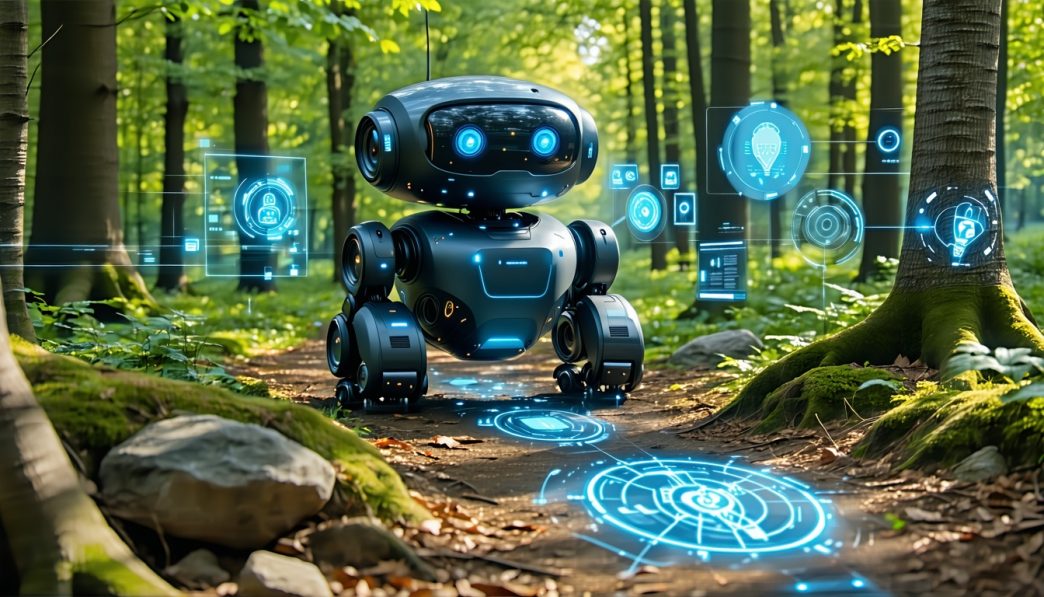
Understanding Robot Navigation
Robotic navigation is a critical aspect of how robots operate, enabling them to move through environments accurately and efficiently. This section will address the significance of sensors and navigation systems as well as the evolution of technologies that allow robots to navigate effectively.
Importance of Sensors and Navigation Systems
Sensors play an essential role in the navigation capabilities of robots. They enable robots to gather data about their surroundings and to make informed decisions based on that information. Key sensor types used in robotic navigation include:
| Sensor Type | Function |
|---|---|
| Lidar | Measures distance using laser light for precise mapping |
| Cameras | Captures visual information for object recognition and path finding |
| Ultrasonic Sensors | Uses sound waves to detect obstacles and measure distances |
| Inertial Measurement Units (IMUs) | Measures speed and orientation for stabilization |
| GPS | Provides geolocation data in outdoor environments |
The integration of these sensors allows for multi-sensor fusion in robots, which enhances navigation accuracy and reliability. Effective navigation systems utilize data from various sensors, allowing robots to create detailed maps of their environments and localize themselves within those maps. 
The Evolution of Robot Navigation Technologies
The evolution of robot navigation technologies has been marked by significant advancements over the years. Early robots relied primarily on simple sensors and predetermined paths, which limited their ability to adapt to unexpected obstacles or changes in the environment. Over time, the development of more sophisticated algorithms and sensor technologies has catalyzed improvements in navigation capabilities.
Timeline of Key Developments in Robot Navigation
| Year | Development |
|---|---|
| 1990s | Introduction of basic obstacle avoidance algorithms |
| 2000s | Emergence of SLAM (Simultaneous Localization and Mapping) for real-time mapping |
| 2010s | Improvement in machine learning algorithms for navigation, leading to better decision-making |
| Present | Integration of AI and IoT to enhance capabilities in dynamic environments |
Technological advances have allowed robots to perform navigation tasks that were previously impossible. For example, the implementation of lidar and camera-based navigation has provided a more comprehensive understanding of surroundings, improving robots’ ability to navigate through complex terrains and environments.
As robots continue to evolve, their navigation capabilities will expand, allowing them to function effectively in outdoor environments and handle challenges presented by obstacles, varied terrains, and environmental conditions. The future of outdoor navigation for robots is promising, with ongoing research and development focused on creating even more autonomous and intelligent systems. For insights into upcoming trends in this domain, refer to our article on the future of robotic navigation.
Handling GPS Loss
The effective navigation of robots in outdoor settings is significantly challenged when GPS signals are lost. This section explores the hurdles faced during GPS navigation and the alternative methods employed in environments where GPS is unavailable.
Challenges of GPS Navigation for Robots
Navigating using GPS can present various challenges for robots, particularly in environments with obstructed signals. Some of the main difficulties include:
| Challenge | Description |
|---|---|
| Signal Interference | Tall buildings, dense forests, and urban canyons can obstruct GPS signals, leading to inaccuracies in location data. |
| Multipath Effects | GPS signals can bounce off surfaces, resulting in the robot receiving incorrect location information. |
| Limitations in Precision | GPS accuracy can vary, with typical errors ranging from 5 to 10 meters, which can be impractical for applications requiring high precision. |
| Dependency on Clear Skies | GPS relies on satellite visibility, making it ineffective in conditions with heavy cloud cover or other obstructions. |
For a deeper understanding of these challenges, refer to our article on robot sensors and navigation.
Alternative Navigation Methods in GPS-Denied Environments
In situations where GPS is not a viable option, robots must resort to alternative navigation techniques. These methods include:
-
Inertial Navigation Systems (INS): These systems use accelerometers and gyroscopes to track the robot’s movement based on its initial position. While they can accumulate errors over time, they are effective in short-term navigation.
-
Visual Odometry: Utilizing cameras, visual odometry enables robots to determine their position by analyzing sequential images of the environment. This method is valuable in environments where visual landmarks are available. For more on this, see our article on lidar vs camera based navigation.
-
Simultaneous Localization and Mapping (SLAM): SLAM allows robots to create and update a map of an unknown environment while simultaneously keeping track of their location. This technique is particularly useful in dynamic settings with changing obstacles. For further details, refer to our article on slam mapping for robots.
-
Multi-Sensor Fusion: This approach combines data from various sensors, such as LiDAR, cameras, and IMUs, to create a more accurate representation of the robot’s surroundings and enhance navigation reliability. To learn more, visit our article on multi sensor fusion in robots.
By leveraging these alternative navigation methods, robots are capable of maneuvering effectively even when GPS is unavailable, ensuring that they can perform their functions in various outdoor environments.
Navigating Through Various Terrains
Robots are increasingly deployed in outdoor environments where they encounter various terrains that can significantly affect their navigation capabilities. Understanding how robots navigate through challenges like mud, rain, and uneven surfaces is essential for optimizing their performance in these conditions.
Dealing with Mud and Rain
Mud and rain present unique challenges for outdoor navigation for robots. Moist conditions can lead to reduced traction, affecting a robot’s ability to move smoothly. Additionally, wet surfaces may obscure sensors and alter the way robots perceive their environments.
| Challenge | Impact on Navigation | Potential Solutions |
|---|---|---|
| Reduced traction in mud | Increases risk of slipping | Implementing specialized wheels or tracks |
| Sensor obstruction due to rain | Impairs environmental sensing | Utilizing waterproof sensors and protective casings |
| Visibility issues from mud splatter | Reduces effective obstacle detection | Employing self-cleaning mechanisms for sensors |
Robots designed for outdoor navigation often utilize advanced materials and designs to enhance grip and maneuverability in muddy conditions. Protective housings can shield sensors from moisture damage, ensuring they maintain functionality. Furthermore, robots may employ techniques such as multi-sensor fusion in robots to obtain reliable readings, combining data from various sensor types to adapt to their surroundings.
Overcoming Uneven Surfaces
Navigating uneven surfaces, such as rocky terrain or slopes, is another significant challenge for robots in outdoor settings. These variations can impede movement and increase the risk of tipping or getting stuck.
| Surface Type | Challenges | Robotics Solutions |
|---|---|---|
| Rocky terrain | Difficulties in traction and stability | Agile design with adaptive suspension systems |
| Slopes | Increased risk of slipping or rolling | Advanced balance algorithms and terrain assessment |
| Holes and ditches | Potential for entrapment | Use of lidar for real-time mapping and detection |
To overcome these issues, robots can utilize advanced algorithms that assess terrain conditions and adjust their navigation strategies accordingly. Technologies like lidar vs camera based navigation enable robots to create detailed 3D maps of uneven surfaces, facilitating safe movement. Implementing slam mapping for robots further enhances navigation, allowing robots to understand their environments in real time and react to obstacles effectively.
By addressing the specific challenges posed by muddy conditions and uneven surfaces, robots can improve their outdoor navigation capabilities, making them more reliable tools in various applications. Understanding these environmental factors is crucial for developing efficient robotic systems capable of navigating the complexities found in outdoor settings.
Safety Measures for Outdoor Navigation
Robots operating in outdoor environments must be equipped with effective safety measures to navigate successfully. Two essential components that ensure safe operation are collision avoidance systems and obstacle detection and avoidance mechanisms.
Collision Avoidance Systems
Collision avoidance systems are critical for preventing robots from accidentally striking objects or other robots while navigating outdoor environments. These systems utilize various technologies to determine potential collisions and adjust the robot’s movement accordingly.
Common methods found in collision avoidance systems include:
- Ultrasonic Sensors: These sensors emit sound waves and measure the distance to nearby objects.
- Infrared Sensors: Infrared systems detect objects by measuring emitted infrared radiation.
- Lidar: This technology uses laser beams to create detailed maps of surroundings, identifying obstacles with high precision.
- Camera Systems: Visual data from cameras can be processed to recognize objects and navigate around them.
The effectiveness of these systems is influenced by the robot’s environment. The table below summarizes different sensor types and their detection capabilities.
| Sensor Type | Detection Range | Advantages |
|---|---|---|
| Ultrasonic | 0.2 – 4 meters | Cost-effective, simple to implement |
| Infrared | 0.1 – 2 meters | Compact, lightweight |
| Lidar | 0.1 – 100 meters | High precision, 360-degree view |
| Camera Systems | Variable | Ability to recognize objects and colors |
For a deeper dive into how these technologies operate, check out our article on robot sensors and navigation.
Obstacle Detection and Avoidance
Obstacle detection and avoidance is a sophisticated process that enables robots to recognize and navigate around physical impediments. This functionality is essential for outdoor operation, particularly in dynamic environments.
Robots often employ a combination of sensors to enhance obstacle detection capabilities. By integrating data from various sources, the robot can create a more comprehensive understanding of its surroundings through a method known as multi-sensor fusion. The integration allows the robot to navigate efficiently while minimizing risks of accidents.
Key methods for obstacle detection and avoidance include:
- Real-time Sensing: Continuous monitoring of surroundings enables immediate reactions to unexpected obstacles.
- Mapping Techniques: Robots utilize algorithms like SLAM (Simultaneous Localization and Mapping) to build and update maps of their environments.
- Path Planning Algorithms: These algorithms calculate the best route around obstacles, ensuring efficient traversal without collisions.
The combination of these approaches results in effective navigation through outdoor terrains. For further insights into obstacle detection technologies, visit our article on robot obstacle detection and avoidance.
Through the incorporation of advanced safety measures, robots can navigate outdoor environments confidently, adapting to the challenges posed by their surroundings.
Addressing Environmental Hazards
Navigating outdoor environments poses numerous challenges for robots, particularly when dealing with environmental hazards. Two key factors that can hinder effective navigation are low visibility conditions and extreme temperatures. This section discusses how robots cope with these challenges.
Coping with Low Visibility Conditions
Low visibility can arise from various factors such as fog, heavy rain, or dust storms. In such conditions, traditional navigation methods relying on visual cues may prove ineffective. To enhance navigation in these scenarios, robots often employ advanced sensor technology.
The following sensors are commonly utilized to improve performance in low visibility:
| Sensor Type | Functionality |
|---|---|
| LiDAR | Employs laser pulses to create a 3D map of the surroundings, working effectively in low light. |
| Infrared Sensors | Detects heat signatures, allowing robots to identify objects and obstacles even when visibility is compromised. |
| Ultrasonic Sensors | Uses sound waves to measure distance and can be effective in detecting nearby objects. |
Combining multiple sensors through techniques such as multi-sensor fusion in robots allows robots to create a more comprehensive understanding of their environment. This integration improves reliability and helps robots navigate through low visibility conditions more effectively. For reasons behind choosing specific sensor types, consider reviewing lidar vs camera based navigation.
Protection Against Extreme Temperatures
Extreme temperatures can affect both the performance of robots and their sensors. High temperatures may lead to overheating, while low temperatures can cause battery efficiency to decline. To ensure reliable operation in diverse climatic conditions, several protective measures are implemented.
Recommended strategies include:
| Temperature Condition | Recommended Protection Measures |
|---|---|
| High Temperatures | Use of cooling systems and heat-resistant materials in robot design. |
| Low Temperatures | Insulated enclosures to maintain optimal operating temperatures and prevent battery degradation. |
Sensors are also designed with temperature resilience in mind to maintain functionality. Robots operating under such conditions benefit from carefully considered designs and robot sensors and navigation techniques.
Effective strategies for addressing these environmental hazards are crucial for enhancing the outdoor navigation capabilities of robots. By integrating advanced sensor technologies and protective measures, they can navigate through challenging conditions while maintaining functionality. For further insights on how robots achieve navigation goals, explore our article on future of robotic navigation.
Enhancing Navigation Efficiency
Efficient navigation is critical for the performance of robots, especially in outdoor environments. To achieve this, various techniques such as integrated mapping and localization and adaptive path planning algorithms are employed.
Integrated Mapping and Localization Techniques
Robots utilize integrated mapping and localization techniques to create a detailed representation of their surroundings while determining their position within that environment. This process often involves advanced methods such as Simultaneous Localization and Mapping (SLAM), which enables robots to map an area while simultaneously tracking their location within it.
The key components of integrated mapping techniques include:
| Technique | Description |
|---|---|
| Simultaneous Localization and Mapping (SLAM) | Combines mapping and location detection to create real-time maps of unknown environments. |
| Multi-Sensor Fusion | Integrates data from various sensors, such as cameras and LiDAR, to enhance map accuracy and localization. |
| Depth Perception | Utilizes depth sensors to perceive distances and improve the robot’s understanding of the three-dimensional space. |
By employing these integrated techniques, robots can effectively navigate through complex outdoor terrains. For more information on SLAM, visit our article on slam mapping for robots.
Adaptive Path Planning Algorithms
Adaptive path planning algorithms are crucial for determining the most efficient route for robots to reach their destination while avoiding obstacles. These algorithms analyze various factors, such as terrain type, obstacles, and dynamic changes in the environment, to adjust the robot’s path in real-time.
Key features of adaptive path planning algorithms include:
| Algorithm Type | Description |
|---|---|
| Safe Points Planning | Calculates a series of safe points to guide the robot around obstacles. |
| Dynamic Replanning | Continuously adjusts the path based on new obstacles detected during navigation. |
| Cost-Based Planning | Evaluates different paths based on factors such as time and energy efficiency. |
These algorithms enhance outdoor navigation for robots, allowing them to adapt to changing conditions and ensuring efficient movement. For further insights into different navigation methods, check out our article on robot sensors and navigation.
By combining integrated mapping, localization techniques, and adaptive path planning, robots can navigate more efficiently in outdoor settings, tackling challenges posed by varied terrains and dynamic environments.
Future Trends in Outdoor Navigation for Robots
As technology continues to advance, the future of outdoor navigation for robots is set to be revolutionized by two key areas: advancements in artificial intelligence (AI) and the integration of the Internet of Things (IoT) and cloud computing. These developments promise to enhance how robots perceive and interact with their environments.
Advancements in AI for Navigation
Artificial intelligence plays a crucial role in enabling robots to navigate effectively in outdoor settings. With enhanced algorithms, robots are becoming better at interpreting data from various sensors, allowing for more precise mapping and navigation.
The following table highlights significant AI advancements that impact outdoor navigation:
| AI Advancement | Description | Impact on Navigation |
|---|---|---|
| Machine Learning | Algorithms that learn from experience | Improves decision-making in complex environments |
| Neural Networks | Mimics human brain function | Enhances pattern recognition in navigation data |
| Computer Vision | Enables robots to interpret visual data | Improves obstacle detection and mapping accuracy |
| Sensor Fusion | Combines data from multiple sensors | Provides a comprehensive view of surroundings |
By leveraging AI technologies, robots can adapt to changing environments, making real-time adjustments to their navigation strategies. This is particularly important in unpredictable outdoor settings where obstacles and hazards may be present.
Integration of IoT and Cloud Computing for Enhanced Navigation
The integration of IoT and cloud computing with robotic navigation systems is another promising trend. This connectivity allows robots to share and receive data from other devices in real-time, significantly enhancing their operational capabilities.
Key benefits of IoT and cloud integration in outdoor navigation include:
| Benefit | Description |
|---|---|
| Real-time Data Sharing | Robots can communicate with each other and other devices to access updated maps and navigation information. |
| Increased Processing Power | Cloud computing enables robots to perform complex calculations without heavy on-board processing, enhancing navigation accuracy. |
| Remote Monitoring | Users can monitor and control robots from distance via cloud interfaces, allowing for quick adjustments and troubleshooting. |
This synergy between IoT and artificial intelligence supports more sophisticated navigation techniques, such as multi-sensor fusion in robots and real-time adjustments during navigation. As these technologies evolve, outdoor navigation for robots will only become more efficient and intuitive.
As robotic systems continue to advance, keeping an eye on developments in AI and cloud integrations will be crucial for understanding the future landscape of navigation technologies. For further insights, explore our comprehensive articles on robot sensors and navigation and the future of robotic navigation.


