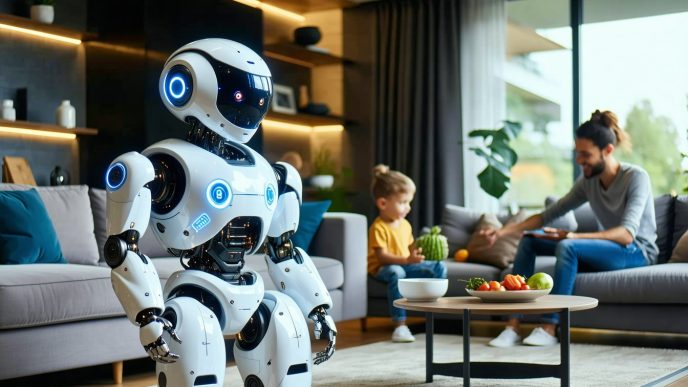
Introduction to Autonomous Surveillance Robots
The Rise of Autonomous Surveillance Robots
Autonomous surveillance robots have gained significant attention in recent years. These advanced machines are designed to navigate, monitor, and report, with little to no human supervision. Their development aligns with the increasing need for enhanced security solutions across various sectors, including homes, businesses, and public spaces. As technology continues to evolve, the capabilities of these robots have expanded, making them more efficient and reliable for security purposes.
| Year | Development Milestone |
|---|---|
| 2010 | Initial prototypes of autonomous surveillance robots introduced |
| 2015 | Improvements in navigation and sensor technologies |
| 2020 | Increased adoption in commercial and residential settings |
| 2023 | Enhanced AI capabilities and integration with smart security systems |
The Role of Robots in Security & Surveillance
The role of autonomous surveillance robots in security is multifaceted. They are utilized to monitor properties, detect unusual activities, and even provide alerts in real-time. These machines can thoroughly patrol premises without fatigue or breaks, which allows for continuous oversight that far exceeds traditional security methods.
Robots can be integrated with existing security systems, enhancing their functionality. For instance, utilizing robots integrated with smart security systems can offer seamless monitoring and alerts. Additionally, robots can be programmed to recognize predefined patterns of normal behavior, making it easier to identify potential threats and alert human operators accordingly. 
In various settings, from urban environments to private residences, autonomous surveillance robots are redefining the standards of security. Their deployment not only aids in protecting property but also provides peace of mind to homeowners, business owners, and property managers in an increasingly complex security landscape.
How Autonomous Patrols Work
Autonomous patrols are facilitated through advanced technologies that allow robots to navigate, detect, and communicate effectively without human intervention. Here are key components involved in the operation of autonomous surveillance robots.
Navigation Systems
Navigation systems are the backbone of autonomous patrols, enabling robots to move throughout an environment safely and efficiently. Most robots utilize a combination of GPS, LiDAR, and computer vision for precise positioning and mapping of their surroundings.
| Technology | Description |
|---|---|
| GPS | Provides location data, useful for outdoor navigation. |
| LiDAR | Uses laser light to create a 3D map of the environment. |
| Computer Vision | Employs cameras to analyze and interpret visual data. |
These systems work together, allowing the robots to create a digital map of the area and identify obstacles in real-time. This capability is critical for effective property monitoring and ensuring safe navigation across various terrains.
Sensor Technologies
Sensor technologies are integral to the functionality of autonomous surveillance robots. They enable robots to detect changes in their environment, allowing for early warning of potential security issues.
| Sensor Type | Function |
|---|---|
| Cameras | Capture video and images to monitor surroundings. |
| Motion Sensors | Detect movement to identify potential intruders. |
| Thermal Sensors | Recognize heat signatures, useful during nighttime patrols. |
| Audio Sensors | Pick up unusual sounds, such as breaking glass or suspicious voices. |
Through these sensors, robots can conduct thorough inspections and detect unusual activity. For more information on detection capabilities, refer to our article on robots detecting unusual activity.
Communication Capabilities
For autonomous patrols to be effective, communication capabilities are essential. Surveillance robots rely on wireless communication systems to relay information back to a central management system or send alerts to property owners.
| Communication Technology | Purpose |
|---|---|
| Wi-Fi | Enables real-time data transmission over common networks. |
| Cellular Networks | Provides coverage in remote areas where Wi-Fi may not be available. |
| Mesh Networks | Allows multiple robots to communicate directly with each other, enhancing coordination. |
These communication abilities allow for immediate alerts of any detected intrusion or unusual activities, ensuring prompt responses. Integrating robots with smart security systems enables seamless synchronization between robotic and human-operated security measures.
These combined features illustrate how autonomous surveillance robots operate and contribute to effective security and monitoring solutions for homes, businesses, and public spaces. Understanding these functions helps property managers and homeowners leverage this technology for enhanced security and peace of mind.
Applications of Autonomous Surveillance Robots
Autonomous surveillance robots are increasingly being used in various applications to enhance security and monitoring. Their capabilities allow them to fulfill several critical functions in property protection, intrusion detection, and active patrols. This section outlines these key applications.
Property Monitoring
One of the primary roles of autonomous surveillance robots is property monitoring. These robots can patrol residential and commercial properties, providing real-time surveillance and information on activity within their designated areas. Equipped with advanced cameras and sensors, these robots can capture high-resolution images and videos, and relay this data to security personnel or property owners.
The effectiveness of property monitoring robots can be illustrated with the following table:
| Application | Key Features | Benefits |
|---|---|---|
| Property Monitoring | 360-degree cameras, night vision | Real-time updates, reduced blind spots |
Using these systems, homeowners and business owners can receive alerts and insights on any unusual activity, allowing for swift action if necessary. For more information on how these robots operate, refer to our section on robots integrated with smart security systems.
Intrusion Detection
Another significant application of autonomous surveillance robots is intrusion detection. These robots analyze their environment using sophisticated sensor technologies to identify unauthorized access. When a breach is detected, the robot can notify security teams and even activate emergency protocols.
The table below shows the key capabilities and advantages of intrusion detection:
| Capability | Technology Used | Advantage |
|---|---|---|
| Intrusion Detection | Motion sensors, thermal imaging | Immediate alerts, evidence collection |
Through reliance on AI and machine learning, these robots can evolve and adapt to recognize patterns in activity, distinguishing between normal and suspicious behavior. For a look at the capabilities of robots in detecting unusual activity, check out our article on robots detecting unusual activity.
Patrols and Alerts
Autonomous patrols represent a dynamic aspect of security applications. These robots can navigate predetermined routes or respond to specific incidents based on real-time alerts. During patrols, they continuously monitor their surroundings, providing a visual deterrent against potential threats.
Here is a breakdown of patrol capabilities:
| Feature | Description | Impact |
|---|---|---|
| Patrol Routes | Pre-programmed or adaptive | Extensive area coverage |
| Alert System | Immediate notifications | Quick response to incidents |
In this way, autonomous surveillance robots not only act as eyes and ears but also provide actionable insights that enhance overall security. For more information on how these technologies affect public spaces, refer to our section on security robots in malls and public spaces.
The utilization of autonomous surveillance robots for property monitoring, intrusion detection, and active patrols underscores their capabilities and importance in contemporary security practices.
Benefits of Utilizing Autonomous Surveillance Robots
The increasing adoption of autonomous surveillance robots offers numerous benefits for enhancing security practices across various settings. Homeowners, business owners, and property managers can significantly enhance their security efforts through the use of these advanced technologies.
Enhanced Security
One of the primary advantages of autonomous surveillance robots is their ability to enhance overall security. These robots operate autonomously, continuously patrolling designated areas without the need for human oversight. This leads to more thorough monitoring and quick response times in the event of intrusions or emergencies.
| Security Improvement | Percent Increase |
|---|---|
| 24/7 Monitoring | 100% |
| Response Time Reduction | 30% |
| Detection of Intrusions | 40% |
With embedded sensors and sophisticated software, these machines can often detect unusual activity more effectively than traditional security systems. For more on this topic, check out our article on robots detecting unusual activity.
Cost-Effectiveness
Integrating autonomous surveillance robots into security protocols can also result in substantial cost savings. These robots reduce the need for extensive human patrols, which can lead to significant reductions in labor costs over time. As a result, businesses and property managers can allocate their budgets more efficiently.
| Cost Savings | Annual Savings Estimate |
|---|---|
| Reduction in Labor Costs | Up to $50,000 |
| Maintenance vs. Security Personnel | 60% less |
| Long-Term Investment Return | 15% annually |
While the initial investment in robotic technology may be substantial, the long-term benefits often outweigh these costs. The efficiency of robots ensures that owners receive consistent value from their investment. For a closer look at operational costs, refer to our article on security and surveillance robots.
Continuous Monitoring
Autonomous surveillance robots provide the continuous monitoring critical for modern security systems. Unlike human security personnel, who may experience fatigue or require breaks, these robots can operate continuously without interruption. This capability allows for seamless surveillance that significantly enhances property security.
| Monitoring Capability | Hours of Operation |
|---|---|
| Continuous Monitoring | 24/7 |
| Scheduled Patrols | Every 15 minutes |
Robots can be programmed for specific patrol routes and can be utilized in various environments, including homes, businesses, and public spaces. Their ability to integrate with existing security systems further enhances their functionality. For insights on how these robots work with other technologies, see our article on robots integrated with smart security systems.
The benefits of utilizing autonomous surveillance robots extend beyond security alone, making them a valuable investment for the future of property protection.
Considerations for Implementing Robots in Security Practices
When integrating autonomous surveillance robots into security practices, several key considerations must be addressed to ensure effectiveness and reliability. This section explores the integration with existing systems, the importance of maintenance and support, and privacy and data security concerns.
Integration with Existing Systems
The seamless integration of autonomous surveillance robots with current security systems is vital. Compatibility allows for efficient operations and data sharing, enhancing overall security capabilities. Homeowners and business owners should assess how these robots can connect with existing alarms, cameras, and monitoring systems.
| Integration Consideration | Key Points |
|---|---|
| Compatibility | Ensure the robot can communicate with existing security infrastructure. |
| Software Integration | Evaluate if the robot’s software can be synchronized with current security management software. |
| User Interface | Consider whether the integration offers a user-friendly interface for ease of management. |
For more information on integrating robots with smart security systems, visit our article on robots integrated with smart security systems.
Maintenance and Support
To keep autonomous surveillance robots functioning optimally, ongoing maintenance and support are necessary. Regular check-ups help identify potential issues before they escalate. Users should be aware of the support services provided by manufacturers, which may include software updates, hardware repairs, and troubleshooting assistance.
| Maintenance Aspect | Importance |
|---|---|
| Regular Updates | Ensure robots are equipped with the latest software to handle new threats. |
| Hardware Checks | Monitor physical components for wear and tear to avoid malfunctions. |
| Support Availability | Assess if support is timely and responsive for urgent situations. |
Understanding the support structure is crucial for maximizing the benefits of robotic security solutions. More insights on robots patrolling homes and properties can be found in our article on robots patrolling homes and properties.
Privacy and Data Security
Implementing autonomous surveillance robots raises significant privacy and data security concerns. The deployment of these robots must align with local regulations regarding surveillance and data collection. Users need to ensure that captured data, including video footage, is stored securely and accessed only by authorized personnel.
| Privacy Consideration | Strategy |
|---|---|
| Data Encryption | Use encryption technologies to protect stored and transmitted data. |
| Access Control | Implement strict access protocols to regulate who can view sensitive data. |
| Compliance | Stay updated on legal requirements related to surveillance technologies. |
Addressing privacy concerns is essential to maintain trust among users and subjects. For details about robots detecting unusual activity, explore our article on robots detecting unusual activity.
Navigating these considerations is critical for successfully implementing autonomous surveillance robots in security practices. Understanding integration, maintenance, and privacy will facilitate the optimal use of robotic technology in protecting properties.
The Future of Autonomous Surveillance Technology
The evolution of autonomous surveillance technology is rapidly changing the security landscape. As advancements continue, the capabilities and integration of autonomous surveillance robots become increasingly sophisticated.
Advancements in Robotics
Recent innovations in robotics have led to significant improvements in the functionality of autonomous surveillance robots. These advancements include enhanced navigation systems, improved sensor technologies, and advanced communication capabilities. Each of these elements contributes to a more efficient and reliable security solution.
| Area of Advancement | Description |
|---|---|
| Navigation Systems | Integration of GPS and advanced mapping technologies for precise movement. |
| Sensor Technologies | Development of high-resolution cameras and environmental sensors for better detection. |
| Communication | Implementation of real-time data transmission for instant alerts and communications. |
With these advancements, many autonomous surveillance robots are becoming more adept at detecting unusual activity and responding accordingly. This improves overall security effectiveness, ensuring that potential threats can be identified and addressed in real-time.
Potential Challenges and Solutions
While the prospects for autonomous surveillance robots are promising, there are challenges that must be navigated. Key issues include integration with existing systems, privacy concerns, and potential technical limitations. Addressing these challenges is crucial for the successful deployment of robotic security solutions.
| Challenge | Solution |
|---|---|
| Integration with Existing Systems | Developing standardized protocols for easy incorporation into smart security systems. |
| Privacy Concerns | Implementing data protection measures to ensure user privacy is respected. |
| Technical Limitations | Investing in ongoing research and development to continuously enhance robot performance. |
By addressing these challenges, property owners and managers can effectively utilize autonomous surveillance robots to enhance security without sacrificing privacy or efficiency.
Impact on the Security Industry
The integration of autonomous surveillance robots into the security industry is transforming traditional security practices. These robots are increasingly being relied upon for not only monitoring properties but also providing real-time alerts and responses. Their use in diverse environments, from homes and businesses to public spaces, demonstrates their versatility and effectiveness.
The potential for robots to operate continuously minimizes the need for human oversight, allowing for a more efficient allocation of security resources. As the industry embraces these advancements, autonomous surveillance robots are poised to become foundational elements in comprehensive security strategies. The future of robotic security systems looks promising, with ongoing developments pointing towards even greater capabilities and applications. For deeper insights, explore our article on the future of robotic security systems.