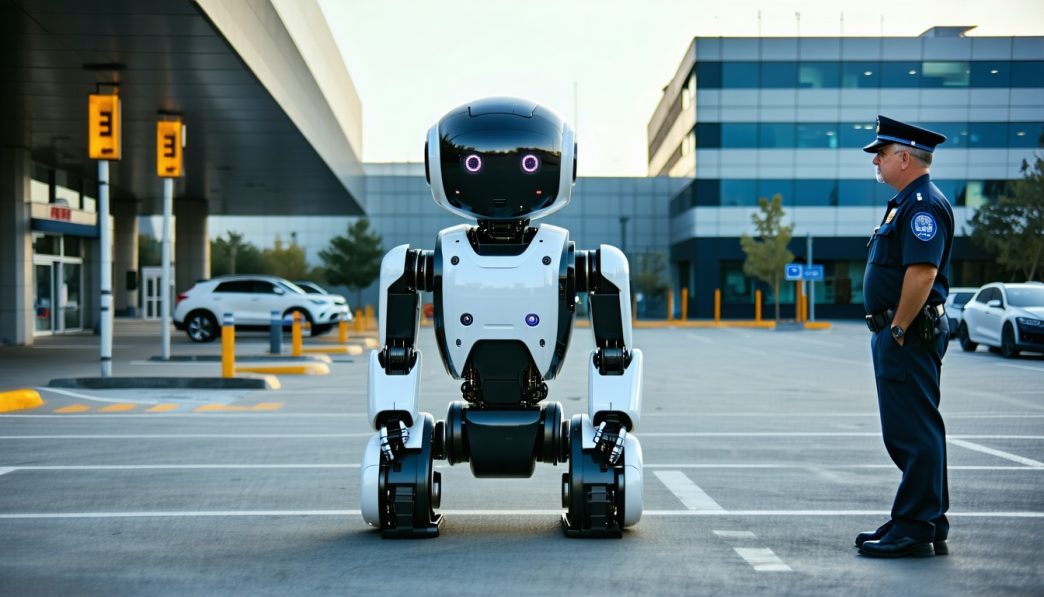
The Role of Robots in Real World Security
Introduction to Security Robots
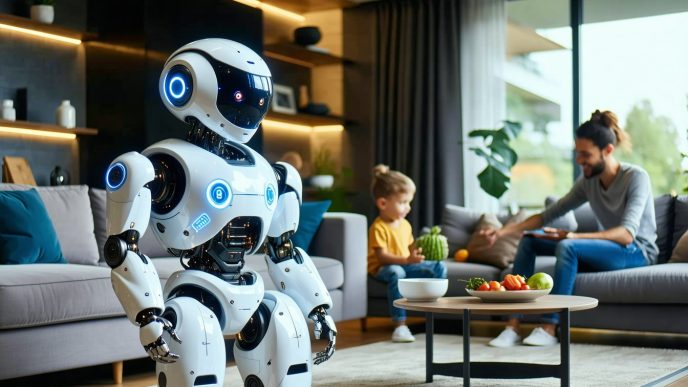
Robots have increasingly become valuable assets in the realm of security. They are engineered to enhance safety measures in various settings, from private homes to commercial properties. Security robots are designed to operate autonomously and assist in monitoring and protecting designated areas. This technology combines sensors, cameras, and artificial intelligence to optimize efficiency and effectiveness in maintaining safety.
Advancements in robotics and AI have allowed these machines to perform tasks that were once strictly the domain of security personnel. The integration of these robotic systems into security frameworks has changed the landscape of how properties are monitored and secured. For more information about the broader category of these machines, explore our article on security and surveillance robots.
Types of Security Tasks Robots Can Perform
Security robots are capable of performing a variety of tasks to aid human security efforts. Below are some key functions that these robots can undertake: 
| Security Task | Description |
|---|---|
| Monitoring and Surveillance | Robots equipped with cameras can monitor areas continuously, providing real-time data and alerts when unusual activity is detected. These systems can track movements and gather evidence. For a detailed discussion, see autonomous surveillance robots. |
| Patrolling and Intruder Detection | Robots can patrol designated areas autonomously to detect intruders. They can respond to motion triggers and alert security personnel if they identify suspicious activities. More on this can be found in robots detecting unusual activity. |
| Emergency Response Mechanisms | Some robots are designed with features to respond to emergencies, such as alerting authorities or providing first response measures until human help arrives. Explore additional features in our article on robot emergency response features. |
| Integration with Smart Systems | Security robots can be integrated with existing smart security systems, enhancing overall functionality and situational awareness. For further details, check our article on robots integrated with smart security systems. |
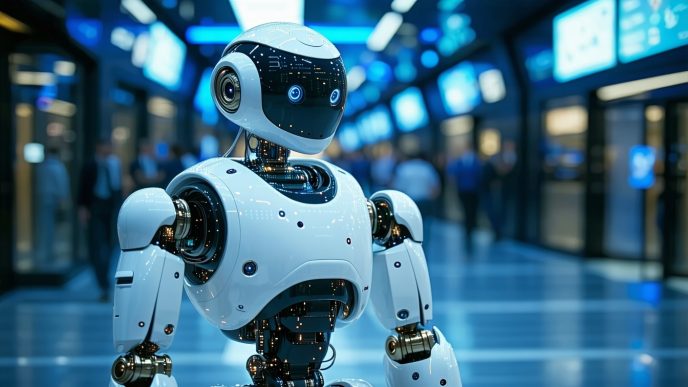
| Safety in Public Spaces | Many robots are deployed in malls and public areas, providing an additional layer of security while also helping to ensure a safe environment for the public. Discover more about this in security robots in malls and public spaces. |
The capabilities of these machines offer significant advantages for monitoring and responding to security threats. Understanding both their potential and their limitations, such as the limitations of security robots, is crucial for any property manager or homeowner considering robotic solutions for their security needs.
What Robots Can Do
Security robots offer a range of capabilities that enhance safety and surveillance for homeowners, business owners, and property managers. Their functionalities can be grouped into three main categories: monitoring and surveillance, patrolling and intruder detection, and emergency response mechanisms.
Monitoring and Surveillance Capabilities
Robots equipped with advanced cameras and sensors can effectively monitor properties. They provide continuous surveillance, capturing high-definition video and images, which can be transmitted to security personnel or property owners in real-time.
This capability is essential for promptly identifying potential threats or suspicious behavior. Many robots use artificial intelligence algorithms to analyze video feeds and differentiate between normal and anomalous activities.
| Feature | Description |
|---|---|
| Camera Quality | High-definition imaging (1080p or higher) |
| Field of View | Wide-angle lenses (up to 180 degrees) |
| Night Vision | Infrared or thermal imaging capabilities |
| Real-time Alerts | Notifications sent to mobile devices |
For more information on these functionalities, visit our article on autonomous surveillance robots.
Patrolling and Intruder Detection
Security robots can patrol defined areas, using programmed routes or autonomous navigation systems. These robots are capable of detecting unusual activity and assessing threats through a combination of motion sensors and surveillance technology.
When an intruder is detected, the robot can alert security personnel or initiate pre-programmed responses, such as sounding alarms or recording video evidence for further investigation.
| Patrol Frequency | Typical Durations |
|---|---|
| Continuous Patrol | 24/7 monitoring |
| Scheduled Patrols | Specific intervals (hourly, daily) |
| Response Time | Average alert within seconds |
For a closer look at their patrolling capabilities, refer to our article on robots patrolling homes and properties.
Emergency Response Mechanisms
In addition to surveillance and detection, security robots can be equipped with emergency response features. Some robots can directly communicate with local law enforcement or emergency services in case of a security breach or critical incident.
These robots may also include the ability to analyze situations, such as identifying hazards or providing assistance during emergencies.
| Emergency Feature | Functionality |
|---|---|
| Real-time Communication | Instant alerts to authorities |
| Incident Analysis | Assessing danger levels |
| Remote Control | Manual override for direct operation |
For more on these capabilities, check our article on robot emergency response features.
While security robots provide robust support in monitoring and protection, it is essential to understand their limitations as well. Familiarize with the limitations of security robots to get a complete view of their effectiveness in real-world applications.
Limitations of Security Robots
As the use of robots in security becomes more common, it is important to acknowledge their limitations. While these machines offer various benefits, they also come with distinct drawbacks that can affect their effectiveness in real-world applications.
Lack of Human Judgment and Intuition
One of the primary limitations of security robots is their inability to replicate human judgment and intuition. While robots can be programmed to follow specific algorithms and rules, they lack the ability to think critically or make decisions based on complex situations. This can lead to difficulties in scenarios that require nuanced understanding, such as assessing whether a situation is genuinely suspicious or merely benign.
For example, a security robot might misinterpret a harmless event, such as a person walking a dog late at night, as a potential threat. Human security personnel possess situational awareness and can evaluate context, which robots currently cannot achieve.
| Comparison | Human Security | Security Robots |
|---|---|---|
| Judgment | Critical thinking | Following algorithms |
| Intuition | Situational awareness | Limited interpretation |
| Decision-making | Contextual evaluation | Pre-programmed responses |
Limited Physical Interactions
Another significant limitation of robotic security systems is their capacity for physical interactions. While robots can patrol and monitor spaces, they are not designed to engage in complex physical tasks. For instance, they may struggle with confronting intruders or physically intervening in an emergency situation.
Robots can alert human security teams about breaches or unusual activities but cannot act in place of a security officer to restrain or detain a person. This limits their effectiveness in dynamic scenarios requiring fast and decisive actions.
| Interaction Type | Human Security | Security Robots |
|---|---|---|
| Engagement | Physical intervention | Alerting only |
| Response | Hands-on approach | Remains passive |
| Conflict resolution | Negotiation skills | No negotiation skills |
Vulnerabilities to Hacking and Malfunctions
Security robots also face vulnerabilities concerning hacking and technical malfunctions. As these devices rely heavily on software for their operation, they are potential targets for cyber-attacks, which can compromise security systems. Hacking can allow unauthorized access, leading to data breaches or disabling the robots entirely.
Moreover, technical failures can occur due to software glitches, hardware wear and tear, or environmental factors, which can disrupt their functionality. This raises concerns about the reliability of robotic security systems in maintaining a secure environment.
| Vulnerability Type | Description | Risk Level |
|---|---|---|
| Hacking | Unauthorized access | High |
| Malfunctions | Technical failures | Moderate |
| Reliability | Dependence on technology | Variable |
These limitations highlight the importance of recognizing that while security robots offer innovative solutions for monitoring and safeguarding properties, they should complement human security efforts rather than replace them. For more information on how robots function in monitoring roles, check out our articles on autonomous surveillance robots and robots detecting unusual activity. Additionally, to learn about enhancing security measures with robots, explore our resource on robots integrated with smart security systems.
Ethical and Legal Considerations
As the use of security robots becomes more prevalent, it is essential to address the ethical and legal implications associated with their deployment. Key concerns include privacy issues related to surveillance and liability in case of security incidents.
Privacy Concerns with Surveillance Robots
One of the primary ethical considerations surrounding security robots pertains to privacy. Surveillance robots are equipped with cameras and sensors designed to monitor activities in various environments. This capability raises questions about individuals’ rights to privacy.
Homeowners, business owners, and property managers must ensure that their use of these robots complies with local laws and regulations regarding surveillance. Unauthorized recording of individuals in private spaces can lead to legal ramifications and community backlash.
Key Statistics on Surveillance Concerns
| Concern | Percentage Affected |
|---|---|
| Worries about being watched | 62% |
| Support for surveillance regulation | 78% |
| Awareness of data collection | 57% |
Addressing these concerns requires transparency about how data is collected, stored, and used. Responsible policies should be in place to protect individuals’ privacy while still allowing for effective monitoring. For more on how robots interact in various settings, visit our article on security and surveillance robots.
Liability Issues in Security Incidents
Liability presents another significant ethical challenge regarding the deployment of security robots. In the event of an incident, such as a breach or an error caused by the robot, determining accountability can be complex.
Property managers and business owners need to understand the scope of liability when employing robotic systems. Issues arise concerning whether the liability falls on the robot’s manufacturer, the software developer, or the property owner. This murky landscape complicates the legal landscape surrounding robotic security.
Liability Considerations
| Incident Type | Potential Liability Party |
|---|---|
| Breach due to malfunction | Owner of the property |
| Misuse of surveillance data | Manufacturer or software developer |
| Physical harm caused by robot | Manufacturer or owner |
To minimize liability risks, clear guidelines and contracts should be established. Additionally, integrating robots with traditional security systems can help create a more robust safety network. Explore more about these integrations in our article on robots integrated with smart security systems.
Understanding the ethical and legal implications of using security robots is essential for homeowners and businesses alike. By navigating privacy concerns and liability issues proactively, stakeholders can foster trust and ensure safer environments.
The Future of Security Robotics
As the landscape of security technology continues to evolve, advancements in artificial intelligence (AI) and robotics play a pivotal role. These innovations are set to enhance the capabilities of security robots and redefine how they are utilized in various environments.
Advancements in AI and Robotics
Recent breakthroughs in AI have significantly improved the functionality of security robots. With machine learning algorithms, robots can analyze and interpret data in real-time, enhancing their monitoring and surveillance capabilities. For instance, these robots can differentiate between regular activities and unusual behaviors, allowing for rapid responses to potential threats.
| Key Advancements | Description |
|---|---|
| Enhanced Recognition | Improved image and motion recognition technology helps robots identify faces, vehicles, and objects. |
| Decision-Making Abilities | AI allows robots to process data and make informed decisions without human intervention. |
| Adaptive Learning | Robots can learn from their environment over time, improving their effectiveness in detecting security breaches. |
These advancements open up new avenues for autonomous surveillance robots to monitor areas more efficiently. By equipping them with advanced sensors and AI-driven analytics, these robots can perform complex security assessments, making them invaluable assets for homeowners and business owners.
Integrating Robots with Traditional Security Systems
The integration of robotic technology with existing security systems is another crucial development. Security robots can complement traditional security measures, providing an additional layer of surveillance and response capabilities.
| Integration Benefits | Description |
|---|---|
| Real-Time Data Sharing | Robots can relay information to central security systems, allowing for coordinated responses. |
| Enhanced Coverage | By working with fixed cameras and alarms, robots can monitor larger areas effectively. |
| Remote Monitoring | Homeowners or property managers can access security feeds and receive alerts through mobile devices. |
This collaboration allows for a holistic approach to property protection, ensuring that both human and robotic resources are utilized effectively. For example, robots integrated with smart security systems can automate responses to detected threats, such as notifying security personnel or activating alarms.
By combining robots with traditional systems, the effectiveness of security measures increases, addressing the limitations of security robots and enhancing overall safety protocols within homes, businesses, and public spaces. For more on how these technologies are transforming the security landscape, explore our article on the future of robotic security systems.