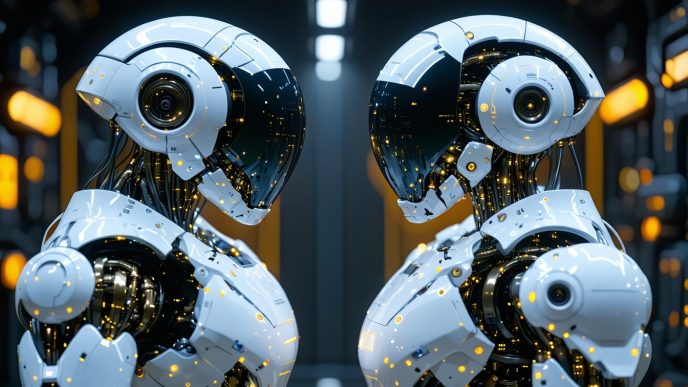
Understanding Smart Voice Assistants and Humanoid Robots
With the advancements in technology, understanding the distinctions between smart voice assistants and humanoid robots is crucial for potential users. Each serves unique purposes and is designed with specific functionalities.
Role and Functionality of Smart Voice Assistants
Smart voice assistants are software-based AI programs that facilitate interaction through voice commands. They are primarily designed to perform a range of tasks, such as providing information, setting reminders, playing music, and controlling smart home devices. Their primary role is to enhance convenience by responding to user queries and automating routine tasks.
Common features of smart voice assistants include: 
- Voice Recognition: Ability to understand and process human speech.
- Task Automation: Managing schedules, reminders, and alarms.
- Information Retrieval: Answering questions and providing updates on various topics, like weather and news.
- Home Integration: Connecting with smart home devices for seamless control.
| Feature | Description |
|---|---|
| Voice Recognition | Understands user commands |
| Task Automation | Organizes schedules and reminders |
| Information Retrieval | Provides answers and updates |
| Home Integration | Controls smart home devices |
Capabilities and Features of Humanoid Robots
Humanoid robots, on the other hand, resemble humans in both appearance and behavior. They are equipped with advanced sensors and software allowing them to navigate environments, interact with people, and perform physical tasks. Their capabilities extend beyond voice interaction, including movement, manipulation of objects, and in some cases, emotional engagement.
Key features of humanoid robots include:
- Mobility: Capability to move around and navigate various settings.
- Object Manipulation: Ability to grasp and use tools or perform tasks that require physical handling.
- Facial Recognition: Identifying individuals and responding accordingly based on interactions.
- Communication Skills: Engaging in more complex conversations and demonstrating social understanding.
| Feature | Description |
|---|---|
| Mobility | Moves within different environments |
| Object Manipulation | Handles tasks requiring physical interaction |
| Facial Recognition | Identifies and interacts with people |
| Communication Skills | Engages in complex dialogues |
Understanding the distinctive roles and functionalities of smart voice assistants versus humanoid robots is essential for making informed decisions in the growing field of robotics. Users can assess their individual needs and preferences, considering which technology better aligns with their specific use cases. For more detailed comparisons, explore our section on robot a vs robot b comparisons.
When to Opt for a Smart Voice Assistant
Smart voice assistants have become increasingly prevalent, providing a range of functionalities that cater to everyday needs. Understanding when to choose these assistants over humanoid robots can aid buyers and tech enthusiasts in making informed decisions.
Use Case Scenarios for Smart Voice Assistants
Smart voice assistants excel in specific scenarios where users seek convenience, efficiency, and straightforward interaction. Some common use cases include:
| Use Case | Description |
|---|---|
| Home Automation | Voice assistants can control smart home devices such as lights, thermostats, and security systems. |
| Information Retrieval | They provide quick access to information like weather updates, news briefings, and internet searches. |
| Task Management | Voice assistants can help with scheduling appointments, setting reminders, and managing to-do lists. |
| Music and Entertainment | They allow users to play music, audiobooks, and podcasts through voice commands. |
| Communication | Users can send messages, make calls, and manage contacts using simple voice commands. |
These scenarios highlight the practical applications of smart voice assistants in daily life.
Advantages of Smart Voice Assistants
Several benefits make smart voice assistants appealing for users:
-
Cost-Effectiveness: Smart voice assistants typically have a lower initial investment compared to humanoid robots, making them accessible for a wider audience.
-
Ease of Use: They are user-friendly and designed for quick interactions, requiring minimal setup to start functioning.
-
Versatility: These assistants can perform a range of tasks, from controlling home devices to providing recommendations for services, making them highly versatile.
-
Continuous Improvement: Many smart voice assistants receive regular software updates, enhancing their features and capabilities over time.
-
Space Saving: Unlike humanoid robots, which may require more physical space for operation, smart voice assistants are often compact and can fit into existing home setups.
By weighing the use case scenarios and advantages of smart voice assistants, individuals can determine whether these tools meet their needs or if a humanoid robot would be a more suitable option. For detailed comparisons between specific robots, refer to our article on robot a vs robot b comparisons.
When to Consider a Humanoid Robot
Humanoid robots have gained significant attention for their advanced capabilities and versatility. Understanding when to opt for a humanoid robot involves assessing specific use case scenarios and recognizing the advantages they bring over simpler AI assistants.
Use Case Scenarios for Humanoid Robots
Humanoid robots are particularly useful in situations where human-like interaction, mobility, and complex task management are required. Here are some notable scenarios:
| Scenario | Description |
|---|---|
| Healthcare Assistance | Providing support in hospitals, assisting with patient care and monitoring. |
| Customer Service | Engaging with customers in retail environments, answering questions, and providing information. |
| Education | Serving as interactive teaching aids in classrooms, helping with lessons and engagement. |
| Home Assistance | Performing tasks such as cleaning, cooking, or grocery shopping, assisting those with mobility challenges. |
| Research and Development | Assisting researchers by collecting data or performing complex experiments in laboratories. |
Advantages of Humanoid Robots
Choosing a humanoid robot comes with several benefits that enhance their functionality and effectiveness in various applications. These advantages include:
| Advantage | Explanation |
|---|---|
| Human-Like Interaction | Humanoid robots can mimic human expressions and movements, making interactions more natural and intuitive. |
| Versatile Task Performance | They can perform a broad range of tasks, from emotional engagement to physical labor, depending on their programming. |
| Enhanced Problem Solving | Equipped with advanced AI, these robots can analyze situations and provide solutions in real-time. |
| Social Engagement | Capable of holding conversations and responding to emotional cues, humanoid robots can create meaningful interactions. |
| Adaptability | They can learn and evolve over time, allowing for continuous improvement in their skills and tasks. |
Choosing between AI assistants and humanoid robots largely depends on the specific needs and context. Assessing the desired use case and understanding which features offer the most value can greatly inform purchasing decisions. For further comparisons, refer to our robot a vs robot b comparisons for a detailed analysis of various models such as the Tesla Optimus vs Figure 01 and Sanctuary AI Phoenix vs Apptronik Apollo.
Performance Comparison
When comparing smart voice assistants and humanoid robots, understanding their performance in interaction and communication, as well as task execution and problem-solving, is crucial. These factors play a significant role in determining which technology will best meet a user’s needs.
Interaction and Communication Abilities
Smart voice assistants primarily rely on voice recognition technology and natural language processing to engage with users. Their main function is to process spoken commands and provide responses, making them ideal for informative tasks and managing smart home devices.
Humanoid robots, on the other hand, combine voice recognition with advanced physical interactions. They often possess facial recognition and can interpret body language, which enhances their ability to engage in more complex social interactions.
| Feature | Smart Voice Assistant | Humanoid Robot |
|---|---|---|
| Voice Recognition | High | High |
| Natural Language Processing | Advanced | Advanced |
| Facial Recognition | No | Yes |
| Physical Interaction | Limited | High |
| Multimodal Communication | No | Yes |
Task Execution and Problem-Solving Skills
Task execution varies significantly between smart voice assistants and humanoid robots. Smart voice assistants are designed for simple, quick tasks such as playing music, setting reminders, or controlling smart home devices. They excel at information retrieval and scheduling.
Humanoid robots can perform a greater range of tasks, including those that require physical actions, like fetching items, assisting with household chores, and even providing companionship. Some models incorporate machine learning algorithms, allowing them to improve their problem-solving skills over time.
| Task Type | Smart Voice Assistant | Humanoid Robot |
|---|---|---|
| Information Retrieval | Excellent | Good |
| Scheduling and Reminders | Excellent | Fair |
| Physical Tasks | Poor | Excellent |
| Problem-Solving | Fair | Good |
The evaluation of interaction capabilities and task performance reveals key distinctions between the use cases for AI assistants vs humanoid robots. When deciding which technology fits particular requirements, understanding these performance metrics plays a pivotal role in making informed decisions.
Price and Affordability Analysis
In determining whether to choose AI assistants or humanoid robots, one key aspect to consider is the cost. This section explores the initial investment, long-term expenses, and overall value of both options.
Initial Investment and Long-Term Costs
The initial investment for both smart voice assistants and humanoid robots varies significantly. Generally, smart voice assistants tend to be more affordable upfront compared to humanoid robots.
| Type | Average Initial Cost | Estimated Long-Term Costs (Maintenance, Updates) |
|---|---|---|
| Smart Voice Assistants | $50 – $300 | $0 – $100/year |
| Humanoid Robots | $1,000 – $50,000 | $200 – $1,000/year |
Smart voice assistants usually require minimal ongoing costs, mainly related to software updates or optional services. In contrast, humanoid robots can entail substantial maintenance and operational expenses, including repairs and software licensing.
Value for Money Comparison
When comparing the value for money between smart voice assistants and humanoid robots, it’s important to assess the features, capabilities, and usage scenarios each offers.
| Type | Key Features | Value Rating (1-5) |
|---|---|---|
| Smart Voice Assistants | Voice control, smart home integration, music playback | 4 |
| Humanoid Robots | Physical interaction, advanced task execution, adaptability | 5 |
Smart voice assistants provide excellent value for basic tasks and smart home control, making them suitable for everyday use. However, humanoid robots excel in their ability to perform complex tasks and interact physically, potentially justifying their higher price point.
In the context of robot A vs robot B comparisons, it’s vital for buyers to analyze both the short-term and long-term financial commitments required for ownership. Understanding these factors can significantly influence the decision of whether to invest in AI assistants or humanoid robots, based on individual needs and applications.
Deciding Factors
When choosing between AI assistants and humanoid robots, several key factors must be evaluated, including personal needs and preferences, as well as future potential and adaptability.
Personal Needs and Preferences
Understanding personal requirements is crucial in this decision-making process. Different users have distinct expectations from technology based on their lifestyle, work environment, and specific tasks.
| Factor | Smart Voice Assistant | Humanoid Robot |
|---|---|---|
| Interaction Style | Voice-driven commands | Physical interaction with presence |
| Complexity of Tasks | Basic information retrieval, smart home control | Advanced tasks like companionship, physical assistance |
| Space Requirement | Minimal | Requires designated space |
| User Interaction | Primarily audio | Can engage visually and physically |
Individuals who need assistance with daily tasks, such as reminders, scheduling, or controlling smart home devices may find a smart voice assistant more convenient. Those requiring more complex interactions, physical presence, or companionship might opt for a humanoid robot. Reviewing robot a vs robot b comparisons can help in weighing these aspects.
Future Potential and Adaptability
As technology evolves, the ability to adapt is essential. Smart voice assistants and humanoid robots each present different pathways for future development.
| Aspect | Smart Voice Assistant | Humanoid Robot |
|---|---|---|
| Software Updates | Frequent improvements and integrations | Larger upgrades often tied to physical capabilities |
| Versatility | Adaptable to new tasks via updates | Adaptability can require hardware changes |
| Market Trends | Growing integration with AI and smart systems | Expanding roles in various fields such as healthcare and hospitality |
A smart voice assistant may quickly integrate new functionalities through software updates, while humanoid robots may evolve slowly due to the complexities of hardware upgrades. Considering potential future capabilities is vital for those looking to invest in long-term solutions. For instance, comparing options like tesla optimus vs sanctuary ai phoenix can offer insight into advancement trends.
Evaluating personal preferences alongside future adaptability allows users to make informed decisions about whether an AI assistant or humanoid robot meets their needs both now and in the future.